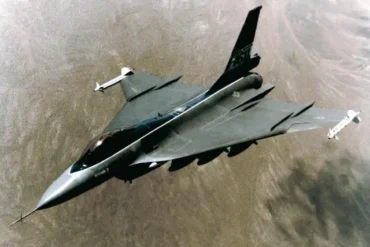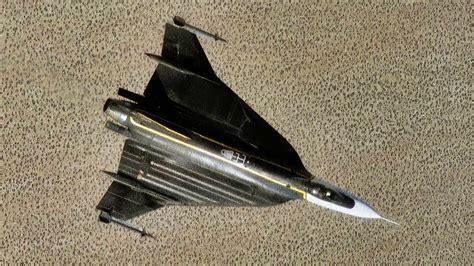
The story of the F-16XL is one of bold engineering, unrealized potential, and a design philosophy that pushed the boundaries of what a modern fighter could become. While the F-16 Fighting Falcon went on to dominate global air forces with thousands of units produced, the F-16XL—its dramatically reimagined sibling—remains one of the rarest experimental fighters ever created, with only two aircraft ever completed.
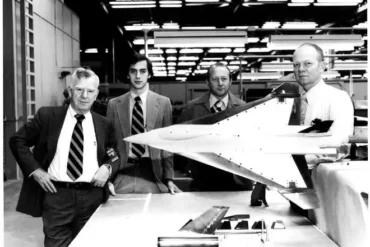
Born during an era of rapid innovation in U.S. military aviation, the F-16XL was not simply an upgrade. It was a transformation. Engineers at General Dynamics reshaped the very identity of the F-16 platform, creating an aircraft that looked like it belonged decades ahead of its time.
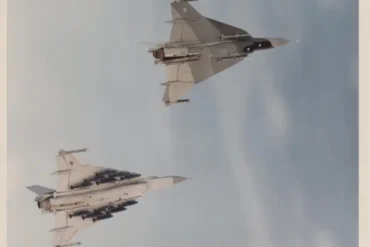
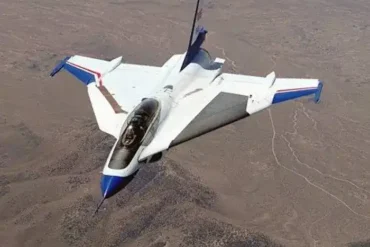
Unlike the standard F-16, the XL variant introduced a striking cranked-arrow delta wing, a design that fundamentally altered its aerodynamics, payload capacity, and mission flexibility. This wasn’t cosmetic ambition—it was a calculated leap into the future of tactical airpower.
A Fighter Designed to Redefine Air Combat
The F-16XL emerged in 1981 as a contender in the U.S. Air Force’s Enhanced Tactical Fighter (ETF) program. The goal was clear: develop a strike aircraft capable of carrying heavier payloads over longer distances while maintaining high performance.
To achieve this, the XL underwent extensive structural changes. The fuselage was lengthened, and the wing area increased by more than 120 percent. This allowed the aircraft to carry significantly more fuel and weapons without relying heavily on external tanks.
The result was a fighter that could theoretically outperform conventional designs in deep strike missions. With up to 27 weapon hardpoints, the F-16XL had a payload capability that rivaled much larger aircraft, all while preserving the agility associated with the F-16 lineage.
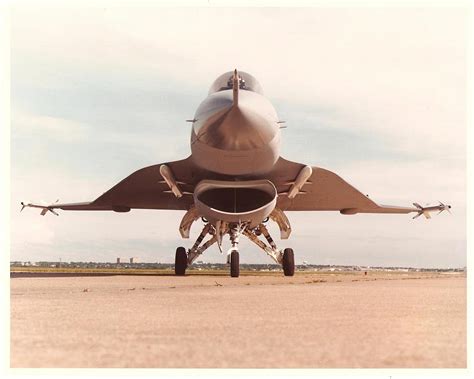
What made the design truly remarkable was its aerodynamic efficiency. The unique wing shape reduced drag at supersonic speeds and improved lift distribution, enabling smoother high-speed performance. It was an aircraft that balanced brute strength with refined engineering elegance.
Why Only Two Were Ever Built
Despite its groundbreaking design, the F-16XL ultimately lost the ETF competition to the F-15E Strike Eagle. The decision wasn’t purely about performance; it reflected broader strategic preferences.
The F-15E offered twin engines, greater survivability, and a larger airframe already proven in combat roles. While the F-16XL showcased innovation, the Air Force opted for a more conservative path—favoring reliability and existing infrastructure over radical redesign.
This decision sealed the fate of the XL program. Only two prototypes were ever completed: a single-seat and a two-seat variant. Both represented the peak of what the concept could achieve, yet neither would enter operational service.
A Second Life with NASA
Rather than being scrapped, the two F-16XL aircraft found a new purpose with NASA in 1988. Their unusual aerodynamic properties made them ideal platforms for experimental research.
One of their most fascinating roles involved flying alongside the legendary SR-71 Blackbird, the fastest jet ever built. These joint missions focused on studying sonic boom behavior, a critical area for future supersonic transport development.
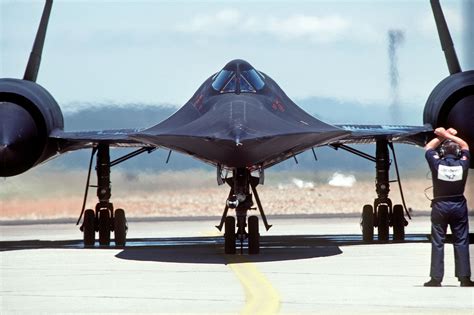
During these tests, the F-16XL operated at speeds approaching Mach 1.8, collecting valuable data on how shockwaves interact under different atmospheric conditions. Engineers explored ways to reduce the disruptive effects of sonic booms—an essential step toward making supersonic passenger travel viable again.
NASA also used the aircraft to investigate laminar flow characteristics, aiming to improve fuel efficiency and aerodynamic performance in future designs. While not all research goals were fully realized, the program delivered insights that extended far beyond military aviation.
Final Chapter: From Prototype to Museum Piece
By 1999, the research phase had concluded, and both F-16XL aircraft were retired to storage at Edwards Air Force Base in California. Today, they reside on display, silent but unmistakably futuristic even decades after their creation.
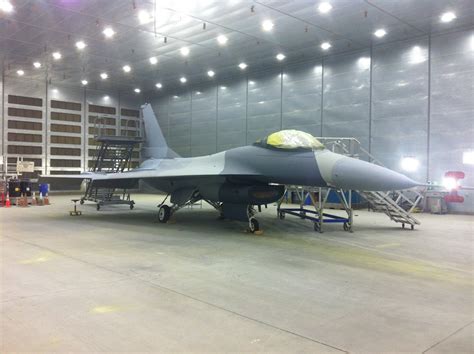
In terms of sheer specifications, the XL stood apart. It measured over 52 feet in length, with a wingspan exceeding 34 feet, and a maximum takeoff weight of 48,000 pounds—significantly heavier than standard F-16 variants. Every dimension reflected its expanded mission profile and experimental ambitions.
Yet numbers alone don’t capture its significance. The F-16XL represents a rare moment when aerospace engineering dared to challenge convention at every level. It was described at its unveiling as having “one foot in the present and one foot in the future”—a fitting summary of an aircraft that never quite found its place in operational service, but never stopped influencing the future of flight.
In the end, the F-16XL didn’t fail—it simply arrived too early for the world it was designed to dominate.