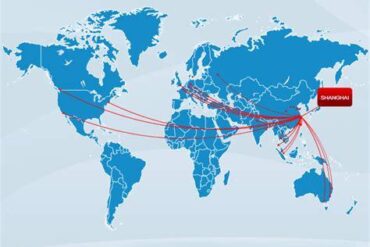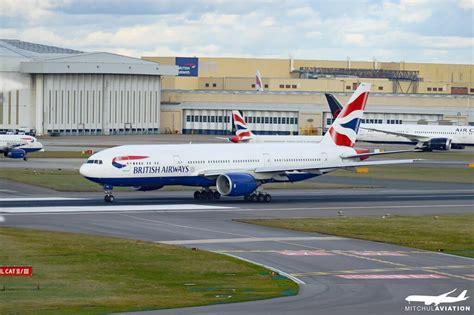
On any given day last year, roughly 14,000 passengers traveled between Europe and Australia, most of them funneled through the vast hubs of Dubai, Doha, Singapore, and Hong Kong. For more than a decade, nonstop European presence on Australian soil has been limited. Gulf carriers and Asian giants mastered the Kangaroo Route while European airlines largely stepped back, constrained by geography, fleet economics, and shifting demand patterns. That era is about to change.
In 2026, for the first time in 14 years, three European airlines—British Airways, Finnair, and Turkish Airlines—will operate services to Australia simultaneously. The shift is more than symbolic. It signals renewed strategic confidence in ultra-long-haul economics, fifth freedom rights, and connecting traffic flows that bridge Northern Europe with the Southern Hemisphere.
The last time three European carriers served Australia concurrently was 2012. Back then, British Airways shared the market with Air Austral and Virgin Atlantic. Air Austral’s intriguing Paris–Réunion–Sydney routing, operated under a single flight number, reflected a different era of network experimentation. Today’s re-entry is sharper, more data-driven, and built around next-generation widebody aircraft designed for efficiency at extreme range.
Finnair’s Bold Helsinki–Melbourne Strategy via Bangkok
Finnair’s decision to launch daily Airbus A350-900 service from Helsinki to Melbourne via Bangkok stands as one of the most unexpected developments in long-haul aviation this decade. Rather than easing into the market with a cautious three-times-weekly schedule, the Finnish flag carrier is committing full daily frequency from day one.
The route begins on October 25, perfectly timed for the Australian summer and peak Christmas travel season. That timing is deliberate. Seasonal demand into Melbourne surges during Europe’s winter, aligning neatly with Finnair’s network flows from Scandinavia and the Baltics. Helsinki’s geographic position—northeastern Europe’s gateway—allows for efficient connections from cities often underserved on direct intercontinental routes.
What makes this service particularly strategic is its use of fifth freedom traffic rights between Bangkok and Melbourne. This permits Finnair to sell tickets solely between Thailand and Australia, tapping into a high-volume leisure and visiting-friends-and-relatives market. Bangkok is already served three times daily by Finnair during peak winter months. Extending one of those frequencies to Melbourne transforms an existing Asian operation into a dual-continent revenue engine.
The economics are nuanced. Origin-and-destination demand between Helsinki and Melbourne is modest. The real opportunity lies in aggregation: Stockholm to Melbourne, Tallinn to Melbourne, Vilnius to Melbourne—flows that consolidate into a long-haul trunk. Add onward connectivity with Qantas within Australia and to New Zealand, and the network math becomes compelling.
Operating both the 278-seat and 321-seat A350 configurations, Finnair will quietly offer more seats to Australia than British Airways on certain seasonal rotations. That capacity advantage is notable, particularly given Finnair’s relative brand footprint in the Australian market. The strategy is not about nostalgia. It is about leveraging aircraft efficiency, slot timing, and hub connectivity to carve a sustainable niche.
Turkish Airlines Expands Its Australian Ambition
If Finnair’s move is bold, Turkish Airlines’ Australian expansion is relentless. The carrier debuted in Australia in March 2024 with Istanbul–Singapore–Melbourne service, followed by Istanbul–Kuala Lumpur–Sydney later that year. Both routes operate with the fuel-efficient Airbus A350-900, configured with 329 seats.
Istanbul Airport’s geographic positioning on the European side of the Bosphorus classifies Turkish Airlines as a European carrier. More importantly, Istanbul functions as one of the world’s most powerful connecting hubs, bridging Europe, Africa, and the Middle East with Australasia. Passengers from Athens, Skopje, and dozens of secondary European cities feed into Turkish’s Australian services, often at competitive fare levels.
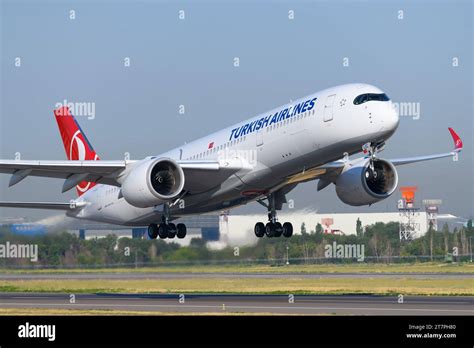
The Melbourne route includes fifth freedom rights between Singapore and Melbourne, allowing Turkish to sell tickets on that sector independently. The Sydney service, routed via Kuala Lumpur, does not enjoy the same rights, which means the majority of traffic must flow through Istanbul. That distinction matters commercially. Fifth freedom access enables diversification of revenue beyond connecting traffic.
Turkish Airlines has made no secret of its ambition to introduce future nonstop services to Australia. Should range-certified A350 variants or next-generation aircraft enter the fleet in sufficient numbers, Istanbul–Sydney nonstop becomes technically feasible. Such a development would fundamentally alter competitive dynamics, eliminating one of the primary disadvantages versus Gulf carriers.
For now, frequency remains sub-daily—three times weekly to Melbourne and five to Sydney. Yet the strategic trajectory is unmistakable. Turkish Airlines is building brand awareness in Australia with long-term intent, not short-term experimentation.
British Airways Maintains the Kangaroo Route Legacy
British Airways represents continuity amid change. Its daily London Heathrow–Singapore–Sydney service remains one of aviation’s iconic long-haul links. While it lacks the novelty of Finnair’s debut or Turkish’s expansion, BA’s role is foundational.
During the northern winter, the airline deploys the 254-seat Boeing 777-300ER on the route. In the northern summer, it transitions to the 216-seat Boeing 787-9, a tactical downgrade that improves load factors and yield management during softer seasonal demand. This fleet flexibility illustrates how mature carriers optimize revenue across fluctuating travel cycles.
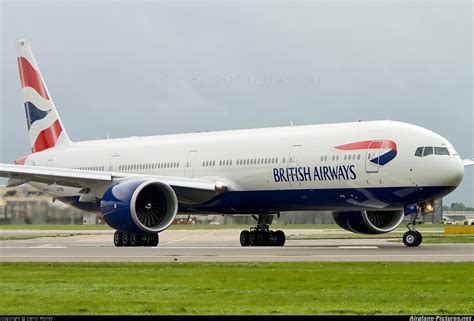
British Airways holds fifth freedom rights between Singapore and Sydney, reinforcing its competitive relevance on that segment. Despite speculation in past years, the airline has not deployed the Airbus A380 to Sydney in recent seasons, instead favoring aircraft that balance capacity with operating cost efficiency.
The oneworld alliance dimension adds another layer. With Finnair also part of oneworld, overlapping alliance connectivity could reshape how European travelers route to Australia. Cooperative feed from continental Europe into London and Helsinki provides alliance-level resilience against non-aligned competitors.
A Structural Shift in Europe–Australia Connectivity
The reappearance of three European airlines in Australia is not a nostalgic milestone. It reflects a structural recalibration of long-haul aviation. Ultra-efficient composite aircraft like the A350 have lowered operating costs per seat-mile, making multi-stop services commercially viable even when nonstop remains out of reach.
Meanwhile, Australia’s resilient outbound leisure demand and Europe’s diversified source markets create a steady baseline of traffic. Gulf carriers will continue to dominate sheer scale, but European airlines are reclaiming relevance through targeted network design and partnership leverage.
In 2026, passengers between Europe and Australia will face a subtly transformed marketplace. Instead of routing almost exclusively through Middle Eastern hubs, travelers will see renewed European-branded options bridging Helsinki, Istanbul, London, and beyond with Melbourne and Sydney. After 14 years of absence, Europe’s aviation presence Down Under is no longer a memory. It is a calculated return powered by strategy, aircraft innovation, and the enduring gravitational pull of the Kangaroo Route.