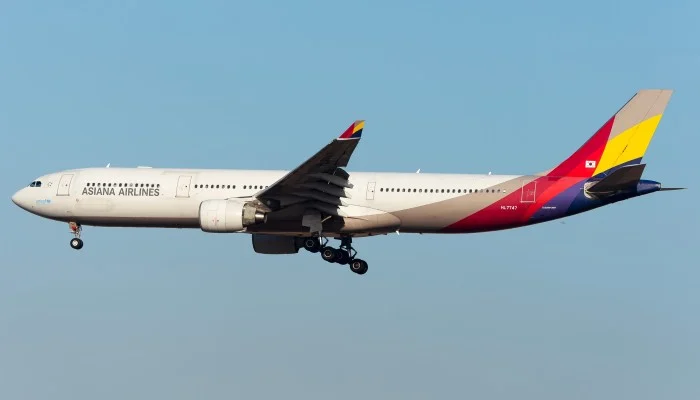
A mid-air scare unfolded on January 8, 2026, aboard Asiana Airlines Flight OZ745, when a lithium power bank caught fire inside an overhead bin, resulting in a passenger sustaining hand burns. The flight, operating from Seoul’s Incheon International Airport (ICN) to Hong Kong International Airport (HKG), was about two hours into its journey when the incident occurred.
Thermal Runaway Erupts at 30,000 Feet
The lithium battery reportedly entered thermal runaway, a hazardous failure mode in which internal temperatures rapidly escalate. Around 10:00 PM local time, flames erupted from the overhead compartment above Row 27, located in the economy class near the middle galley and lavatory.
Passengers were startled as the overhead bin began emitting smoke and flames. According to eyewitness accounts and posts on social media platform Threads, chaos momentarily ensued until the cabin crew reacted with impressive speed and composure, extinguishing the blaze in under three minutes and sealing the damaged power bank in a containment bag.
Passenger Suffers Burns, Flight Continues Safely
Although the flight continued safely to Hong Kong and landed without further incident, one passenger — reportedly the owner of the device — suffered burns to their hand. Fortunately, the injury did not require hospitalization. A photo of a charred winter jacket, shared by user zicaptain25 on X, hints that the device may have been tucked in a coat pocket or placed nearby when it ignited.
Aircraft Integrity Unaffected Despite Blaze
The aircraft involved, an 18-year-old Airbus A330-300 registered as HL7754, showed no critical system damage. After landing in Hong Kong, it was cleared to operate the return flight to Seoul, underscoring how contained the fire was thanks to the crew’s swift response. Data from Flightradar24 confirms that the aircraft has since completed multiple flights, including a recent route to Sapporo, Japan.
Airline Battery Rules Under Scrutiny
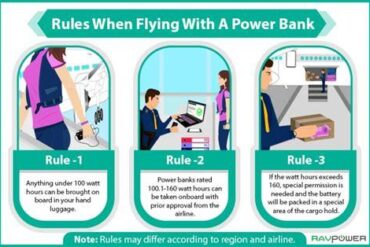
Like most global carriers, Asiana Airlines prohibits lithium-ion batteries in checked baggage and enforces strict limits on their use in the cabin. While passengers are allowed to carry power banks, Asiana explicitly bans storing them in overhead bins, requiring instead that they be kept in hand luggage under the seat or on the person, preferably with exposed terminals taped or placed in zip-lock bags for safety.
The carrier’s policy reflects wider international aviation safety standards aimed at mitigating the rising number of battery-related inflight incidents. Devices exceeding 160Wh are outright banned from carriage.
A Pattern of Power Bank Fires in Asian Skies
This event is just the latest in a troubling string of battery fires aboard Asian flights, highlighting a growing safety concern. Other recent examples include an Air China flight diverted to Shanghai due to a similar incident, and a Scoot flight departing from Hong Kong that faced an onboard device malfunction.
Cabin Fire vs. Cargo Fire: A Critical Distinction
Although dangerous, fires that occur within the aircraft cabin present a far safer scenario than those that ignite in the cargo hold. Cabin crew are trained to react immediately, minimizing the risk of fire spread. In contrast, cargo fires can go unnoticed until they’re out of control, which is why stringent bans on lithium devices in checked luggage remain in place.
Ongoing Calls for Tighter Regulations
As power banks become increasingly ubiquitous in daily life, airlines and regulators are wrestling with how to balance passenger convenience with safety. There are mounting calls across the aviation sector to:
- Enforce stricter inspections during boarding
- Mandate fire-resistant battery containment bags
- Ban in-seat charging from personal power banks
The International Civil Aviation Organization (ICAO) and various regional aviation authorities continue to issue guidance, but enforcement and awareness still vary widely.
The Bigger Picture: Are Bans the Only Answer?
Experts agree that better passenger education and device design improvements could go a long way in mitigating risks. Meanwhile, some airlines have opted to prohibit the usage of power banks during flight entirely, while still allowing them to be carried onboard.
This recent Asiana Airlines incident serves as a stark reminder that even small devices can pose serious hazards at altitude. As the aviation industry evolves, one thing is clear: battery safety is now a frontline concern for flight crews, regulators, and manufacturers alike.