The aviation industry is entering a new era of battery safety enforcement as American Airlines rolls out stricter policies governing portable power banks onboard its aircraft. Beginning May 1, passengers will face tighter controls on how many devices they can carry, how they are used, and—most notably—where they must be placed during flight. The defining requirement is clear: power banks must remain visible at all times.
This move places American alongside Southwest Airlines, which implemented similar but even stricter rules earlier in April. Together, these changes reflect a growing urgency across aviation authorities to address the escalating risk posed by lithium-ion batteries in confined aircraft cabins.
Rising Lithium Battery Risks Force Industry Action
The push for stricter oversight is grounded in a troubling upward trend. According to the Federal Aviation Administration, there were 97 reported lithium battery incidents in 2025, a noticeable increase from 89 cases the previous year. Each incident represents a potential in-flight emergency, often involving overheating, smoke, or fire triggered by thermal runaway—a chain reaction that can escalate rapidly.
Lithium-ion batteries, while essential to modern travel, pack high energy density into compact forms. That efficiency becomes a liability under stress conditions, particularly in aircraft cabins where containment options are limited and response time is critical.

The new rules are not about eliminating passenger convenience but about minimizing risk exposure. By ensuring power banks remain visible, cabin crew can quickly identify and respond to any irregularities before they escalate into serious hazards.
Inside American Airlines’ New Power Bank Policy
American Airlines’ updated guidelines introduce a structured framework designed to balance usability with safety. Passengers are still allowed to bring portable chargers onboard, but under clearly defined limits:
- Maximum of two power banks per passenger
- Each device must not exceed 100 watt-hours (Wh)
- Power banks must remain visible at all times
- Charging the power bank itself during flight is prohibited
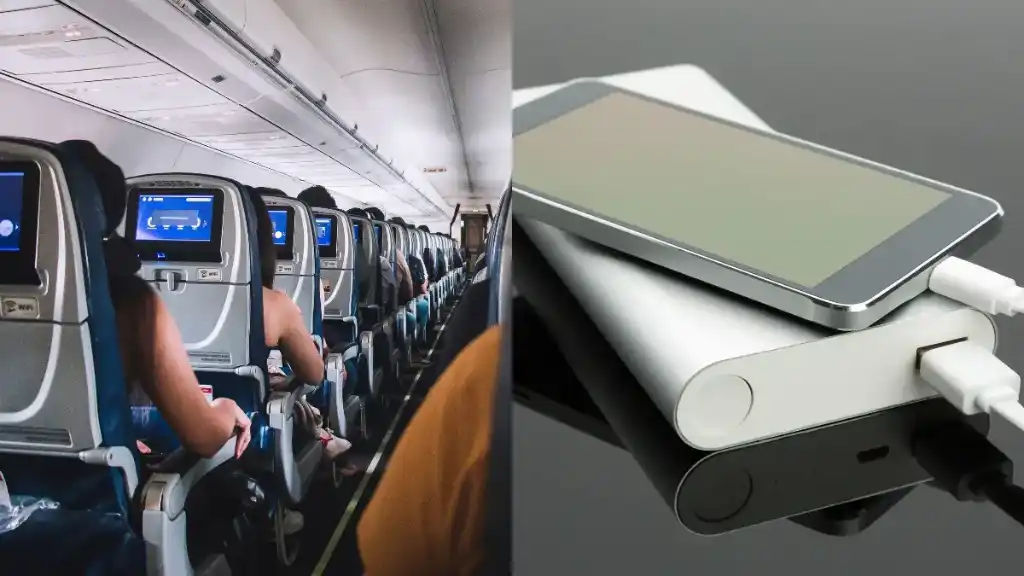
This means no storing devices in backpacks, no covering them with blankets, and no charging them via seat power outlets. Instead, power banks must be placed in locations such as seatback pockets, tray tables, or held in hand.
The distinction is subtle but critical: passengers can use power banks to charge their devices, but cannot recharge the power banks themselves mid-flight. This eliminates a key trigger point for overheating incidents.
Global Standards Shape Airline Policies
The shift by American Airlines is not happening in isolation. It closely follows new guidance issued by the International Civil Aviation Organization, which recently introduced updated recommendations for lithium battery handling onboard aircraft.
The ICAO framework reinforces two central ideas: limit the number of power banks per passenger and prohibit in-flight recharging of these devices. These guidelines aim to standardize safety practices globally, reducing inconsistencies between airlines and improving overall passenger awareness.
Interestingly, ICAO’s recommendations stop short of imposing identical rules on flight crews, instead allowing airlines to tailor procedures based on aircraft type and operational needs. This flexibility underscores the complexity of managing battery risks across different aviation environments.
Understanding the Difference: Power Banks vs. Standalone Batteries
A key aspect of American Airlines’ policy is its distinction between power banks and standalone lithium batteries. While both rely on similar chemistry, their usage profiles differ significantly.
Power banks are rechargeable external battery packs designed to charge multiple devices. Standalone batteries, on the other hand, are typically single-use or device-specific, such as those inserted directly into cameras or other electronics.
American’s new restrictions apply specifically to power banks. Standalone batteries remain subject to existing rules: they must be carried in hand luggage and are strictly prohibited in checked baggage due to fire risk in cargo holds.
This nuanced approach allows airlines to target the highest-risk devices without unnecessarily restricting all battery-powered equipment.
Southwest Airlines Sets an Even Stricter Benchmark
While American Airlines’ policy is comprehensive, Southwest Airlines has gone a step further. The low-cost carrier allows passengers to bring only one power bank onboard, and like American, requires it to remain visible throughout the flight.
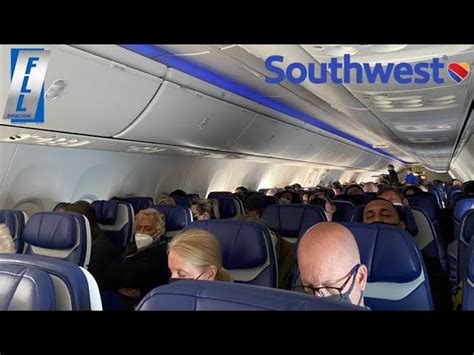
Additionally, Southwest prohibits storing power banks in overhead bins entirely—a measure designed to eliminate blind spots where overheating devices might go unnoticed.
Despite these tighter rules, enforcement remains largely educational rather than punitive. Passengers are informed during booking and check-in, with the goal of achieving compliance through awareness rather than confrontation.
What This Means for Travelers in 2026
For passengers, the new regulations introduce a shift in travel habits rather than a loss of convenience. Charging devices mid-flight remains possible through onboard power outlets, reducing reliance on portable chargers altogether.
However, travelers will need to adapt by:
- Carrying fewer power banks
- Ensuring devices meet capacity limits
- Keeping chargers accessible and visible at all times
The days of tossing a power bank into a carry-on bag and forgetting about it are over. Visibility is now a core safety requirement, not a suggestion.
A Subtle but Significant Safety Evolution
The crackdown on power banks marks a broader evolution in aviation safety philosophy. Rather than reacting to incidents, airlines are proactively tightening controls around known risk factors. The emphasis on visibility reflects a simple but powerful principle: what can be seen can be managed.
As passenger reliance on portable electronics continues to grow, these policies represent a necessary recalibration. They preserve the convenience of modern travel while reinforcing the industry’s uncompromising stance on safety.
In the confined, high-stakes environment of an aircraft cabin, even small devices demand serious attention—and now, they demand to be seen.