A routine regional flight from Kansas to Washington turned into a tense midair emergency when a passenger’s power bank ignited, forcing an Alaska Airlines-operated service to return to its departure airport and delaying travelers by more than seven hours. What began as a standard climb to cruising altitude quickly escalated into a safety-critical incident that underscored the growing risks associated with lithium-ion battery devices carried onboard commercial aircraft.
On February 22, Horizon Air flight AS2117 departed Wichita Dwight D. Eisenhower National Airport (ICT) at 2:04 p.m., slightly behind its scheduled 1:57 p.m. pushback. The Embraer E175, operating on behalf of Alaska Airlines, was bound for Seattle-Tacoma International Airport (SEA) with 76 passengers on board. Data from Flightradar24 shows the aircraft had climbed to approximately 20,000 feet and was flying over St. John, Kansas, when the incident unfolded inside the cabin.
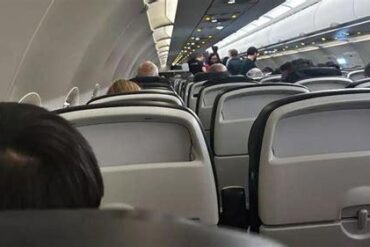
Passengers later described a sudden eruption of flames from a portable power bank that had reportedly not been actively handled at the time. Within moments, the device experienced what aviation safety experts identify as a thermal runaway—a chain reaction inside lithium-ion cells that causes rapid overheating, fire, and potentially explosion. Flames were said to have reached nearly one foot in height, accompanied by thick smoke that quickly spread through the cabin.
According to witness accounts cited by Hawaii News Now, a nearby passenger instinctively grabbed the burning device and threw it into the aisle, preventing further ignition near seating areas. A towel was then placed over the flames as cabin crew moved swiftly to contain the hazard. Flight attendants deployed onboard firefighting procedures, dousing the device and securing it in a specialized containment bag designed for lithium battery incidents. These fire-resistant bags are increasingly standard equipment on commercial aircraft, reflecting the aviation industry’s heightened awareness of battery-related risks.
While the crew managed the immediate threat, the flight deck made a decisive call. The pilots declared an emergency and initiated a return to Wichita out of precaution. In aviation operations, this decision reflects a layered safety philosophy: when smoke, fire, or potential toxic fumes are involved, landing as soon as practicable is the overriding priority.
Lithium-Ion Thermal Runaway: Why Power Banks Become Airborne Fire Hazards
Lithium-ion batteries power smartphones, laptops, and portable chargers because they store large amounts of energy in compact form. That density is both their strength and their vulnerability. When internal damage, manufacturing defects, or short circuits occur, the chemical reactions inside the cells can spiral uncontrollably. This process, known as thermal runaway, releases heat faster than it can dissipate, igniting flammable electrolyte material and producing highly toxic smoke.
Passengers on AS2117 reported difficulty breathing during the event. Smoke from lithium-ion battery fires can contain compounds such as carbon monoxide and hydrogen fluoride, which may cause nausea, headaches, and respiratory irritation even after brief exposure. One traveler sustained minor burns and was transported to a hospital following the aircraft’s safe return.
The Federal Aviation Administration has repeatedly warned about lithium battery incidents onboard aircraft, and airlines routinely emphasize that spare batteries and power banks must be carried in cabin baggage rather than checked luggage. In the cabin, crew can respond immediately. In the cargo hold, detection and suppression are far more complex.
Emergency Return to Wichita and Aircraft Inspection
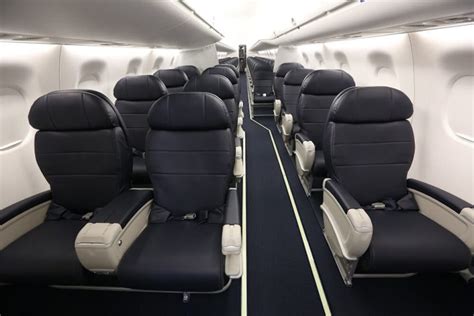
The aircraft involved, registration N641QX, is a seven-year-old Embraer E175 operated exclusively within Horizon Air’s regional fleet. Delivered in November 2018, the jet is powered by two General Electric CF34-8E engines and configured for 76 passengers across three classes: 12 seats in First Class, 12 in Premium Economy, and 52 in Economy.
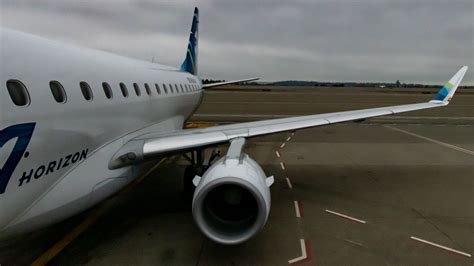
After landing safely back in Wichita, the aircraft remained overnight for inspection. Such post-incident evaluations are standard practice following onboard fires, even when damage appears minimal. Engineers assess wiring, insulation, cabin panels, and air filtration systems to ensure no residual contamination or hidden structural harm remains.
The following day, N641QX was repositioned to Portland International Airport as flight QXE9741, departing Wichita at 11:07 a.m. and arriving in Portland at 1:02 p.m. After inspection and clearance, the aircraft returned to regular service, highlighting the limited physical impact of the incident but the significant operational ripple effects it triggered.
Replacement Flight Leaves Passengers Seven Hours Behind Schedule
For the 76 affected travelers, the delay was substantial. A replacement aircraft, registration N652MK—another Embraer E175 featuring Horizon Air’s retro livery—departed Wichita at 9:34 p.m. as QX2117. It landed in Seattle at 11:30 p.m., more than seven hours after the originally scheduled 3:57 p.m. arrival time.
Regional carriers such as Horizon Air operate under the Alaska Airlines brand but maintain distinct fleet management and staffing structures. Horizon Air, wholly owned by Alaska Air Group, operates 47 Embraer E175 aircraft, forming its entire active fleet. Each aircraft carries co-branding that differentiates it from flights operated by other regional partners like SkyWest Airlines.
Operationally, a diversion of this nature affects crew duty limits, aircraft rotations, gate availability, and passenger connections. Even a contained onboard fire can cascade into network-wide disruptions. In this case, swift cabin response and conservative decision-making prevented a far more serious outcome.
A Growing Pattern of In-Flight Battery Incidents
Battery-related cabin fires are not isolated anomalies. In recent years, aviation authorities worldwide have documented a steady increase in incidents involving overheating personal electronic devices and portable chargers. The portability and ubiquity of power banks—now nearly standard travel accessories—mean risk mitigation depends as much on passenger awareness as airline procedure.
Airlines continue refining containment strategies, investing in fire-resistant storage bags and crew training. Yet the root hazard remains embedded in the chemistry of lithium-ion technology. Until safer battery architectures become mainstream, vigilance inside aircraft cabins will remain essential.
Flight AS2117 ultimately ended without catastrophic consequences. The aircraft landed safely, injuries were minor, and the affected jet returned to service within 24 hours. Still, for passengers who expected a routine afternoon arrival in Seattle, the experience served as a stark reminder that even pocket-sized electronics can ignite chain reactions thousands of feet above the ground.