Airlines across the world are facing intensifying pressure to impose stricter restrictions—or outright bans—on power banks after a series of alarming in-flight fire and smoke incidents linked to lithium-ion battery failures. What was once treated as an occasional safety anomaly has now become a recurring operational risk, forcing regulators, carriers, and passengers to confront an uncomfortable truth: the modern cabin is increasingly vulnerable to the devices designed to keep travelers connected.
The latest incident unfolded on January 10 aboard a T’way Airlines Boeing 737 MAX 8 operating between Sanya and Cheongju. Mid-flight, a passenger’s power bank began emitting smoke inside a carry-on bag, triggering an immediate response from the cabin crew. Following established fire-containment procedures, the device was submerged in water and secured, preventing escalation. Even so, smoke exposure affected multiple occupants, sending three cabin crew members and five passengers for medical evaluation after landing.
While the aircraft itself suffered no damage and returned to service, the episode underscored how little margin for error exists when lithium-ion batteries enter thermal runaway—a chain reaction in which internal heat rapidly builds, often resulting in fire, smoke, or explosion. With only 32 passengers onboard, the situation was manageable. In a full aircraft, the outcome could have been far more severe.
The Science Behind Thermal Runaway at 35,000 Feet
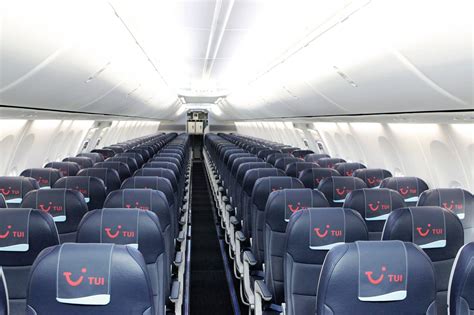
Lithium-ion batteries store significant energy in compact cells, a design that makes them indispensable—and dangerous. When damaged, overcharged, or poorly manufactured, internal separators can fail, allowing short circuits that generate extreme heat. At altitude, the aircraft cabin environment complicates suppression: confined spaces, limited ventilation, and dense seating amplify the risks of smoke inhalation and panic.
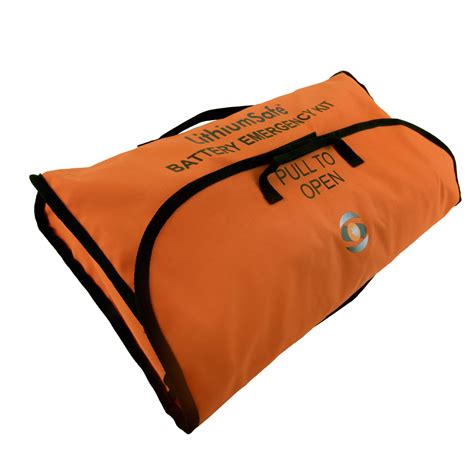
Cabin crews are trained to respond swiftly, using fire containment bags, water, and protective equipment. Yet even a textbook response does not eliminate exposure. Smoke from burning lithium batteries contains toxic gases, and inhalation—even briefly—can require medical intervention. The industry has long accepted this risk as manageable. Recent trends suggest that assumption may be eroding.
A Surge in Incidents Forces Airline Policy Shifts
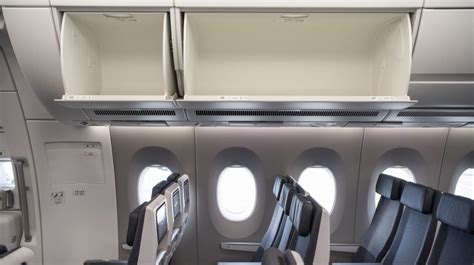
The T’way episode was not isolated. On the same day, an Asiana Airlines flight from Seoul Incheon to Hong Kong experienced a more dramatic failure when a power bank ignited inside an overhead bin. Flames were extinguished within minutes, but not before a passenger sustained burns to their hands. That the flight continued normally speaks to crew professionalism, not to the harmlessness of the threat.
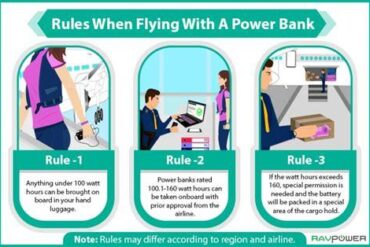
In response to a rising number of similar incidents, airlines including Qantas, Emirates, Singapore Airlines, and China Airlines have tightened onboard rules. Most now prohibit the use and charging of power banks during flight, require devices to remain accessible at all times, and ban storage in overhead compartments. Checked baggage has long been off-limits for lithium batteries; the focus has now shifted squarely to the cabin.
Why “No Use” May No Longer Be Enough
Despite these measures, safety experts argue that banning usage without banning carriage only addresses part of the problem. A power bank does not need to be actively charging to fail. Internal defects, physical stress during boarding, or exposure to heat can trigger thermal runaway even when the device is idle.
This concern is fueling calls for a complete prohibition on power banks, particularly high-capacity models. The challenge lies in enforcement and passenger reliance. Travelers increasingly carry multiple devices, and while many modern aircraft offer USB-C ports and AC outlets, not all power systems are equal in reliability or output. Power banks remain a perceived necessity, especially on long-haul routes.
Operational Reality Meets Passenger Expectation
Airlines are caught in a delicate balancing act. On one side lies safety, non-negotiable and unforgiving. On the other sits customer expectation, shaped by a decade of device-dependent travel. Removing power banks entirely could provoke backlash, especially in regions where older aircraft still lack robust in-seat power.
Yet the data trend is unambiguous. Each incident adds operational cost, regulatory scrutiny, and reputational risk. Smoke events, even when contained, trigger maintenance inspections, crew reports, and passenger claims. The financial and safety calculus increasingly favors prevention over accommodation.
The Likely Path Forward for Global Aviation
Regulators are now under pressure to harmonize standards rather than rely on fragmented airline policies. A globally consistent rule—potentially limiting capacity, quantity, or outright carriage—would reduce confusion and strengthen enforcement. Such a move would echo past aviation safety evolutions, where incremental restrictions eventually gave way to decisive action once risk thresholds were crossed.
For now, passengers can still carry power banks, but the window for that privilege appears to be narrowing. Each new incident shifts the conversation from “how to manage the risk” to “why accept it at all.” Aviation safety has always advanced through lessons written in near-misses. The question is how many more will be tolerated before lithium-ion power banks follow other once-common cabin items into prohibition.
The cabin of the future is likely to be better powered, more regulated, and far less forgiving of personal energy storage devices. In an industry built on redundancy and risk elimination, the message is becoming clear: convenience is negotiable, safety is not.