Lithium-ion power banks have become indispensable for modern travelers. From smartphones and tablets to laptops and cameras, these portable energy sources keep us connected and entertained throughout our journeys. Yet, their convenience comes with an escalating safety risk—one that has forced a wave of new bans and restrictions by airlines worldwide, particularly in Asia.
Recent incidents involving fires sparked by these compact energy devices have underscored the growing threat they pose to aviation safety. As a result, regulators and carriers are moving quickly to adjust their policies, leaving passengers uncertain about what they can—and cannot—bring aboard.
The Catalyst: Air Busan Fire and the South Korean Crackdown
The turning point came on January 28, 2025, when a fire broke out on an Air Busan aircraft while it was parked at Gimhae International Airport in South Korea. The investigation, led by South Korea’s transport ministry and forensic teams, pointed to a lithium-ion power bank as the likely cause. Charred remains of the battery showed multiple electrical melting marks, indicating it had either short-circuited or overheated—hallmarks of thermal runaway behavior in lithium batteries.
This incident spurred a swift national response. South Korea banned the storage of power banks in overhead bins and prohibited charging power banks via USB ports on planes. Instead, passengers must store them under the seat or in seat pockets, with exposed terminals covered in friction tape or sealed inside zip-lock bags to prevent contact with metal objects.
Wider Regional Impact: Airlines Tighten Lithium Rules
Following South Korea’s lead, a domino effect of regulatory tightening has swept across Asia. Multiple carriers and aviation authorities have responded by redefining what passengers can do with their portable battery packs during a flight.
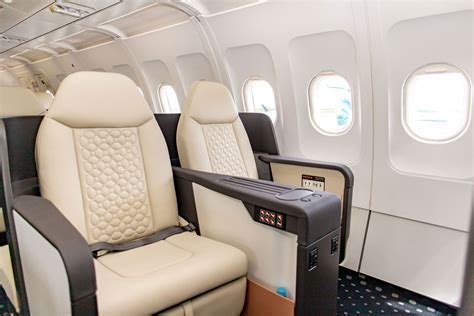
- Thai Airways instituted a full ban on using or charging power banks during flights from March 15, citing “incidents of in-flight fires on international airlines.”
- Singapore Airlines and its low-cost subsidiary Scoot followed suit, prohibiting charging of power banks in-flight starting April 2025.
- Air Asia, a key low-cost carrier in Southeast Asia, declared that power banks must be stored under the seat or in seat pockets only, with charging strictly forbidden throughout the flight.
- Hong Kong’s aviation authority banned the use of power banks mid-flight and disallowed their storage in overhead compartments as of April 7. This change was directly linked to a recent incident involving Hong Kong Airlines, where a charging device triggered a fire in an overhead bin.
- Taiwan’s major airlines, including EVA Air, China Airlines, and Uni Air, have also issued clear bans on in-flight use of portable chargers.
The common theme across these decisions is simple: the risk of spontaneous ignition from lithium-ion batteries is too high to ignore.
The Science Behind the Risk: Why Lithium-Ion Batteries Burn
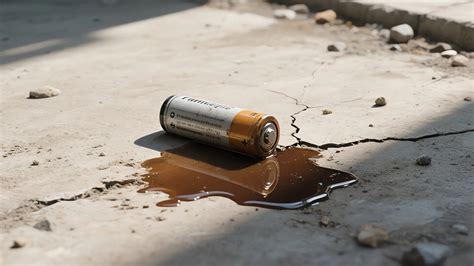
Power banks are powered by lithium-ion cells, chosen for their high energy density and compact size. While efficient, these batteries are also highly volatile under stress. According to Dr. Sonya Brown, senior lecturer in aerospace design at the University of New South Wales, lithium batteries are susceptible to thermal runaway, a self-reinforcing chemical reaction triggered by heat, damage, or overcharging.
“Lithium batteries could act as an ignition source or fuel for an onboard fire, particularly if they are damaged, swollen, poorly manufactured, or exposed to high temperatures,” Brown stated. She emphasizes the importance of insulating power bank terminals, either with non-conductive tape or protective pouches, to avoid contact with metals that could cause a short circuit.
What Travelers Need to Know: Can You Still Carry Power Banks?
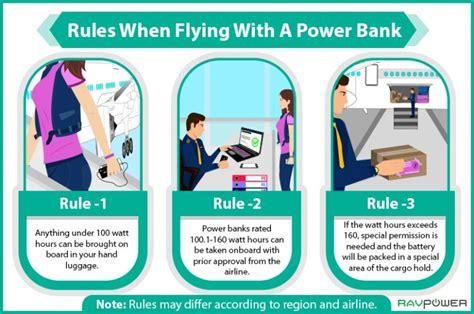
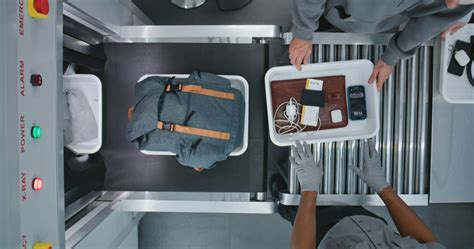
Yes—but with strict limitations. Both the US FAA and the TSA allow passengers to carry lithium-ion batteries only in their carry-on bags, not checked baggage. Airlines typically restrict passengers to two power banks with a combined rating of 100–160 watt-hours (Wh).
Given that many power banks are rated in milliampere-hours (mAh), travelers need to convert accordingly. A 100Wh power bank is roughly equivalent to 27,000 mAh for a standard 3.7V device—enough to fully charge an iPhone 13 Pro Max several times. For compliance, keep your power bank’s capacity below 43,000 mAh unless otherwise stated by the airline.
Here are current policies from major carriers:
- Korean Air: Allows up to five 100Wh battery packs per person.
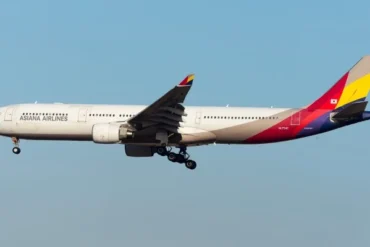
- Asiana Airlines: Requires short-circuit proof packaging for spare batteries under 160Wh.
- Singapore Airlines & Scoot: Permit up to 100Wh without approval, 100–160Wh requires pre-approval.
- Cathay Pacific: Limits power banks to under 100Wh.
- Hong Kong Express: Requires individual protection for each battery, limited to 100Wh.
- Virgin Australia: Demands non-conductive insulation or original packaging for carry-on only.
Misuse and Aging: Overlooked Risks to Aviation
The danger isn’t just in capacity—it’s in how power banks are used, stored, and maintained. Misuse, such as overcharging or using low-quality cables, can push the battery beyond its thermal limits. Aging batteries, particularly those with visible swelling or discolored casing, pose a heightened risk of internal short circuits.
Manufacturing defects are also a serious concern. Inexpensive or counterfeit power banks, which may lack robust internal protections, are especially prone to catastrophic failure. Airlines and regulators now encourage passengers to inspect power banks before travel and to dispose of damaged units responsibly.
The Passenger’s Dilemma: Convenience vs. Safety
Chrystal Zhang, an associate professor at RMIT University, acknowledges that power banks are a necessity for modern travelers—especially on long-haul routes or when airport charging stations are unavailable. “Passengers rely on these devices for productivity, entertainment, and communication,” Zhang told CNN. But the blanket bans on using them in-flight can feel like an overcorrection, especially for business travelers or families.
Still, the priority must be safety. A single fire at 35,000 feet could lead to a catastrophic scenario. The aviation industry’s primary responsibility is to eliminate in-flight ignition sources, and lithium batteries remain a statistically significant risk.
What Can Be Done? Safer Travel Practices for Power Bank Users
To reduce the risk while maintaining convenience, passengers should follow these best practices:
- Check watt-hour rating before flying. Ensure it’s within the airline’s approved range.
- Insulate terminals with tape or keep power banks in original retail packaging.
- Avoid charging power banks in-flight, even if permitted.
- Don’t pack power banks in checked luggage.
- Inspect for physical damage or bloating before travel. Discard any suspicious units.
- Use brand-name, certified models from reputable manufacturers.
Conclusion: A Shifting Regulatory Landscape
The global air travel industry is in the midst of a critical reassessment of how it handles portable lithium-ion battery technology. From South Korea to Singapore and beyond, the wave of new rules reflects an urgent need to prevent preventable disasters. For passengers, this means adjusting behaviors and staying informed on ever-evolving airline policies.
While the power bank remains a valuable travel companion, its safe use requires diligence and responsibility. As the regulatory landscape continues to evolve, passengers must remain proactive, informed, and cautious—because in the air, one spark is one too many.