Qantas and its budget arm Jetstar will implement a strict ban on the use of portable power banks during flights starting December 15, 2025, marking a significant escalation in aviation safety policies concerning lithium battery-powered devices. This change comes in response to an alarming uptick in incidents involving thermal runaway fires caused by faulty or uncertified power banks.
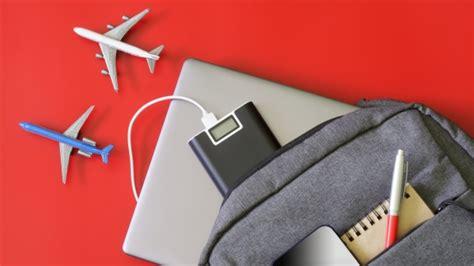
Passengers on Qantas, Jetstar, and QantasLink flights will still be allowed to carry a maximum of two power banks, but these must be stored within immediate reach—such as under the seat or in a seat pocket. Importantly, passengers will be prohibited from using these devices to charge electronics in-flight, and the aircraft’s own in-seat power supply must not be used to recharge power banks. These devices also must not exceed 160 watt-hours, and labeling with clear battery specifications is mandatory.
The move aligns Qantas Group with a wave of similar measures taken across the airline industry as global concern over the safety of lithium-ion batteries escalates. The primary risk stems from a phenomenon known as thermal runaway, where internal cell failures trigger uncontrollable heat buildup, often resulting in fires, explosions, and the emission of toxic gases. These fires are notoriously difficult to contain due to the high temperatures generated and the chain reaction that propagates through adjacent cells.
Until recently, airlines mainly considered lithium battery fires a risk only if the device was physically damaged, such as when crushed inside a seat mechanism. However, a series of recent incidents have revealed that many fires now originate spontaneously, even when devices appear to be undamaged.
One of the most alarming cases occurred in January 2025, when a power bank exploded inside an overhead bin aboard an Air Busan Airbus A320 in South Korea. As the aircraft prepared for takeoff, smoke erupted from a bin, quickly followed by flames that engulfed the cabin. Although passengers were safely evacuated, the aircraft was left gutted and deemed a total loss.
Such incidents have prompted a broader reevaluation of battery-related safety protocols, with Virgin Australia also set to enforce similar rules starting December 1, 2025. While Virgin will not cap the number of power banks carried by passengers, it maintains identical usage restrictions. Both carriers are coordinating with international aviation authorities, including the International Air Transport Association (IATA) and the oneworld alliance, signaling a unified industry approach to managing in-cabin battery risks.
Meanwhile, the International Civil Aviation Organization (ICAO) is reviewing global regulations, and sweeping updates could arrive as early as 2026. Presently, international guidelines prohibit lithium batteries in checked luggage but remain surprisingly lenient when it comes to in-cabin use. That status quo is under imminent threat as aviation regulators grapple with the rising frequency of unprovoked battery failures.
The tightening restrictions reflect a consensus that not all power banks are created equal. Many travelers purchase power banks from low-cost online retailers that lack reliable safety certification or proper labeling. These substandard products often use inferior cells or lack thermal cutoffs, significantly increasing the risk of catastrophic failure at high altitudes.
Comparatively, Qantas’ new rules place it in the middle tier of stringency among global carriers:
- Singapore Airlines permits up to 15 power banks, each under 100Wh, with limited higher-capacity allowances.
- Lufthansa allows 20 devices with 100Wh and 2 extra up to 160Wh.
- Other carriers like Emirates, British Airways, and United enforce strict bans on in-flight use but differ on storage policies and quantity limits.
As the aviation world braces for a paradigm shift in lithium battery regulation, travelers are advised to inspect their devices carefully before flying. Look for CE or UL safety certification, visible battery capacity labels, and manufacturer information. Always pack batteries in carry-on luggage, never in checked bags, and ensure they are not left unattended during the flight.
The upcoming restrictions signal that the days of casually charging devices mid-air are coming to an end. With lithium battery fires posing a credible and increasing threat to flight safety, airlines like Qantas are prioritizing preventive action to avoid disasters before they happen.