Becoming a U.S. Navy pilot is one of the most demanding career paths available to a military officer. Naval aviators are expected to master complex aircraft, operate in challenging environments, maintain demanding qualification standards, and lead sailors and fellow officers while carrying out missions that can directly affect national security. The financial compensation reflects that responsibility, although an aviator’s total military compensation involves considerably more than basic salary.
In 2026, a Navy pilot’s base pay depends primarily on officer rank and years of service rather than the particular aircraft being flown. An F/A-18 pilot, P-8A Poseidon pilot, MH-60S helicopter pilot, and F-35C pilot do not automatically receive different basic salaries simply because their aircraft have different capabilities. Instead, compensation rises as an officer gains experience, advances through the commissioned ranks, and becomes responsible for increasingly complex missions and larger organizations.
That distinction is important when discussing Navy pilot salaries in 2026. A newly commissioned Ensign may earn substantially less in basic pay than an experienced Commander, but the junior officer is also at the beginning of a career that can eventually lead to squadron command and senior leadership positions. In addition to base pay, eligible naval aviators may receive aviation-related incentive pay and other allowances, meaning the headline salary does not necessarily represent the full value of military compensation.
How Much Does a US Navy Pilot Make in 2026?
The supplied 2026 figures illustrate how compensation increases with rank and experience. An Ensign (O-1) with two or fewer years of service is listed at approximately $4,150.20 per month, equivalent to $49,802.40 annually before taxes. At this stage, the officer is still building fundamental flying experience and developing the qualifications needed for operational service.
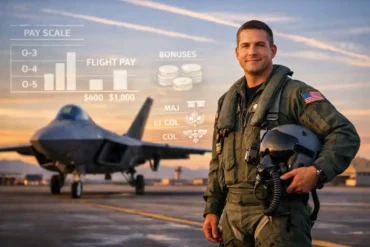
A Lieutenant Junior Grade (O-2) with two or more years of experience is listed at approximately $5,446 per month, or about $65,354 per year. A Lieutenant (O-3) with four or more years of service reaches approximately $7,383 per month, equivalent to $88,596 annually. By the time an officer becomes a Lieutenant Commander (O-4) with six or more years of experience, the supplied figure rises to approximately $8,332 per month, or $99,984 per year.
At the senior operational level represented in the reference figures, a Commander (O-5) with ten or more years of service receives approximately $9,929 per month, translating to $119,148 annually in basic pay. These figures show an important feature of the military pay system: career progression can have a larger effect on basic salary than the aircraft type itself.
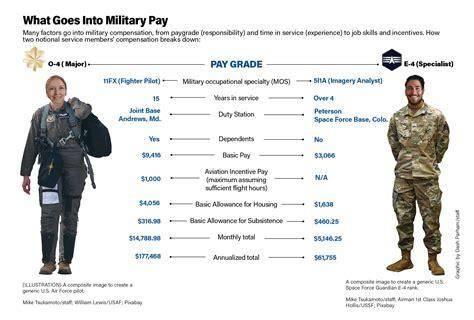
The numbers should therefore be viewed as representative basic-pay figures, not a complete calculation of every dollar a naval aviator could receive. Actual compensation can vary depending on years of service, eligibility for aviation incentive pay, housing arrangements, location, dependents, deployment circumstances, and other military benefits.
The Long Road to Becoming a Naval Aviator
The financial story begins long before a pilot reaches an operational squadron. Prospective naval aviators first receive commissions through routes such as the U.S. Naval Academy, Officer Candidate School, or Naval Reserve Officers Training Corps. From there, aviation students generally proceed to Naval Air Station Pensacola and begin the demanding process of flight training.
The journey from entering flight training to earning the famous “Wings of Gold” generally takes around 18 to 24 months, although individual timelines can vary. Students study subjects including aerodynamics, aircraft engines, navigation, aviation physiology, and other technical disciplines before progressing into increasingly advanced flight training. Naval aviation is not simply about learning to control an aircraft. Students must learn to operate safely, understand sophisticated systems, manage emergencies, and perform under pressure.
Training is divided according to the aircraft category eventually selected. The supplied reference material indicates that jet training can take roughly 50 to 54 weeks, while propeller-driven aircraft training may require approximately 17 to 22 weeks, and helicopter training around 20 to 24 weeks. These stages form only part of the journey because receiving the wings does not mean the aviator has finished learning.
After earning their wings, newly qualified naval aviators generally move to a Fleet Replacement Squadron, commonly known as the RAG or Replacement Air Group. This stage can last approximately six to twelve months. Pilots learn the specific aircraft they will operate in the fleet, including advanced systems, tactics, emergency procedures, mission planning, and operational qualifications.
Only after completing this process does the aviator move into a fleet squadron. In other words, the salary paid to a Navy pilot reflects not just time spent sitting in a cockpit, but years of training and preparation for a profession in which mistakes can have exceptionally serious consequences.
Ensign Salary: The Starting Point for a Navy Pilot
The O-1 Ensign represents the entry point for a commissioned Navy officer. The supplied 2026 figure of approximately $49,802 per year in basic pay may appear modest when compared with civilian commercial aviation salaries, but a Navy pilot’s career structure is fundamentally different.
A newly assigned aviator is still developing operational experience. In a helicopter squadron, for example, an Ensign flying an MH-60S Seahawk may initially serve as a co-pilot while accumulating flight hours and expanding the number of qualifications held. The officer can be expected to study aircraft systems, emergency procedures, tactics, mission planning, and operational doctrine while simultaneously developing practical flying skills.
The MH-60S is a highly versatile platform capable of supporting missions ranging from logistics and search and rescue to special warfare support and intelligence, surveillance, and reconnaissance activities. Its crews can also participate in anti-submarine, surface warfare, electromagnetic warfare, command-and-control, and other operations. The junior pilot therefore learns much more than aircraft handling.
The early years are also when naval officers begin developing leadership skills. Even while learning from more experienced pilots, an Ensign is part of a military organization with responsibilities that extend beyond flight operations.
Lieutenant Junior Grade Salary and Increasing Responsibility
Promotion to Lieutenant Junior Grade, or O-2, marks an important step in a naval aviator’s professional development. The reference material gives an initial figure of approximately $5,446 per month, or $65,354 annually, for an LTJG with two or more years of experience.
An officer at this level may be flying aircraft such as the C-2A Greyhound in the reference example. Although the Greyhound has a very different mission from a fighter aircraft, flying it requires substantial technical knowledge and disciplined crew coordination. Its primary role historically involved transporting personnel, mail, cargo, aircraft components, and other high-priority loads between aircraft carriers and shore facilities.
For an LTJG, responsibilities can include communications, navigation, aircraft systems management, approach procedures, and assisting the senior pilot during flight operations. The officer is also expected to continue building qualifications and understanding the broader operational environment.
This stage demonstrates why simply comparing military pay with civilian pilot salaries can be misleading. A naval aviator is developing simultaneously as a pilot, officer, leader, and military specialist. Compensation is tied to the officer’s career progression rather than being calculated solely according to flight hours.
Lieutenant Salary: The Operational Fleet Pilot
The Lieutenant (O-3) level represents a major transition into experienced operational service. The supplied 2026 figure is approximately $7,383 per month, or $88,596 annually, for an officer with four or more years of service.
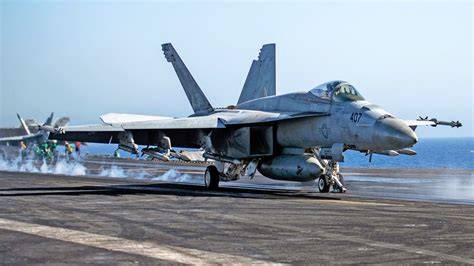
A Lieutenant flying an F/A-18E/F Super Hornet may be expected to reach full combat qualification, including carrier operations and mission readiness. That means the officer has progressed far beyond basic flight training. Carrier aviation requires precise procedures, disciplined teamwork, tactical knowledge, and the ability to operate an aircraft in a highly demanding environment.
The Lieutenant also begins carrying substantial responsibilities outside the cockpit. These can include training junior officers, safety oversight, scheduling, administration, and serving in organizational leadership positions. The officer may become responsible for helping less experienced aviators develop the same skills that were previously taught to them.
At this stage, a naval aviator’s value is therefore measured by more than the ability to fly a high-performance aircraft. The officer is becoming an essential part of the squadron’s leadership structure.
Lieutenant Commander Salary: The Experienced Navy Pilot
Promotion to Lieutenant Commander (O-4) brings another significant increase in responsibility. The reference material lists approximately $8,332 per month, or $99,984 annually, for an officer with six or more years of service.
A Lieutenant Commander operating a P-8A Poseidon, for example, may serve as the aircraft commander and have responsibility for an entire crew. The P-8A is designed for demanding maritime missions, including anti-submarine warfare, anti-surface warfare, intelligence, surveillance and reconnaissance, search and rescue, and communications.
The aircraft’s crew structure makes leadership particularly important. The aircraft commander must coordinate pilots, tactical personnel, sensor operators, and other specialists while ensuring that the mission is conducted safely and effectively. The pilot must understand not only how the aircraft operates but also how the crew’s various functions combine to accomplish the mission.
Experienced officers can also become instructors and mentors. They help improve aircrew qualifications, develop tactics, plan missions, and prepare younger aviators for greater responsibility. The increase in compensation reflects this broader role as an operational leader.
Commander Salary: The Senior Naval Aviator
At the Commander (O-5) level, the reference material lists approximately $9,929 per month, or $119,148 annually, for an officer with ten or more years of service. This represents a substantial increase over the salary of a newly commissioned Ensign.
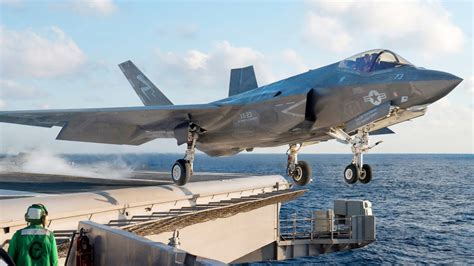
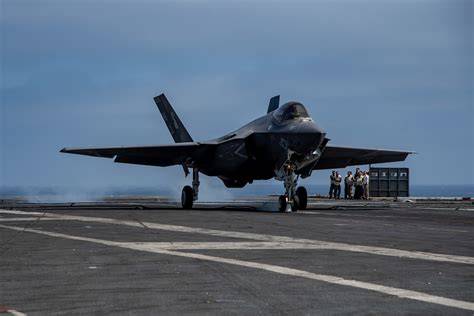
A Commander associated with an F-35C Lightning II may serve as the commanding officer of a Navy fighter squadron. At this point, the officer’s primary responsibility is no longer simply to fly an aircraft. The Commander must lead the squadron, establish operational priorities, oversee training, manage personnel, enforce safety standards, and ensure that the unit remains capable of generating combat-effective sorties.
Before deployment, squadron personnel undergo extensive preparation. Training can progress from individual certifications to squadron-level exercises and then to larger wing and strike-group events. The commanding officer has a central role in ensuring that pilots and other personnel meet the required standards.
The F-35C itself adds another layer of complexity. Designed for carrier operations, the aircraft combines advanced sensors, stealth characteristics, networking capabilities, and precision weapons into a single platform. Yet even the most advanced aircraft depends on people who can operate it effectively and integrate it into a larger military system.
Navy Pilot Pay Includes More Than Basic Salary
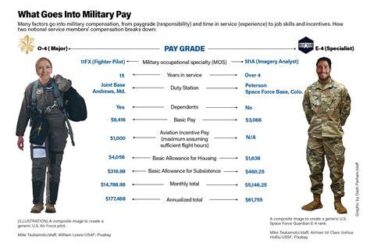
One of the most important points when examining US Navy pilot salaries in 2026 is that basic pay is only one part of total military compensation. Eligible aviators may receive additional forms of compensation depending on their circumstances and career status.
Aviation-related incentive compensation can be particularly relevant because military aviation requires specialized training and continued qualification. Housing and subsistence benefits can also materially affect an officer’s overall financial package, while location and family circumstances may influence the value of certain allowances.
Military service also provides benefits that are not easily represented by a simple annual salary figure. Healthcare, retirement provisions, paid leave, education benefits, and other programs can contribute significantly to the overall value of a Navy career.
For this reason, comparing a Navy pilot’s basic salary directly with the headline salary of an airline pilot does not provide a complete financial picture. Civilian airline compensation can become substantially higher at senior levels, but the career structures, responsibilities, benefits, and employment conditions are fundamentally different.
Why Navy Pilots Are Paid According to Rank
The Navy’s pay structure reflects its organizational philosophy. An aviator does not receive a completely different basic salary simply because one pilot flies an F-35C while another operates an MH-60S. Instead, rank and years of service establish the foundation of basic pay.
That approach makes sense within a military organization. A senior officer is responsible for more than individual technical performance. They may command personnel, manage resources, develop operational plans, enforce standards, and make decisions affecting an entire unit.
Consequently, the progression from Ensign to Lieutenant Junior Grade, Lieutenant, Lieutenant Commander, and Commander represents both increasing compensation and increasing responsibility. The cockpit remains important, but leadership becomes progressively more central to the job.
The Real Value of a US Navy Pilot Career
The salary figures for 2026 provide a useful snapshot of what naval aviators can earn, but they do not fully explain why officers pursue the profession. Becoming a Navy pilot requires an extraordinary investment of time, effort, and discipline. The training pipeline is lengthy, operational assignments are demanding, and the responsibilities can involve significant personal risk.
Naval aviators may fly helicopters, turboprops, maritime patrol aircraft, carrier-based fighters, and advanced fifth-generation aircraft. Regardless of platform, they operate as part of a much larger organization whose missions can extend across oceans and involve aircraft carriers, surface ships, submarines, shore installations, and joint military forces.
The progression in pay mirrors that career journey. An Ensign begins by learning. A Lieutenant becomes an experienced operational aviator. A Lieutenant Commander becomes a senior aircraft and mission leader. A Commander may ultimately be responsible for an entire squadron. Each step brings greater authority and a corresponding increase in compensation.
US Navy Pilot Salaries in 2026: The Bottom Line
The supplied 2026 figures place basic annual pay at approximately $49,802 for an O-1 Ensign, $65,354 for an O-2 Lieutenant Junior Grade, $88,596 for an O-3 Lieutenant, $99,984 for an O-4 Lieutenant Commander, and $119,148 for an O-5 Commander at the experience levels described.
Those numbers reveal a steady progression, but the larger story is the relationship between compensation and responsibility. Navy pilots are not simply paid to fly aircraft. They are commissioned officers expected to master complex technology, maintain demanding qualifications, lead personnel, plan missions, manage risk, and remain prepared for operations around the world.
For someone considering a military aviation career, the financial calculation should therefore extend beyond the basic salary column. Training, aviation-related compensation, allowances, healthcare, retirement benefits, education opportunities, and long-term career progression all contribute to the overall package.
The Navy’s aircraft may have changed dramatically since Theodore G. Ellyson began his aviation training in 1910, but one principle remains recognizable: naval aviation demands exceptional commitment. In 2026, the compensation structure reflects that commitment through a career ladder in which increasing expertise, leadership, and responsibility lead to steadily higher pay.