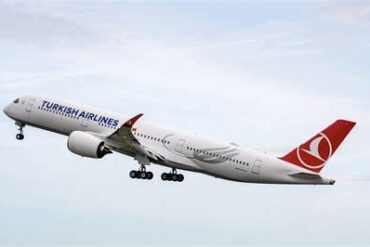
Turkish Airlines is preparing for one of the most ambitious long-haul expansions in global aviation, pushing its network deeper into ultra-long-range territory with flights stretching beyond 20 hours. From Australia to South America and North America, the airline’s 2026 schedule reveals how Istanbul is evolving into one of the world’s most powerful connecting hubs. While Gulf carriers traditionally dominate discussions about ultra-long-haul travel, Turkish Airlines is quietly building a network capable of linking secondary European, Balkan, Middle Eastern, and African cities to some of the planet’s most distant destinations through a single stop in Istanbul.
The airline’s latest operational schedule between June 2026 and March 2027 highlights ten massive routes that now define the carrier’s long-distance ambitions. Many of these services combine nonstop and one-stop sectors into a single passenger itinerary, creating journey times that rival the longest commercial flights ever scheduled.
Turkish Airlines already ranks among the world’s largest international airlines by flight volume. Nearly all of its operations revolve around Istanbul Airport, a mega-hub strategically positioned between Europe, Asia, Africa, and the Americas. That geographical advantage allows the carrier to funnel passengers from dozens of smaller markets into extremely long intercontinental services that would otherwise be impossible to sustain.
The result is a route map increasingly built around endurance, connectivity, and global reach.
By 2026, Turkish Airlines will operate more than 1,100 daily movements at Istanbul Airport, reinforcing the airport’s role as one of the busiest international transfer centers on Earth. Despite geopolitical challenges, including regional airspace restrictions and suspended services near Iran, the airline continues expanding toward distant, high-demand markets.
The most fascinating part of the network is how these flights are structured. Unlike traditional point-to-point ultra-long-haul operations, Turkish Airlines often combines strategic stopovers with massive connecting flows from Europe, the Balkans, Central Asia, and the Middle East.
Turkish Airlines’ Longest Flight Reaches Nearly 22 Hours
The airline’s longest passenger service in 2026 will connect Sydney Kingsford Smith Airport to Istanbul via Kuala Lumpur, with a staggering block time of up to 21 hours and 40 minutes on the return journey to Turkey.
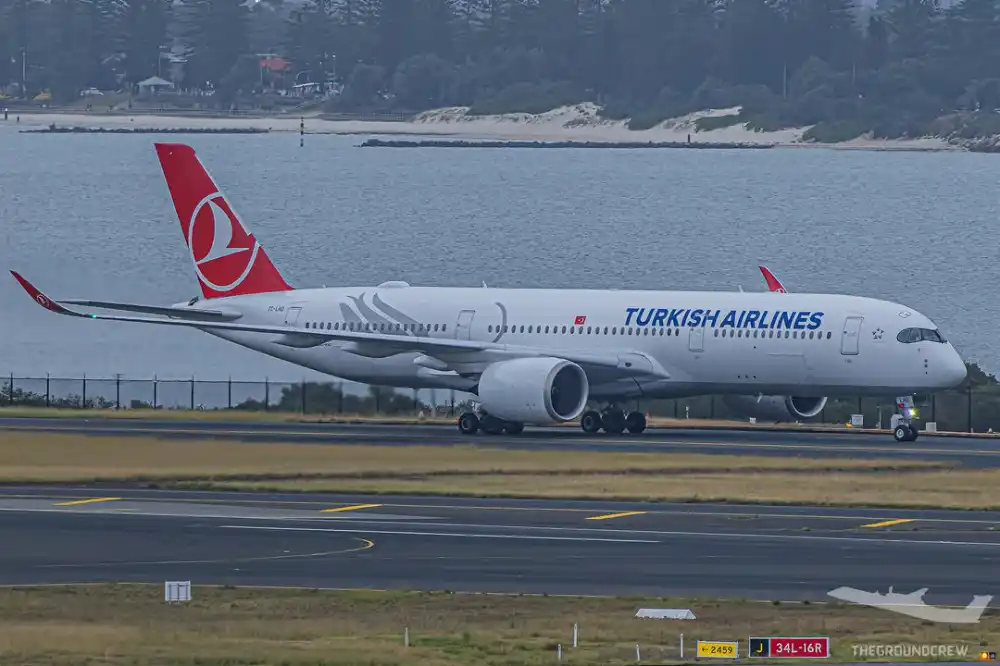
This route demonstrates how modern airline strategy has evolved beyond simple nonstop flying. Turkish Airlines does not possess traffic rights to carry local passengers solely between Sydney and Kuala Lumpur, meaning the service is carefully designed around Istanbul-bound transfer traffic. The return sector becomes even longer because of powerful headwinds and rerouting requirements that avoid Iranian airspace.
The Sydney operation has rapidly become one of the airline’s most strategically valuable long-haul services. Although the route only launched in late 2024, booking trends reveal enormous demand from connecting passengers traveling beyond Istanbul into Europe and the Balkans.
Interestingly, only a small percentage of passengers fly exclusively between Sydney and Istanbul. Most travelers continue onward to destinations such as London, Athens, Belgrade, Paris, Berlin, Rome, and Skopje. That connecting traffic is precisely what makes Turkish Airlines so powerful in long-haul aviation. The airline succeeds not merely because it links major cities, but because it connects dozens of underserved regional markets through a single global hub.
The Sydney route will operate five times weekly using the Airbus A350-900, one of the airline’s most important next-generation aircraft for ultra-long-range operations.
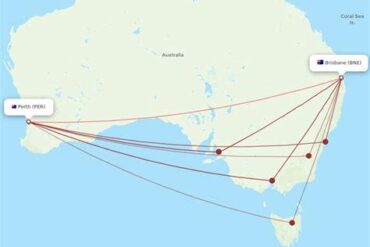
Melbourne Flights Highlight Turkish Airlines’ Australian Expansion
Melbourne ranks as Turkish Airlines’ second-longest passenger service, with flights back to Istanbul via Singapore reaching block times of 21 hours and 15 minutes.
Unlike the Sydney service, Turkish Airlines does hold traffic rights on the Melbourne–Singapore sector, giving the airline more operational flexibility in Australia. Melbourne was also the carrier’s first destination in the country, marking a major milestone in Turkish Airlines’ long-term Asia-Pacific ambitions.
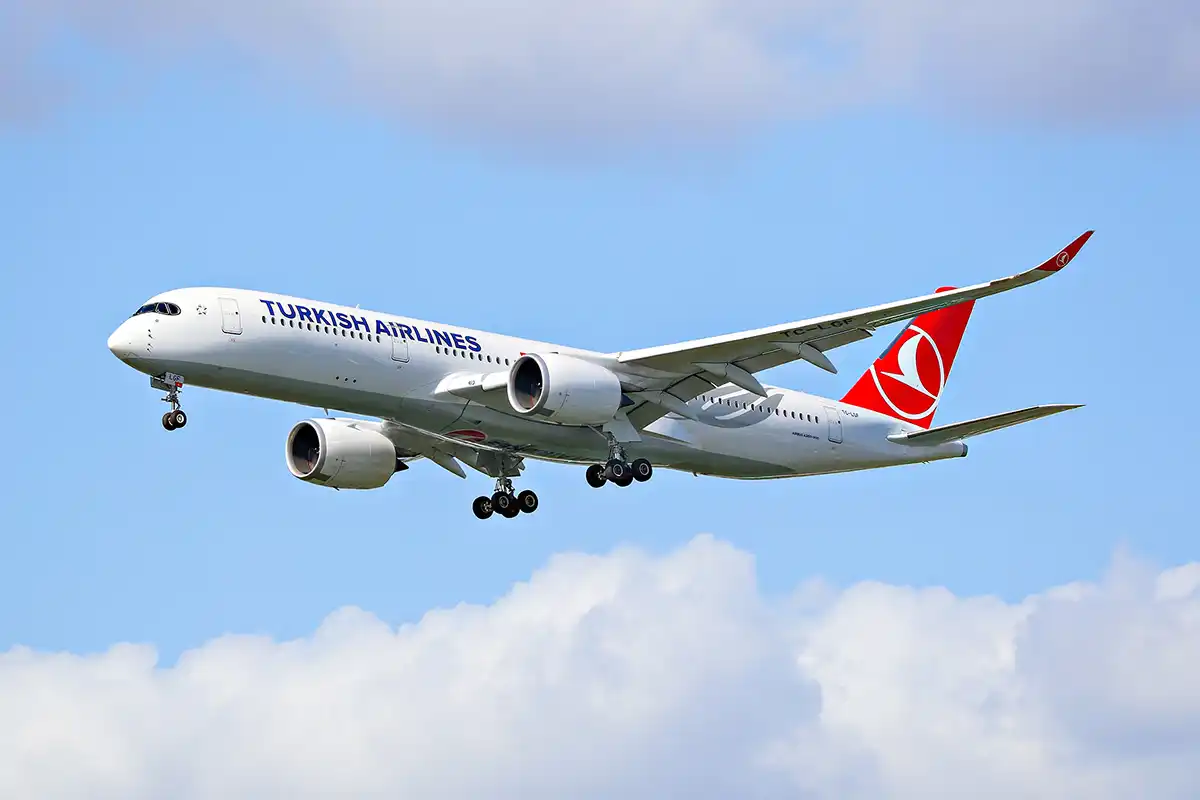
Despite strong demand, Melbourne remains limited to only three weekly flights. The relatively low frequency reflects an ongoing shortage of widebody aircraft across the global aviation industry. Turkish Airlines continues receiving additional Airbus A350s and Boeing 787 Dreamliners, but demand for long-haul capacity still exceeds supply.
Passenger data shows that Melbourne travelers overwhelmingly use Istanbul as a transfer gateway into Southern Europe, Eastern Europe, and Türkiye itself. Cities such as Athens, Sarajevo, Ohrid, Adana, Ankara, and Belgrade generate particularly strong demand because Turkish Airlines offers routing options unavailable through many competing airlines.
The Australian expansion also signals a larger competitive battle emerging between Turkish Airlines, Gulf carriers, and European airlines for traffic flowing between Oceania and Europe.
South America Becomes A Major Long-Haul Battleground
Turkish Airlines is aggressively strengthening its South American network, with Santiago, Buenos Aires, and Panama City all appearing among its longest routes.
Flights from Istanbul to Santiago via São Paulo now reach block times exceeding 20 hours, making the Chilean capital the airline’s third-longest passenger link. The route operates daily using the Airbus A350-900 and represents one of the most geographically ambitious services in the network.
South America presents enormous strategic potential for Turkish Airlines because Istanbul can function as a highly efficient transfer hub between Latin America and Eastern Europe, the Balkans, Central Asia, and the Middle East.
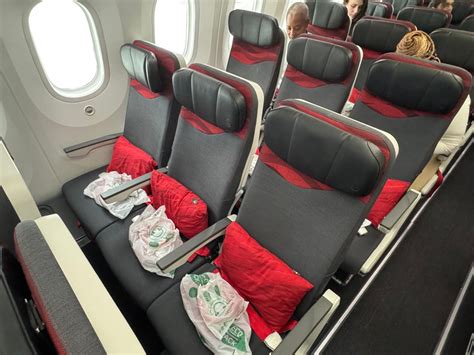
Buenos Aires also ranks among the carrier’s longest flights, with services via São Paulo approaching 18 hours and 30 minutes. Meanwhile, Panama City via Bogotá has become another increasingly important market, particularly for business and connecting traffic.
What makes the Panama route especially fascinating is the diversity of destinations passengers connect to beyond Istanbul. Booking trends reveal strong demand not only for Europe but also for cities such as Mumbai, Moscow, Beijing, Dubai, and Delhi. Turkish Airlines has effectively transformed Istanbul into a crossroads between Latin America and Asia.
That strategy mirrors the global hub model perfected by Gulf airlines, yet Turkish Airlines possesses one unique advantage: direct access to Europe’s massive short-haul and medium-haul network.
North American Routes Continue Growing Longer
While one-stop services dominate the upper half of the rankings, nonstop flights to the United States also feature prominently among Turkish Airlines’ longest routes.
Los Angeles emerges as the carrier’s longest nonstop operation, reaching flight times of more than 15 hours. The route is primarily served using Boeing 777-300ER and Boeing 787-9 aircraft, both optimized for dense long-haul international travel.
San Francisco, Houston, and Dallas/Fort Worth also appear among the airline’s top ten longest services. These routes are increasingly important because Turkish Airlines has successfully positioned itself as a preferred connector between North America and secondary destinations across Europe, Central Asia, Africa, and the Middle East.
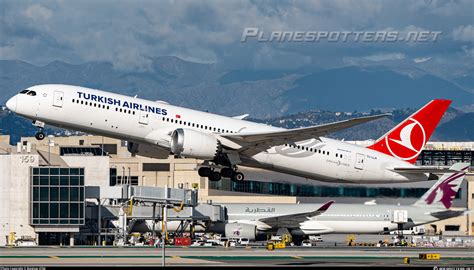
The airline’s North American growth reflects a broader trend reshaping international aviation. Travelers increasingly prioritize one-stop itineraries offering efficient connections to destinations beyond traditional European hubs such as London, Paris, or Frankfurt.
Istanbul’s location provides a powerful geographic advantage. Flights from the United States can connect seamlessly onward to dozens of cities that would otherwise require multiple layovers through Western Europe.
Istanbul’s Mega-Hub Strategy Is Reshaping Global Aviation
Turkish Airlines’ expanding ultra-long-haul network demonstrates how aviation is evolving into a battle of global transfer ecosystems rather than simple nonstop routes.
The airline’s strategy relies on funneling passengers from hundreds of city pairs through Istanbul, allowing ultra-long-haul services to remain commercially sustainable even when local demand alone would never justify them.
This model has turned Turkish Airlines into one of the fastest-growing intercontinental carriers in the world. The airline is no longer simply competing with European legacy carriers. It is increasingly challenging the dominance of Gulf giants in connecting Europe, Asia, Oceania, Africa, and the Americas.
As new aircraft continue joining the fleet and Istanbul Airport expands further, Turkish Airlines appears positioned to push even deeper into ultra-long-haul territory. More Australian destinations, additional South American frequencies, and expanded North American services are all likely possibilities over the next decade.
For passengers, that means more one-stop access to distant destinations than ever before. For competitors, it signals a rapidly intensifying fight over the future of global long-haul aviation.