A New Era of Ultra-Long-Haul Aviation Dominance
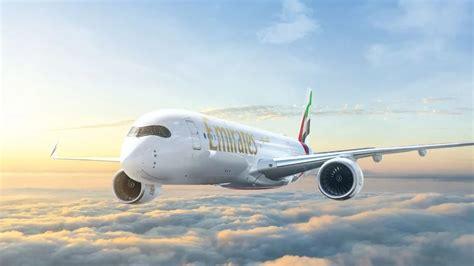
Emirates is not merely expanding its network—it is stretching the very definition of long-haul travel. In 2026, the Dubai-based carrier is pushing boundaries with a portfolio of routes that extend up to 22 hours and 25 minutes, blending operational precision with strategic market positioning. With a fleet composed entirely of widebody aircraft, including Boeing 777s, Airbus A380s, and A350-900s, Emirates has engineered a system that maximizes both range and passenger capacity, reinforcing its dominance in global aviation.
What makes these routes remarkable is not just their duration, but the complex orchestration of logistics, passenger demand, and geopolitical factors. Emirates has consistently ranked as a leader in long-haul connectivity, and this latest expansion demonstrates how it continues to leverage its Dubai hub as a global crossroads linking continents with efficiency and ambition.
The Longest Journey: Dubai to Bogotá via Miami
The crown jewel of Emirates’ 2026 network is the Dubai–Miami–Bogotá route, clocking in at an astonishing 22 hours and 25 minutes. This journey is not just long—it is strategically brilliant. By incorporating a stop in Miami, Emirates taps into multiple revenue streams while optimizing aircraft utilization.
Passengers traveling onward to Colombia must clear immigration in the United States, adding a layer of complexity, yet the route’s design allows Emirates to capitalize on fifth freedom rights, enabling ticket sales between Miami and Bogotá. This transforms what could have been a logistical burden into a profitable multi-market operation.
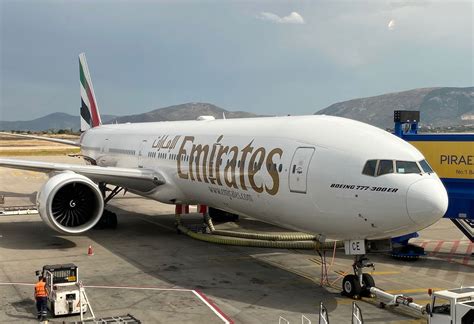
The use of the four-class Boeing 777-300ER, equipped with first class, ensures that even on such extended journeys, travelers experience premium comfort across all cabins. The route’s reinstatement in May 2026 signals renewed confidence despite prior disruptions, including geopolitical tensions affecting regional operations.
Second to Fifth Longest Routes: Strategic Stops and Smart Engineering
Close behind is the Dubai–Barcelona–Mexico City service, reaching up to 22 hours and 15 minutes. This route illustrates how geography and physics shape aviation strategy. Mexico City’s high altitude reduces aircraft performance, making nonstop flights impractical with full payloads. The Barcelona stopover is not a compromise—it is a carefully engineered solution that also opens a lucrative European market.
The third longest route, Dubai–Rio de Janeiro–Buenos Aires, demonstrates Emirates’ commitment to South America. At just over 20 hours, it balances regional connectivity with long-haul efficiency, offering passengers seamless access between continents.
Meanwhile, routes like Christchurch–Sydney–Dubai and Dubai–Milan–New York JFK showcase the airline’s ability to integrate high-demand city pairs with extended itineraries, maintaining both frequency and profitability.
These routes are not simply long—they are carefully layered networks designed to maximize aircraft usage while serving multiple high-demand corridors.
Sixth to Tenth: Expanding Reach Across the Americas and Beyond
Further down the list, Emirates continues to demonstrate its global reach and operational consistency. The Dubai–Athens–Newark route ranks sixth, combining European and North American demand into a single extended journey. This hybrid approach reflects a broader strategy: turning stopovers into revenue generators rather than operational necessities.
The Auckland–Dubai nonstop service, though shorter at around 17 hours, remains the airline’s longest uninterrupted flight, emphasizing its capability in ultra-long-range operations. It is a reminder that while one-stop routes may be longer in duration, nonstop flights still represent the technological pinnacle of aviation endurance.
Routes to major U.S. cities—Houston, Los Angeles, Dallas/Fort Worth, and Orlando—round out the top ten. Each operates with high-capacity aircraft like the A380, ensuring that even ultra-long flights maintain economies of scale.
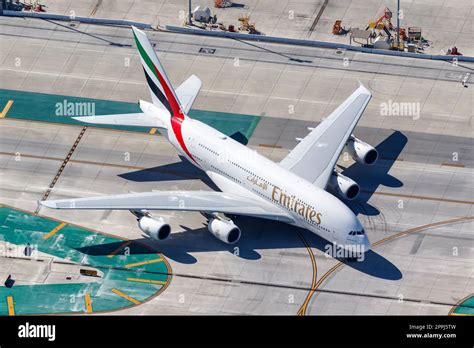
Interestingly, some of these routes persist despite fluctuating demand. Orlando, for instance, recorded a 72.2% seat load factor, yet Emirates continues to invest, signaling a long-term growth strategy rather than short-term optimization.
Why One-Stop Flights Are Sometimes Longer Than Nonstop
A common assumption is that nonstop flights are always the longest. Emirates’ network challenges that idea. One-stop routes can exceed nonstop durations due to ground time, taxiing, and scheduling buffers. These “block times” include everything from gate departure to arrival, offering a more realistic picture of total travel time.
This approach allows Emirates to expand its network without relying solely on aircraft range limitations. By strategically placing stops, the airline can serve destinations that would otherwise be unreachable nonstop while also capturing additional passenger markets along the way.
Fleet Power: The Backbone of Ultra-Long Routes
None of this would be possible without Emirates’ formidable fleet. Its 129 Boeing 777s, 116 Airbus A380s, and growing A350 presence provide unmatched flexibility. Each aircraft type plays a specific role:
- 777-300ER: Ideal for long-haul routes with premium-heavy configurations
- A380: High-capacity flagship for dense international corridors
- 777-200LR: Specialized for ultra-long-range missions
This fleet strategy enables Emirates to match aircraft capabilities with route demands, ensuring both efficiency and passenger comfort.
The Passenger Experience on 20+ Hour Flights
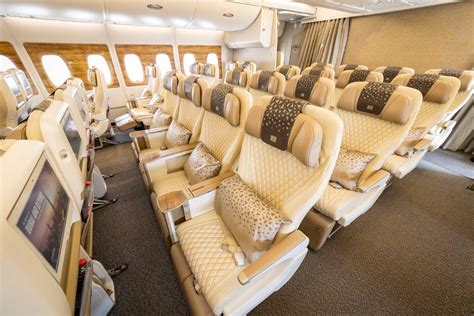
Ultra-long-haul flights are as much about endurance as they are about comfort. Emirates addresses this with multi-class cabins, advanced in-flight entertainment, and carefully designed seating ergonomics. On flights exceeding 20 hours, these details are not luxuries—they are necessities.
Passengers benefit from spacious cabins, curated dining experiences, and onboard amenities that reduce fatigue and enhance the journey. The airline’s focus on experience ensures that even the longest routes remain appealing rather than daunting.
A Glimpse Into the Future of Global Travel
Emirates’ 2026 route expansion is more than a schedule update—it is a blueprint for the future of aviation. By combining ultra-long-haul capability with strategic stopovers, the airline is redefining how distance, time, and connectivity interact.
These routes highlight a shift toward hyper-connected global networks, where passengers can traverse continents with fewer barriers and greater efficiency. As technology advances and demand evolves, the line between long-haul and ultra-long-haul will continue to blur.
In this landscape, Emirates is not just participating—it is setting the pace, proving that even in an industry defined by limits, there is always room to go further.