Severe summer storms swept across Canada on July 1, 2025, bringing air travel to a virtual standstill across the country’s busiest airports. From Toronto Pearson to Vancouver, Montreal, Calgary, Ottawa, Edmonton, and Halifax, more than 450 flights were either delayed or cancelled, leaving thousands of passengers stranded. The cascading operational breakdown has affected both domestic and international routes, with some passengers experiencing delays exceeding six hours.
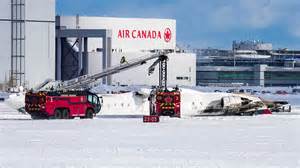
Toronto Pearson: The Eye of the Travel Storm
Toronto Pearson International Airport bore the brunt of the chaos. With 136 delays and 20 cancellations, a staggering 156 flights were disrupted at Canada’s busiest aviation hub. The intense weather—marked by low visibility, pounding rain, and powerful crosswinds—left airlines struggling to maintain runway schedules. Porter Airlines was hit hardest, cancelling 10 flights and delaying another 12, while Air Canada and its regional affiliates, Jazz and Air Canada Rouge, faced dozens of delays.
International airlines were also grounded. Air France, TAP Air Portugal, United Airlines, and others experienced substantial long-haul hold-ups, with average delays ranging from 90 minutes to over four hours. With so many grounded aircraft clogging gates, Pearson quickly became a choke point for nationwide and transcontinental operations.
Vancouver International: Pacific Delays Multiply
Out west, Vancouver International Airport (YVR) experienced 78 delays and 8 cancellations, totaling 86 flight disruptions. The wet and windy Pacific weather played havoc with flight visibility and scheduling. Airlines such as Air Canada, WestJet, Jazz, Pacific Coastal, and Porter faced domestic bottlenecks. Meanwhile, transpacific connections to Tokyo, Seoul, and Delhi stalled as Japan Airlines, Korean Air, Air India, and others delayed or rescheduled departures due to gate congestion and runway occupancy limits.
Notably, some passengers on Asia-bound flights reported being held on board for hours after boarding, only to be disembarked due to aircraft rotation issues. Cathay Pacific and American Airlines saw particularly high rates of delay, with Alaska Airlines reporting a full 100% delay rate.
Montreal-Trudeau: Eastern Corridor in Gridlock
Montréal–Trudeau International Airport (YUL) matched Vancouver with 86 disrupted flights, including 81 delays and 5 cancellations. The primary affected carriers—Air Canada, Jazz, Porter, Air Transat—struggled to navigate crowded tarmacs and turbulent approach paths. Long-haul international carriers like Air France, TAP Air Portugal, and Royal Air Maroc experienced ripple delays, as their scheduled aircraft arrived late from previously grounded airports.
Several European-bound flights were delayed by up to five hours, and in certain cases, aircraft were rerouted to secondary airports due to congestion. Passengers reported poor communication and hours-long queues at rebooking counters.
Calgary and Edmonton: Prairie Disruptions Amplified
Though further inland, Calgary International Airport (YYC) recorded 68 total disruptions (62 delays and 6 cancellations), mostly from WestJet and WestJet Encore, which together accounted for 41 delays. As an important hub for east-west travel in Canada, these issues rippled into Edmonton International Airport (YEG), where 23 flights were affected.
While weather in Alberta was less severe, the backlog from Toronto and Vancouver caused major connection delays. Smaller airlines such as Flair Airlines and Central Mountain Air reported partial to complete disruption of their schedules.
Ottawa and Halifax: Eastern Airports Under Pressure
In the capital, Ottawa Macdonald–Cartier International Airport (YOW) logged 25 total disruptions, mainly from Porter Airlines, which delayed 11 flights and cancelled three. Weather across Ontario and Quebec created significant arrival congestion, impacting traffic flow from Montreal and Toronto.
Further east, Halifax Stanfield International Airport (YHZ) endured 26 total disruptions (20 delays and 6 cancellations). Air Canada and Porter flights into and out of Atlantic Canada were heavily delayed, and smaller regional carriers such as Air Saint Pierre and Pascan Aviation saw 100% delay rates, completely grounding scheduled operations. Even a few U.S.-bound flights operated by American Airlines and Republic Airways were caught in the operational maelstrom.
Ripple Effects and National Totals
The total across seven major Canadian airports rose to 470 disruptions:
- 415 delays
- 55 cancellations
Airports affected most:
- Toronto Pearson: 156
- Vancouver International: 86
- Montreal-Trudeau: 86
- Calgary International: 68
- Halifax International: 26
- Ottawa International: 25
- Edmonton International: 23
These numbers underscore the fragility of Canada’s air travel infrastructure in the face of compounding weather events. What began as localized weather disruptions quickly escalated into a nationwide system overload, as delays in one airport created a domino effect across others.
Air traffic control teams were forced to manage complex reroutes, while baggage crews, gate agents, and airline dispatchers faced operational pressure far beyond routine scheduling.
International Carriers Also Hit
Not just Canadian airlines, but international players suffered heavily:
- Air France: delays at Toronto, Montreal
- TAP Air Portugal: delayed at all major hubs
- United Airlines: delays at Toronto, Calgary
- Japan Airlines and Korean Air: impacted at Vancouver
- Air India: delays at Toronto and Vancouver
Passengers arriving in Canada from international destinations encountered immigration processing backups, as delayed flight clusters overloaded terminal staffing capabilities.
What This Means for Travelers
With ripple delays extending into July 2, airlines are encouraging passengers to:
- Check flight status early and often
- Arrive at airports well in advance
- Be prepared for last-minute gate changes or rebooking scenarios
Air Canada, WestJet, Porter, Jazz, United, Japan Airlines, and others have published travel advisories urging travelers to rebook online where possible to avoid long airport lines.
Many travelers are turning to third-party flight trackers, airline apps, and digital concierge services to stay ahead of changes. However, call centers remain overwhelmed, and some passengers have reported multi-hour waits just to speak to a representative.
Systemic Vulnerabilities Laid Bare
The crisis highlights how Canada’s aviation network—though efficient under normal conditions—remains extremely sensitive to disruption. Airports like Toronto Pearson already operate at near maximum capacity, and when multiple aircraft are grounded due to weather, there is little room for operational recovery.
What exacerbated this particular incident was the simultaneous nature of the storms: widespread systems stretched from British Columbia to the Maritimes, meaning no airport could act as a fallback. Even smaller regional hubs experienced residual delays, demonstrating the interconnected fragility of Canada’s flight operations.
Next Steps and Future Precautions
As summer continues and climate patterns become increasingly erratic, airlines and airports may need to re-evaluate operational thresholds for weather response. Real-time coordination between meteorological services, airport authorities, and airline operations centers will become more critical.
Infrastructure enhancements such as:
- Expanded gate availability
- Improved real-time weather tracking
- Faster aircraft turnaround systems
- Smarter AI-powered passenger notifications
…could reduce the scale of disruption in future events.
But for now, passengers across Canada are left to navigate a landscape of delays, cancellations, and airport fatigue as the aviation system slowly untangles from one of its worst mass disruption events in recent years.