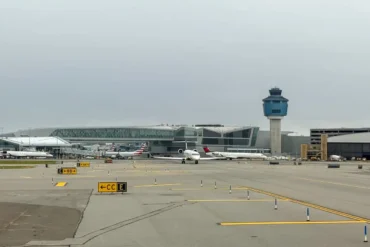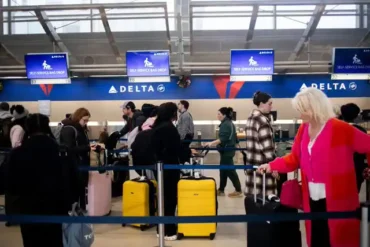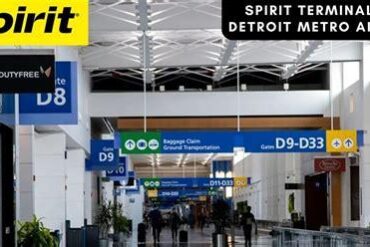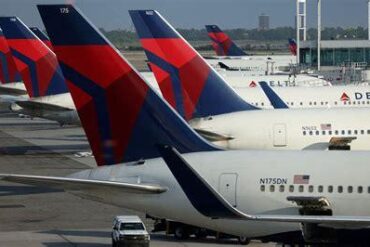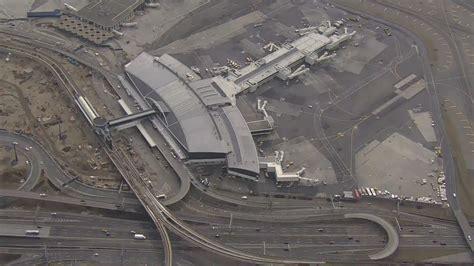
Delta Air Lines, long celebrated for its reliability and operational efficiency, recently found itself at the center of a sprawling network crisis that illuminated the fragile underbelly of its hub-and-spoke infrastructure. What began as a system outage at Detroit Metropolitan Wayne County Airport (DTW) quickly spiraled into cascading delays, cancellations, and customer frustration across key Delta strongholds, including New York’s JFK and Atlanta’s Hartsfield-Jackson International Airport (ATL).
The Unraveling at DTW and Beyond
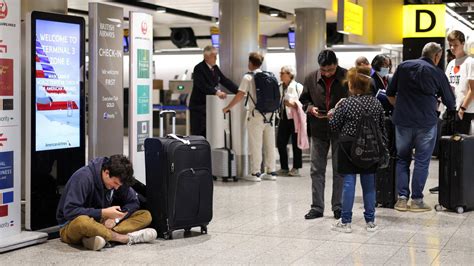
In early December, a seemingly isolated technical failure at DTW triggered a domino effect that exposed the airline’s vulnerability. Though the ground stop at Detroit was lifted the same day, Delta’s operations were already hemorrhaging efficiency. Hundreds of flights were either delayed or outright canceled, effectively stranding thousands of passengers.
Compounding the issue was a concurrent ground stop at ATL, Delta’s largest hub and arguably the world’s most vital airport in terms of volume and throughput. Hosting nearly 1,000 Delta flights per day, ATL is the nucleus of the airline’s logistical universe. Disruptions here reverberate across every segment of the network, and when paired with system outages at New York’s JFK and LaGuardia just days later, the impact became catastrophic.
By Sunday alone, FlightAware reported:
- Nearly 250 flight cancellations
- Over 1,000 delays on Delta’s mainline services
And the misery didn’t end there. Delays spilled into Monday, adding another 100+ cancellations and more than 650 disruptions, suggesting a systemic strain rather than isolated misfortune.
Hub-and-Spoke: A Model of Strength or Stagnation?
Delta’s struggles bring to light the double-edged nature of the hub-and-spoke model. While this system allows for strategic centralization, enabling greater control over schedules and aircraft utilization, it also harbors inherent fragility. A failure at one spoke—or worse, at the hub—sets off a chain reaction that no redundancy protocol can fully contain.
Unlike point-to-point networks where damage is often localized, hub-and-spoke structures concentrate risk. This means:
- One hub’s failure paralyzes multiple downstream routes.
- Weather, technical issues, or personnel shortages at one location create cascading operational chaos.
- The more flights that rely on the hub, the greater the disruption radius.
The Detroit outage illustrated this vividly. Although the IT problem was resolved quickly, just a few hours of downtime rippled across thousands of passengers’ itineraries, grounded aircraft, and strained customer service resources.
From Resilient to Reactive: Delta’s Recent Performance
To understand the magnitude of the current debacle, it’s essential to contextualize it against Delta’s reputation. In 2024, Delta was named the most punctual U.S. airline, boasting an on-time performance rate of 83.46%, surpassing even global standards and securing third place worldwide. United Airlines, its closest domestic rival, trailed by over 2.5%.
This level of precision has built Delta’s brand equity. Passengers trust Delta not just for comfort, but for reliability in the air and on the ground. The current meltdown, therefore, is not just a logistical hiccup—it’s an erosion of that trust.
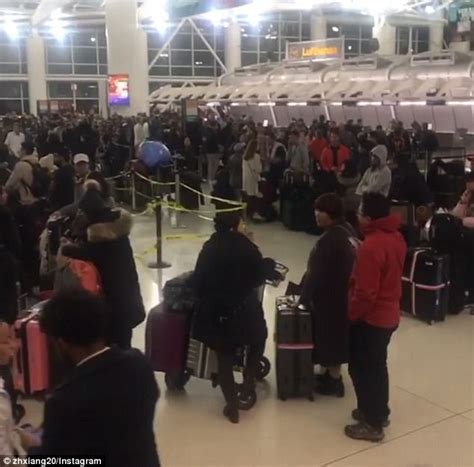
Take, for example, Delta Flight 5052 from Charlotte, which experienced a triple threat of delays. First, it landed at JFK over three hours behind schedule. Then, astonishingly, it spent another three hours taxiing, unable to find a gate or clear deplaning procedures. For passengers, this wasn’t a delay—it was an ordeal.
Such incidents, amplified across social media and mainstream outlets, not only damage Delta’s image but invite scrutiny into its operational foresight and technological resilience.
Federal Constraints and Financial Fallout
Delta’s woes aren’t entirely self-inflicted. Federal shutdowns and government-imposed capacity constraints have significantly limited the carrier’s operational flexibility. CEO Ed Bastian publicly stated that such regulatory bottlenecks cost the airline over $200 million. These constraints, though largely beyond Delta’s control, intensify the pain when other variables—like weather or IT failures—come into play.
Regulatory delays not only affect flight slots and airspace availability but hamper recovery efforts when things go wrong. For a carrier that relies heavily on fast turnarounds and tightly choreographed schedules, any friction in the bureaucratic machine becomes a liability.
Passenger Experience on the Edge
The real-time consequence of Delta’s operational collapse has been a sharp deterioration in passenger experience. Beyond the delays, passengers reported missed connections, rerouted baggage, and unresponsive customer service channels. The strain on Delta’s internal support teams mirrored that of its air operations.
Even frequent flyers and elite SkyMiles members were not spared. Reports from Platinum Medallion members describe being left without hotel accommodations or timely rebookings, underscoring how deeply the crisis has pierced the airline’s service ethos.
Lessons for the Future: Rethinking Operational Architecture
If one thing is clear, it’s that Delta—and airlines like it—must revisit the foundational logic of their hub-centric systems. While the hub-and-spoke model provides efficiency in times of smooth operations, it proves brittle under duress.
Investments in distributed network capabilities, such as point-to-point flexibility or micro-hubs, may help diffuse risk. Additionally, bolstering IT infrastructure and integrating more predictive analytics can allow quicker identification and response to system vulnerabilities.

Furthermore, Delta may benefit from:
- Decentralized recovery protocols to avoid full dependency on ATL or DTW.
- Increased cross-training of personnel to mobilize rapid response teams at any affected hub.
- Enhanced communication frameworks, both internally and with passengers, to manage expectations and deliver accurate information in real-time.
The SkyTeam Giant at a Crossroads
Delta’s recent crisis should not be viewed merely as a momentary lapse but as a stress test for the entire architecture of modern airline operations. As travel volumes surge during holiday seasons and weather unpredictability increases, reliance on centralized systems becomes a gamble.
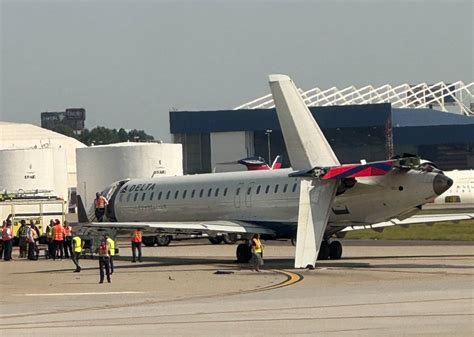
Delta’s ability to course-correct in the wake of this turmoil will define its future trajectory. Whether it doubles down on its current system with upgraded safeguards or pivots toward a more adaptive network will depend on how the leadership interprets this winter’s events. What remains undeniable is that the tolerance for systemic fragility is shrinking—from regulators, passengers, and investors alike.
The skies may be clear now, but the turbulence that Delta experienced in December is a loud warning that even the best can falter when stretched beyond design limits.