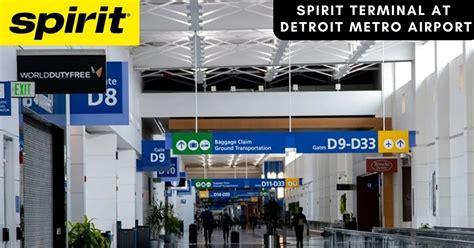
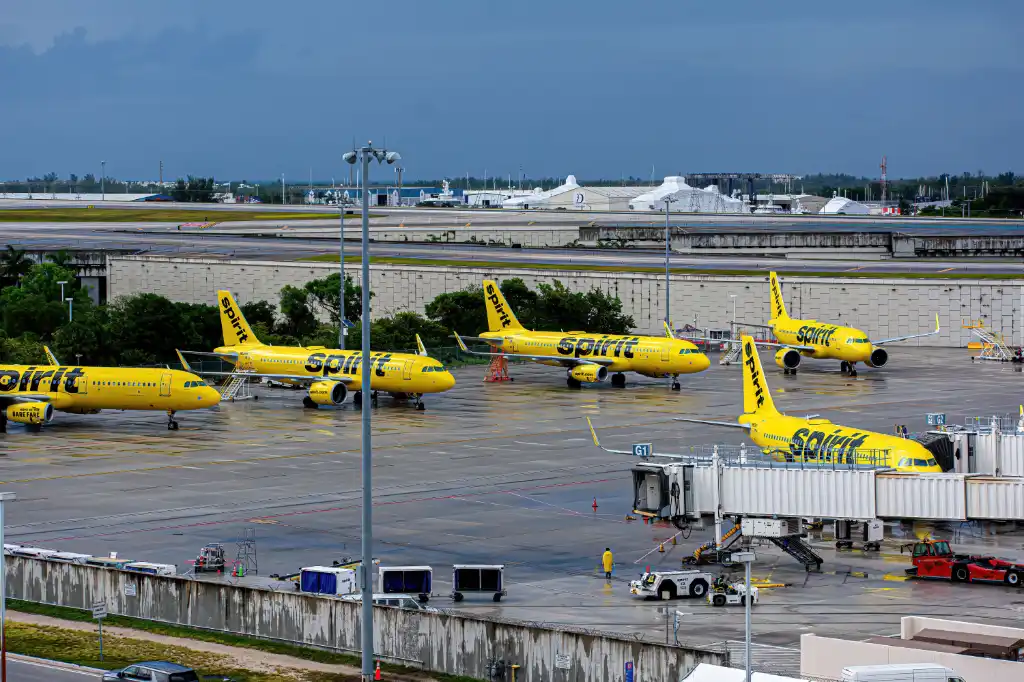
Spirit Airlines, a name synonymous with ultra-low-cost air travel in North America, maintains a significant presence at Detroit Metropolitan Airport (DTW), offering budget-conscious travelers a gateway to various destinations. The airline’s distinctive yellow planes are a common sight at DTW, promising rock-bottom base fares that often catch the eye. However, the true cost and overall experience of flying Spirit from Detroit are subjects of intense debate and widely varying passenger reviews. This comprehensive analysis delves into the multifaceted experiences of travelers flying Spirit Airlines through Detroit, exploring everything from the initial booking allure to the realities of the onboard journey, customer service encounters, and operational reliability, all informed by recent passenger feedback.
The Siren Song of Low Fares: Spirit’s Core Appeal from Detroit
The primary magnet drawing passengers to Spirit Airlines at Detroit Metropolitan Airport, and indeed across its network, is undeniably its aggressive pricing strategy. The advertised fares often appear dramatically lower than those of legacy carriers, making air travel accessible to a broader demographic or allowing frequent flyers to travel more often. For many Detroit-based travelers, the prospect of a significantly cheaper ticket is too tempting to ignore, especially for short-haul flights or spontaneous getaways. Reviews frequently highlight this initial appeal, with some passengers reporting astonishingly low round-trip costs. For instance, one traveler recounted a journey from Kansas City to Detroit for a mere $58 round trip, including a personal backpack. This illustrates the core value proposition Spirit offers: if your primary concern is the upfront ticket price, Spirit often emerges as the most economical option. This focus on minimal base fares allows passengers to tailor their spending, theoretically only paying for the services they actually need. However, this stripped-down pricing model is also where the complexities and potential frustrations begin for many unwary travelers.
Deconstructing the “Bare Fare”: Understanding Spirit’s A La Carte Pricing at DTW
Spirit Airlines operates on an unbundled, or “à la carte,” pricing model, which means the initial low fare, often marketed as the “Bare Fare™,” covers only the passenger’s transport from point A to point B with one small personal item (like a purse or small backpack that fits under the seat in front). Anything beyond this typically incurs additional charges. These ancillary fees are a cornerstone of Spirit’s business model and a frequent topic in passenger reviews originating from Detroit. Checked baggage and even standard carry-on bags that go into the overhead bins come with fees that can vary based on the route, time of booking (prices are generally lower when paid for during initial booking online versus at the airport), and even the bag’s weight. One reviewer lamented, “It sucked they charged on suitcases,” a common sentiment among those surprised by these costs. Another explicitly stated, “I hate this airline, from ridiculous bag fees…” These fees can quickly escalate the total cost of travel, sometimes bringing the final price closer to, or even exceeding, what traditional airlines charge, especially for passengers who don’t pack light.
Beyond baggage, seat selection also incurs a fee. If passengers opt out of paying for a seat assignment, they are typically assigned one at random during check-in. While some travelers don’t mind this gamble, others prefer the certainty of choosing an aisle, window, or sitting with their travel companions, which adds to the overall expense. Even the coveted “Big Front Seat,” Spirit’s version of a premium economy seat with more legroom, comes at a significant upcharge. Furthermore, onboard refreshments, including water, are not complimentary; everything from snacks to beverages must be purchased. One passenger noted, “On our way to Detroit from California, we did not get offered water. Items are for purchase but the items are very expensive…” This pay-for-everything approach is a stark contrast to full-service carriers and is crucial for passengers to understand before booking a Spirit flight from DTW to accurately budget for their trip.
The Onboard Experience: A Closer Look at Spirit’s Cabins from Detroit
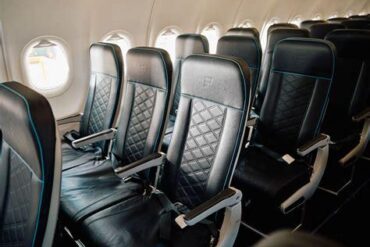
The in-flight experience on Spirit Airlines is often described as no-frills, a direct consequence of its cost-saving measures. The seats are a frequent point of discussion in reviews from Detroit passengers. Spirit’s standard seats are known for being pre-reclined, meaning they do not offer a recline function, a design choice aimed at saving space and maintenance costs. Legroom, or seat pitch, is also generally tighter compared to many other airlines. One reviewer described the space between seats as “the worst I have experienced compared to other airlines.” While some newer aircraft in Spirit’s fleet reportedly feature updated seats that some find more comfortable, the general consensus leans towards a less spacious environment. For short flights, many passengers find this acceptable given the cost savings, but on longer routes, the comfort level can become a significant issue.
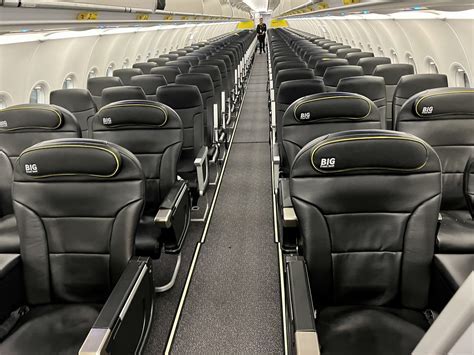
As mentioned, there are no complimentary amenities like pillows, blankets, or in-flight entertainment systems (though Wi-Fi for a fee is available on many aircraft). Passengers are advised to bring their own entertainment and any comfort items they might need. The lack of free water is a particularly salient point for some, as even basic hydration comes at a cost unless passengers bring an empty bottle to fill post-security at DTW. While the airline does offer a range of snacks and beverages for purchase, including a notable selection of alcoholic drinks as one reviewer pointed out, these costs can add up. The overall cabin atmosphere is functional, designed to transport as many passengers as efficiently as possible, rather than to provide a luxurious or pampering experience. For travelers whose priority is simply getting from Detroit to their destination cheaply, these trade-offs may be worthwhile. One reviewer flying from Detroit to New Orleans even praised the crew for being “compassionate and kind,” suggesting that a positive crew interaction can sometimes offset the spartan nature of the cabin.
Navigating Detroit Metropolitan Airport (DTW) with Spirit Airlines
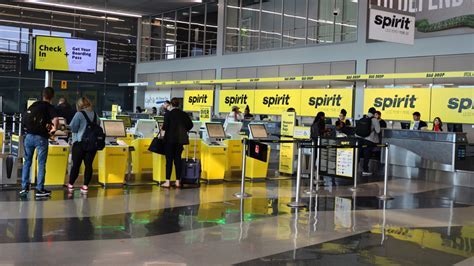
Spirit Airlines operates out of the Evans Terminal (formerly known as the North Terminal) at Detroit Metropolitan Airport (DTW). This terminal, while generally modern and user-friendly, can still present challenges depending on the airline and time of day. When flying Spirit from DTW, passengers should be prepared for the standard airport procedures, but with a few airline-specific considerations. The check-in process can vary; while online check-in and using airport kiosks are encouraged to save time and potentially money (some airport agent assistance can incur fees), lines at the Spirit check-in counters and bag drop areas can sometimes be long, especially during peak travel periods. Arriving at DTW with ample time before a Spirit flight is highly recommended, particularly if checking bags or needing agent assistance.
Once past security, passengers will proceed to their assigned gates in the Evans Terminal. The terminal itself offers a range of dining and shopping options, allowing passengers to purchase food and drinks before boarding, which can be a cost-effective alternative to Spirit’s onboard offerings. However, issues can arise at the gate, as highlighted by one passenger’s experience: “Our flight was delayed for hours and then when we arrived at the gate the jet bridge did not work.” Such operational hiccups, while not always the airline’s direct fault, contribute to the overall travel experience. Understanding the terminal layout and allowing sufficient time for transit within DTW can help mitigate some potential pre-flight stress when flying Spirit.
Reliability and Punctuality: A Mixed Record for Spirit Flights at DTW
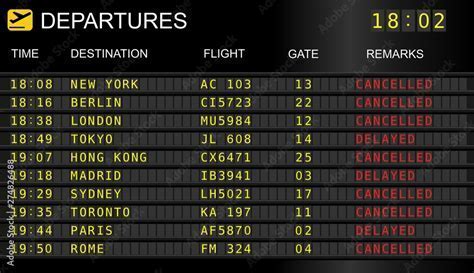
One of the most significant concerns for air travelers is on-time performance, and Spirit Airlines’ record in this area, as reflected in reviews from Detroit, is decidedly mixed. Delays and cancellations are a recurring theme in negative feedback. One passenger on a quick flight to New Orleans out of Detroit reported, “Of course something is wrong w the plane and now we are de-boarding and delayed. Last time. This airline sucks.” Another detailed a frustrating experience where a 1 hour and 18-minute flight turned into a 7.5-hour travel ordeal due to delays and a non-functional jet bridge upon arrival. A separate review mentioned a five-hour delay, with the issue stemming from the inbound aircraft’s location, not weather at DTW or the destination. These accounts paint a picture of an airline where operational disruptions can significantly impact travel plans.
However, it’s important to note that not all experiences are negative. One traveler, Jacqueline G., explicitly stated her flight from Detroit to New Orleans was on time, and her return flight five days later was also punctual. This highlights the variability in Spirit’s operational reliability. While some passengers experience smooth, on-time departures and arrivals, others face considerable disruptions. The reasons for delays can range from mechanical issues and crew scheduling to air traffic control and weather, factors that can affect any airline. Yet, for an ultra-low-cost carrier, the resources available to manage and recover from disruptions may be more constrained, potentially leading to more prolonged or frustrating experiences for affected passengers. Travelers booking with Spirit from DTW should be aware of this potential for variability in punctuality and consider building some flexibility into their itineraries.
Customer Service: Encounters with Spirit Staff from Detroit
Customer service experiences with Spirit Airlines, both at Detroit Metro Airport and in general, are perhaps the most polarized aspect of passenger reviews. There are accounts of genuinely positive interactions, where staff members have been helpful and pleasant. For example, a passenger flying from Detroit to New Orleans specifically commended the lead stewardess, Sonja Stewart, and her crew for being “compassionate and kind” and even for sharing restaurant recommendations. Another reviewer, Chelsea D., noted that the on-flight staff is friendly and that while she had one experience with a rude counter employee, she subsequently found someone helpful. These instances suggest that dedicated and professional individuals are working for the airline.
Conversely, many reviews detail deeply frustrating encounters with Spirit customer service. One passenger, facing a five-hour delay, described the gate agents as unhelpful, lacking an apologetic tone, and being rude and condescending when questioned about the situation. Another recounted a “HORRIBLE HORRIBLE EXPERIENCE” with customer service on the phone, stating it took 4.5 hours to reach an agent, who then allegedly refused to help resolve an issue with a long layover. Sandra R. characterized the crew as “unfriendly, unhelpful, unwelcoming, uncaring, unwilling,” a stark contrast to the positive crew experiences mentioned by others. Issues with policy enforcement, such as a denied refund for a medical cancellation despite a bereavement situation, also contribute to negative perceptions of customer care. This wide spectrum of reported service levels indicates a significant inconsistency in how Spirit Airlines’ staff interacts with and supports its passengers at DTW and beyond. For many, the perceived lack of empathy or assistance during stressful situations like delays or cancellations is a major deterrent to flying with the airline again.
The Art of Managing Expectations: Key to a Tolerable Spirit Journey from DTW
Successfully navigating a Spirit Airlines flight from Detroit, or anywhere else, often boils down to managing expectations. Spirit is an ultra-low-cost carrier, and its entire business model is built on providing a basic transportation service at the lowest possible base price, with everything else considered an optional extra. If travelers book a Spirit flight expecting the amenities, comfort levels, and comprehensive customer service of a full-service legacy airline, they are almost certain to be disappointed. As one reviewer astutely put it, “I can honestly say for the price I have never had an issue with spirit airlines. Knock on wood… you are paying a fraction of the price to travel with this airline.” This perspective underscores a crucial point: value is subjective. For this passenger, a $58 round-trip flight to Michigan, even with a randomly assigned seat that was later upgraded for free due to flight availability, represented excellent value.
Those who understand the ULCC model, pack light to avoid baggage fees (like the reviewer who mentioned, “We usually pack light and each bring a personal item… so we don’t have to pay for luggage”), bring their own snacks and entertainment, and are prepared for a less luxurious seat, are more likely to have a satisfactory experience. Conversely, passengers who are caught off guard by fees, expect complimentary services, or require a high degree of flexibility and support when travel plans go awry may find Spirit’s approach frustrating. The numerous negative reviews often stem from a misalignment between passenger expectations and the service Spirit is designed to deliver. Therefore, thorough research into Spirit’s policies and fees before booking is paramount for any traveler considering them for a flight out of DTW.
Proactive Strategies for Flying Spirit Airlines from Detroit Metro
For Detroit-based travelers who decide that Spirit Airlines’ low base fares are worth the potential trade-offs, adopting a few proactive strategies can significantly improve the travel experience. Firstly, pack exceptionally light. The most effective way to keep costs down is to fit everything into a single personal item that meets Spirit’s stringent size requirements (check their website for current dimensions before flying). If more luggage is necessary, pay for bags online during the initial booking process. This is almost always cheaper than paying at the airport counter or, even worse, at the gate. Secondly, check-in online as soon as it becomes available (typically 24 hours before departure) and print your boarding pass at home or save it to your mobile device. This helps avoid potential lines and fees for airport check-in.
Thirdly, bring your own sustenance. Pack snacks and an empty reusable water bottle to fill up at a DTW water fountain after clearing security. This circumvents the need to purchase Spirit’s relatively expensive onboard refreshments. Fourthly, manage your comfort. Download movies or music to your personal devices, bring a neck pillow if desired, and dress in layers, as cabin temperatures can vary. If seat selection is important, especially when traveling with others, factor in the cost of choosing seats when comparing Spirit’s total price to other airlines. Finally, be prepared for potential disruptions. Have a backup plan or at least a degree of flexibility in your travel schedule, as delays can occur. While not always necessary, for critical travel, considering travel insurance that covers delays and cancellations might offer peace of mind. By taking these steps, passengers can mitigate many of the common pain points associated with flying an ultra-low-cost carrier like Spirit from Detroit.
The Detroit Traveler’s Verdict: Is Spirit Airlines the Right Choice from DTW?
Ultimately, whether Spirit Airlines is the “right” choice for a flight departing from Detroit Metropolitan Airport depends entirely on the individual traveler’s priorities, budget, destination, and tolerance for the ultra-low-cost carrier model. The airline undeniably offers some of the lowest base fares available, making air travel accessible for many who might otherwise be unable to afford it, or allowing for more frequent trips. For the Detroit traveler who values cost above all else, is a savvy packer, doesn’t mind a no-frills experience, and is flying a relatively short distance, Spirit can be a perfectly viable and economical option. Positive reviews often come from passengers who understand the model, manage their expectations, and feel they received good value for the price paid, like the individual who secured a $58 round-trip fare and even received a complimentary seat upgrade.
However, for those who prioritize comfort, convenience, inclusive amenities, and reliable customer service, especially in the face of operational disruptions, Spirit may not be the ideal choice. The plethora of additional fees can quickly inflate the initial low fare, sometimes negating the perceived savings, particularly for families or those traveling with significant luggage. Experiences from DTW highlight a significant inconsistency in both operational reliability and customer service quality. The numerous accounts of lengthy delays, uncomfortable seating, and unhelpful staff serve as a caution. Therefore, prospective Spirit passengers from Detroit must weigh the potential for substantial cost savings against the potential for a less comfortable and potentially more stressful travel experience. A thorough comparison of the total cost, including all anticipated fees, against other airlines serving DTW, coupled with a realistic assessment of one’s own travel needs and preferences, is essential before committing to a Spirit Airlines ticket.