ACTS Aviation Security, Inc. is one of the many private security contractors in the United States responsible for airport security and related aviation services. With dozens of locations across the country, its workforce stretches from Denver and Houston to Charlotte, New York, and beyond. But behind the high-visibility vests and stringent checkpoint duties lies a workforce with mixed and often polarized views on what it’s like to work for this organization.
This article explores the real working conditions at ACTS Aviation Security, Inc., as described by current and former employees. By analyzing detailed reviews across various job roles and locations, we aim to shed light on the company’s work environment, management style, career development prospects, and operational culture.
A Fragmented Employee Experience Across the Nation
From Dulles to Denver, Charlotte to San Francisco, one theme becomes immediately apparent in employee testimonials: inconsistency. Depending on the location and management team, the experience at ACTS can range from “a great place to work” to “toxic beyond belief.”
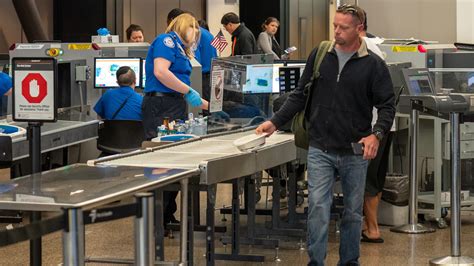
At its best, ACTS is described as low-stress, flexible, and rewarding for those seeking entry-level security positions. A former employee from Dulles International Airport (IAD) reported that the job was “fairly easy and low stress,” praising flexible management and a supportive work environment. This sentiment was echoed by a current traffic control supervisor in Charlotte, who described every workday as typical and worry-free, noting “excellent” culture and pay raises.
However, these positive views are overshadowed in volume and intensity by a flood of negative reviews across multiple locations. In Houston, Newark, and Denver, employees repeatedly cite toxic leadership, poor communication, favoritism, and inconsistent enforcement of rules as major deterrents.
Management Culture: A Repeating Theme of Distrust
A significant share of employee feedback focuses on what many refer to as “bad management” or “toxic supervision.”
Former and current workers across the Houston, Charlotte, and Denver sites describe scenarios where favoritism dictates disciplinary actions, supervisors fail to support staff during conflicts, and a pervasive culture of micromanagement and disrespect undermines morale.
For instance, in Humble, Texas, one security agent claimed that certain employees were allowed to come in late or miss multiple days without consequence, while others were reprimanded for minor infractions. This apparent lack of consistency in policy enforcement breeds resentment and mistrust. A review from Newark warns readers bluntly: “Avoid at all costs,” citing incompetent leadership and daily conflict with both coworkers and third-party drivers.
Denver-based employees provided particularly damning assessments. One officer stated: “Upper management is lazy, never communicates, and cuts corners.” Workers reported unreliable pay, delays in HR responses, and substandard equipment, which not only hinder productivity but also pose potential safety risks.
Favoritism and Unequal Treatment: A Morale Killer
A recurring theme in the reviews is the widespread perception of favoritism. This issue reportedly manifests in everything from scheduling and shift assignments to disciplinary actions and opportunities for advancement.
At multiple locations — particularly Charlotte, Denver, and New York — employees expressed frustration that certain workers are allowed to break rules with impunity, while others are reprimanded for minor infractions. Such a culture fosters resentment, high turnover, and widespread dissatisfaction.
A former agent in Astoria, NY, painted a bleak picture, describing ACTS as “untrustworthy and deceptive.” According to their account, management made promises that were never kept, and there was no regard for employee well-being, especially during times of illness.
Working Conditions and Equipment Issues
While the duties at ACTS are generally not physically demanding, multiple reviewers have emphasized harsh working conditions, particularly related to uniforms and equipment.
In Denver, one former guard recalled being issued ill-fitting clothing and defective tools. Employees were expected to use UV lights and flashlights during inspections but were often given dead batteries or poorly maintained gear. Some resorted to buying their own tools, citing company-issued items as unreliable or unsafe.
There’s also mention of unrealistic scheduling, with employees asked to stay over for hours beyond their shift with minimal notice. At some locations, refusing such overtime reportedly results in reprimands or retaliation. In addition, breaks are frequently missed or delayed, making long shifts physically and mentally taxing.
Entry-Level Opportunity or Career Dead End?
Despite the widespread criticism, there are employees who acknowledge the job as a good stepping-stone. Particularly for individuals new to the workforce or recent high school graduates, ACTS offers basic training, security experience, and a foot in the door at major airports.

A former agent from Cleveland highlighted the benefit of early career exposure, stating that while long-term growth is limited, the experience gained can be useful elsewhere. However, most reviews also stress that ACTS does not offer meaningful career development, raises, or advancement opportunities, making it unsuitable for long-term employment.
This sentiment is reinforced by multiple reviews stating that raises are rare, bonuses are unreliable, and promotions are often based on personal relationships rather than performance.
Workplace Culture: Divisive and Often Hostile
The workplace culture at ACTS is consistently described as contentious, with reports of gossip, backstabbing, and cliques.
In several locations, particularly Houston and Erlanger, KY, employees describe an atmosphere where colleagues undermine one another, supervisors enable toxic behavior, and disputes among team members go unaddressed.
In one troubling account, a former employee in Kentucky recounted how uniforms were so poorly maintained that they had to sew buttons onto their pants themselves. Another noted how equipment batteries were stored haphazardly in desk drawers, calling it an environmental hazard. The environment, as described, lacks basic professional standards that are expected even in entry-level positions.
Pay, Benefits, and Incentives: A Mixed Bag
ACTS Aviation Security’s compensation is described as modest but steady, with weekly pay and health benefits available to most full-time employees. Some locations also offer free lunch and uniforms, which are appreciated, albeit inconsistently applied.
However, the absence of regular pay raises and transparent bonus policies casts a long shadow. In Denver and Charlotte, numerous employees claimed that promised bonuses were withheld, often based on ambiguous criteria. Payroll inconsistencies were also reported, with delays or underpayments requiring follow-up with HR, which itself was described as unresponsive and disorganized.
Conclusion: Proceed with Caution
ACTS Aviation Security, Inc. appears to function as a stepping-stone rather than a career destination. For some, particularly at select locations with strong local managers, the job offers flexibility, simplicity, and steady pay. For others, especially those stationed at high-traffic airports or under weak supervision, it becomes a source of daily stress, frustration, and disillusionment.
The company’s most pressing issues — toxic management, favoritism, broken communication, and inconsistent work standards — are well-documented by its own employees. Until ACTS addresses these concerns on a systemic level, its reputation as an employer will remain highly polarized.
For job seekers considering ACTS Aviation Security, Inc., the advice from many former employees rings loud and clear: Do your homework, investigate your local site’s leadership, and understand that your experience may hinge more on your manager than on the company itself.