United Airlines is preparing to scrap an Airbus A320 that has remained at Ronald Reagan Washington National Airport (DCA) since May after suffering rear-fuselage damage in a ground collision with a catering truck. The aircraft, registered N470UA, has not returned to scheduled service since the incident, and recent observations indicate that its engines and other components are now being removed.
The decision effectively ends the career of an aircraft that had spent roughly 25 years in commercial service. Although the A320 was not lost in a flight-related accident, the extent and location of its structural damage appear to have made a return to passenger operations economically impractical. The case also demonstrates how an otherwise routine airport ground operation can ultimately result in the retirement of a mature commercial jet.
United Airbus A320 N470UA Has Been Parked at Reagan National Since May
N470UA arrived at Ronald Reagan Washington National Airport after operating United flight UA1369 from Chicago O’Hare International Airport. Flight records show the aircraft landed at DCA at approximately 1:08 a.m. UTC on May 17, following its May 16 departure from Chicago. Its planned return flight to Chicago was subsequently canceled, and the A320 has not appeared in normal United flight activity since.
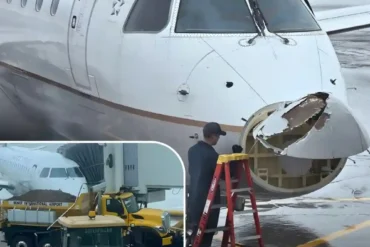
Aircraft records classify N470UA as having sustained damage to its rear fuselage during the May 16 incident. The aircraft was subsequently considered damaged beyond economical repair. Rather than being returned to the United schedule, it remained parked at Reagan National while inspections and recovery work were carried out.
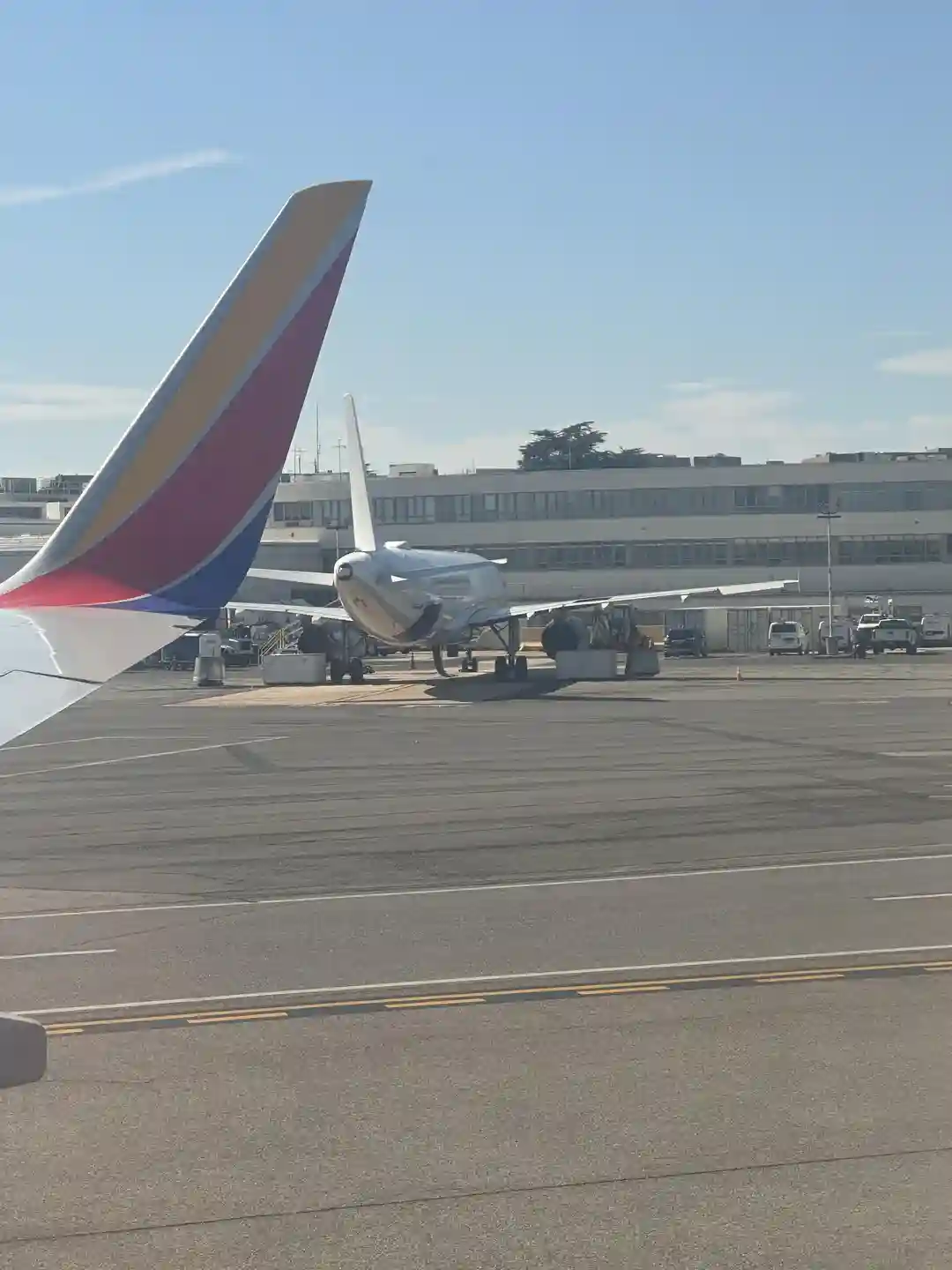
The aircraft’s extended presence at DCA eventually attracted attention from airport observers and aviation enthusiasts. Photographs published during August showed the A320 still sitting at the airport, with its United branding covered and visible work taking place around the rear portion of the fuselage. More recent observations indicate that the aircraft has progressed from storage toward dismantling.
A 25-Year-Old Airbus A320 Was Damaged in the Rear Fuselage
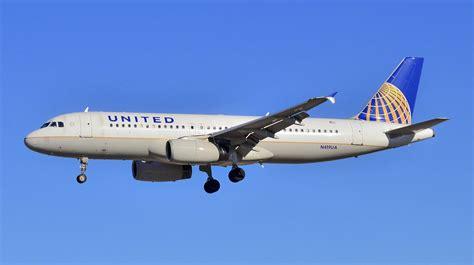
N470UA is an Airbus A320-232 with manufacturer serial number 1427. Built in 2001, the aircraft was delivered to United Airlines in March of that year. It subsequently operated under United’s former Ted brand before returning to the main United operation in 2009.
By the time of the ground incident, N470UA was approximately 25 years old. That age is important when considering why United ultimately chose not to repair the aircraft. A relatively young aircraft with significant structural damage might justify a major repair because many years of future service could remain. An older aircraft faces a very different economic calculation.
The available information does not establish the precise manner in which the catering vehicle struck N470UA, nor does it provide a detailed engineering assessment or repair quotation. However, the documented location of the damage is significant. A collision involving the rear fuselage can affect more than the aircraft’s external skin. Engineers must determine whether frames, stringers, panels, systems, wiring, insulation, and other structural elements have been compromised.
That process can become particularly expensive when a commercial aircraft has accumulated decades of operating cycles. The repair must restore the aircraft to its required certified structural condition, while inspections and replacement work can create substantial labor and material costs. For an aircraft already approaching the later stages of its expected commercial life, those expenses may not make financial sense.
Structural Repair Costs Helped End the Aircraft’s Career
The decision to scrap N470UA should not be interpreted as meaning that a catering-truck collision automatically makes an Airbus A320 uneconomical to repair. Ground-damaged aircraft can often be repaired and returned to service, depending on the location and severity of the damage, the aircraft’s age, its maintenance condition, and the expected cost of restoration.
In N470UA’s case, the combination of rear-fuselage damage and the aircraft’s age appears to have changed the calculation. United would have needed to invest in restoring a 25-year-old A320 while also considering the value of an aircraft that was already relatively mature within its fleet.
The commercial value of an aircraft is not simply determined by whether it can physically be repaired. Airlines must consider future maintenance requirements, remaining useful life, fuel efficiency, fleet standardization, parts availability, and the opportunity cost of keeping an older aircraft in operation.
For United, retiring N470UA avoids the cost and uncertainty associated with returning the damaged aircraft to service. The airline can instead recover value from components that remain usable, turning an otherwise total fleet loss into a partial asset recovery.
United Is Removing Engines and Other Valuable Components
Recent photographs and reports from observers indicate that N470UA is now being stripped for parts. Its engines have reportedly been removed, while additional components appear to have been taken from the aircraft.
This is a common outcome for commercial aircraft that are damaged beyond economical repair. An airframe can be unsuitable for further passenger operations while still containing components worth significant amounts of money. Engines are obvious examples, but aircraft operators and maintenance organizations can also recover landing gear, avionics, flight-control components, cabin equipment, auxiliary systems, and other serviceable parts.
The enormous global fleet of Airbus A320-family aircraft makes component recovery particularly practical. Thousands of A320-family jets remain in service around the world, creating a substantial installed base that requires replacement parts and maintenance support.
For United, useful components from N470UA can potentially support other aircraft or contribute to parts recovery value, subject to their condition, maintenance status, certification requirements, and remaining service life. The aircraft’s retirement therefore does not mean that everything associated with N470UA has become worthless.
N470UA’s Retirement Shows How Ground Damage Can End an Aircraft’s Life
The story of N470UA is notable because its final flight was not followed by a dramatic airborne accident. Instead, the aircraft’s commercial career appears to have ended after a ground collision involving a catering truck at one of America’s busiest airports.
The A320 had spent approximately a quarter-century transporting United passengers across the airline’s network. It arrived at Reagan National as an ordinary scheduled flight, but after the ground incident, it never returned to normal operations.
United has not publicly released a detailed explanation of the disposal decision or a complete repair-cost assessment. Consequently, the exact financial calculation behind the retirement remains unavailable. What the available aircraft records and photographs do establish is that N470UA was damaged in its rear fuselage, remained parked at DCA for months, was not returned to service, and is now being dismantled.
The aircraft’s eventual physical fate at Reagan National is not yet fully established. It could continue to be dismantled at the airport or be moved elsewhere for further processing. Either way, N470UA’s active airline career is effectively over.
Its retirement is a reminder of an often-overlooked reality of commercial aviation: an aircraft does not have to suffer a catastrophic accident in flight to reach the end of its useful life. For an older jet, a single ground incident in the wrong structural area can make repair more expensive than the aircraft’s remaining economic value. In N470UA’s case, the catering truck collision transformed a routine airport turnaround into the final chapter of a 25-year United Airlines A320 career.