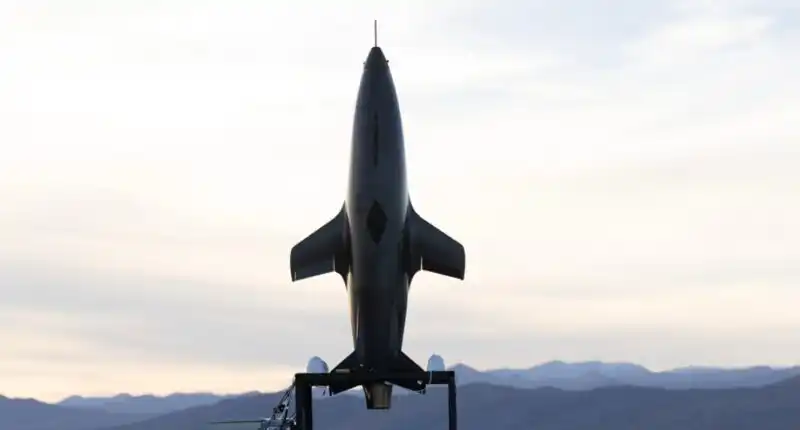
California’s defense innovation sector has once again redefined modern warfare with the revelation of the AI-powered Viper drone, a tactical weapon system that merges the lethality of precision-guided munitions with the affordability and agility of unmanned platforms. Developed by Mach Industries, the Viper drone promises to alter the strategic landscape by offering frontline units an ATACMS-like strike capability at a fraction of the cost.
Viper Drone: Fusing Cruise Missile Reach With AI Autonomy
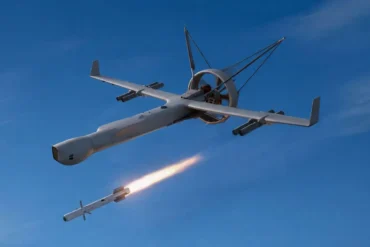
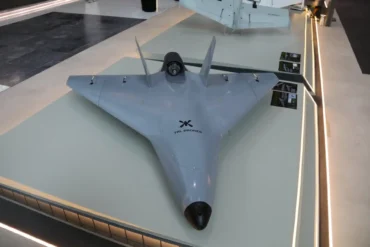
The Viper drone, recently unveiled by the California-based Mach Industries, is not merely another addition to the growing catalogue of loitering munitions. Instead, it represents a hybrid evolution of cruise missile performance, loitering munition affordability, and drone versatility.
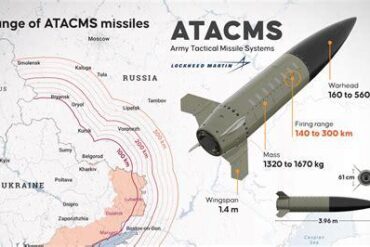
At its core, Viper integrates a high-subsonic propulsion system capable of delivering a 10-kilogram (22-pound) warhead to targets as far as 290 kilometers (180 miles) away. This strike envelope puts it in direct competition with the Army Tactical Missile System (ATACMS), a mainstay of long-range precision strikes, but at a substantially reduced price point. Where ATACMS rounds can cost several million dollars each, the Viper comes with an estimated unit price of under $100,000, potentially enabling deployment at scale.
Compact, Mobile, and Vertical Launch Capable
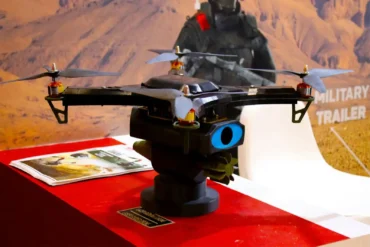
In keeping with modern battlefield demands for rapid mobility and flexibility, the Viper features a compact, modular design paired with vertical takeoff capability, eliminating the need for elaborate launch infrastructure. Units can deploy Viper from unprepared ground, making it ideally suited for forward-deployed strike teams, reconnaissance groups, and special operations.
The vertical launch ability is crucial for maintaining operational momentum in contested environments, where static launchers become prime targets for counter-battery fire and surveillance drones. With this capability, frontline units gain the power to strike high-value targets, including:
- Artillery positions
- Enemy radar systems
- Command and control nodes
- Logistics hubs deep within contested territory

AI Navigation and GPS-Denied Operations
Where the Viper sets itself apart technologically is in its advanced artificial intelligence-guided navigation system, specifically engineered to function within GPS-denied or electronically contested environments. This represents a direct response to lessons learned from conflicts such as the Russia-Ukraine war, where electronic warfare and GPS jamming have rendered many traditional drone platforms ineffective.
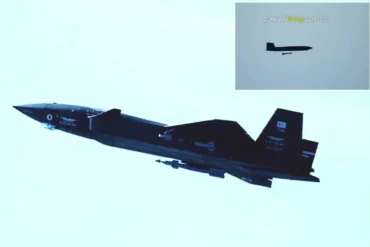
The Viper’s AI system leverages multi-band radio frequency (RF) guidance, machine learning-enabled target recognition, and onboard autonomous routing algorithms. While its full capabilities in active electronic warfare (EW) scenarios remain under classified testing, initial demonstrations indicate improved survivability and mission success rates compared to legacy loitering munitions like the Hero-120 or Russia’s KUB-BLA.
Strategic Parallels: ATACMS Impact at Drone Scale
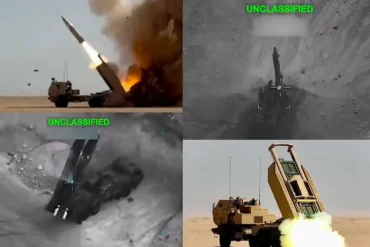
The Viper’s design philosophy intentionally mirrors the strategic function of the ATACMS, a system lauded for its ability to deliver precise, deep-strike capability against hardened or high-value targets. However, the prohibitive cost and limited inventory of ATACMS rounds have constrained their widespread battlefield use.
By contrast, the Viper’s lower price point enables commanders to execute similar mission profiles—such as neutralizing enemy air defense sites, logistics depots, or high-priority infrastructure—without the budgetary limitations associated with traditional cruise missiles.
Its compact warhead delivers a precise, Hellfire-class kinetic effect, capable of destroying lightly armored vehicles, degrading fortified positions, and disrupting supply chains. The drone’s high-subsonic speed further reduces exposure to enemy air defenses, enhancing its penetration capabilities.
Production Scaling and Rapid Prototyping Approach
Behind the scenes, Mach Industries has implemented an aggressive rapid prototyping and iterative development model, incorporating direct feedback from operational users and frontline military advisors. The company credits this approach with compressing traditional defense development timelines, enabling the Viper to progress from concept to flight testing within record time.
The firm’s production capacity has similarly scaled, fueled by a blend of private capital investment and support from the U.S. Army, which views the Viper as a potential game-changer for distributed, high-tempo conflict environments.
At under $100,000 per unit, the Viper’s affordability positions it not just as a niche asset but as a mass-producible, disposable precision weapon, ideal for saturation strikes, denial operations, and attrition warfare. This aligns with broader U.S. military efforts to field cost-effective, high-volume systems that can overwhelm adversary defenses without exhausting national arsenals.
Tactical Advantages Over Existing Loitering Munitions
Compared to other loitering munitions in the U.S. and global inventories, the Viper delivers distinct operational advantages:
- Extended Range: Its 290-kilometer reach outperforms existing tactical drones and aligns with operational ranges of strategic missile systems.
- Faster Flight: High-subsonic speeds minimize time-to-target and reduce vulnerability to interception.
- AI-Guided Autonomy: Enhanced navigation in GPS-denied zones elevates mission success rates.
- Vertical Launch Flexibility: Rapid deployment from austere locations supports dynamic battlefield maneuvering.
- Low Unit Cost: Enables massed deployment strategies, force multiplication, and persistent strike options.
These attributes provide frontline commanders with a flexible, scalable strike tool capable of reshaping tactical engagements and strategic planning.
Lessons from Ukraine Driving U.S. Drone Innovation
The ongoing conflict in Ukraine has provided an unprecedented live battlefield laboratory for drone technology evolution. From commercial quadcopters to advanced loitering munitions, the Ukraine war has underscored the value—and limitations—of unmanned systems in modern, high-intensity warfare.
Mach Industries’ development of the Viper directly reflects this evolving combat reality, blending affordability, survivability, and precision in a package that mitigates vulnerabilities exposed by recent conflicts. As drones become increasingly central to both reconnaissance and strike operations, platforms like Viper signal a future where AI, autonomy, and mass production redefine how wars are fought.
The Road Ahead: Integration and Battlefield Deployment
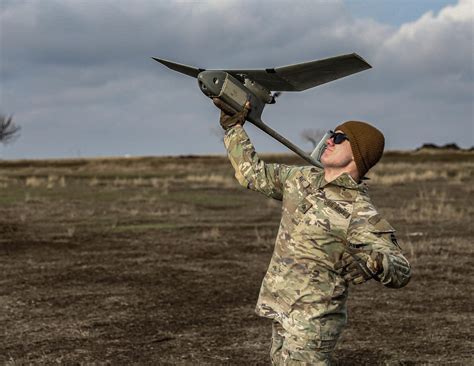
While full-scale production and deployment timelines for the Viper remain confidential, early flight trials and operational evaluations suggest that the system could see limited fielding within specialized U.S. military units in the near term. Analysts anticipate that Viper will complement, rather than replace, existing missile and drone inventories, providing a flexible, rapid-response option for:
- Forward-deployed strike teams
- Special operations missions
- Suppression of enemy air defenses (SEAD)
- Battlefield interdiction and logistics disruption
- Targeted high-value strikes in contested zones
As geopolitical tensions continue to elevate the risk of peer-to-peer and hybrid conflicts, systems like the Viper exemplify the U.S. defense sector’s push to field cutting-edge, cost-effective solutions for complex modern battlespaces.
In the broader context of defense innovation, the Viper represents not just a tactical weapon, but a strategic symbol of how AI, autonomy, and affordability are converging to reshape the future of warfare.