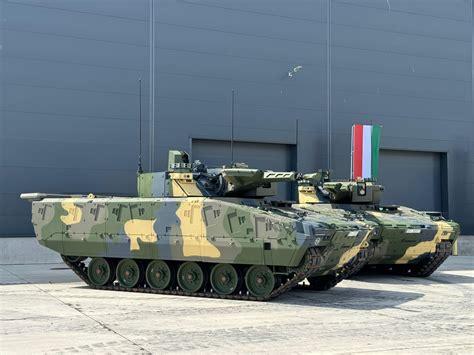
Germany’s Rheinmetall AG has officially launched local production of its KF41 Lynx Infantry Fighting Vehicle (IFV) in Romania, marking a major milestone in both defense industrial cooperation and regional security strategy. This move underscores Rheinmetall’s long-term commitment to Eastern European defense modernization and strategically integrates Romania into the company’s global production ecosystem.
Set against the backdrop of increasing geopolitical volatility in Eastern Europe, this development is more than a commercial expansion—it is a technological and industrial leap for Romania. The KF41 Lynx production will be spearheaded from Rheinmetall Automecanica’s facility in Mediaș, with local supply chain integration and Romanian industrial partners playing pivotal roles.
KF41 Lynx: The Backbone of Next-Gen Mechanized Infantry
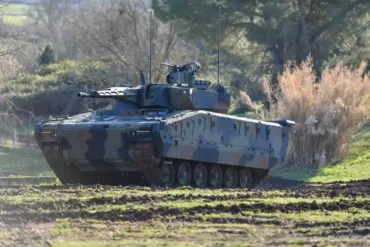
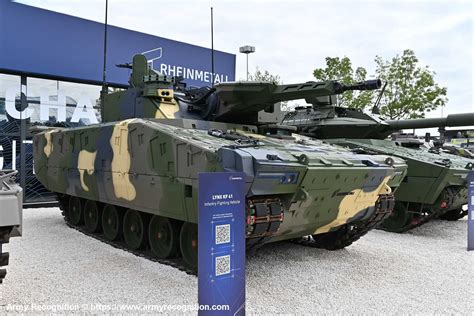
The KF41 Lynx is not just another armored vehicle—it is a modular, scalable, and digitally-advanced war machine designed for 21st-century battlefields. Developed by Rheinmetall to exceed NATO interoperability standards, the Lynx is armed with the Lance 2.0 turret, featuring a 35mm automatic cannon, integrated anti-tank guided missile (ATGM) launchers, and advanced optics.
Its digital open-architecture allows for future combat system upgrades without complete overhauls. The IFV supports modular mission kits, enabling rapid configuration between roles such as reconnaissance, command and control, medevac, and anti-air. Designed for high-intensity conflict, its survivability features include scalable ballistic and mine protection, enhanced situational awareness systems, and full-spectrum electronic warfare compatibility.
Romania’s €2.5 Billion IFV Procurement: Strategic Value Beyond Numbers
Romania is poised to acquire 246 KF41 Lynx IFVs under a proposed €2.5 billion agreement. Although the deal has yet to be formally signed, the Romanian Ministry of National Defence has labeled the procurement a top priority for 2025. The planned fleet will equip 15 mechanized infantry battalions, modernizing the Romanian Army with state-of-the-art mobility and firepower.
The Romanian government is exploring government-to-government channels to expedite the procurement, a method favored over public tenders due to its alignment with security and delivery requirements. This approach would allow rapid signature and onboarding, potentially before the end of 2025.
Rheinmetall Automecanica Mediaș: The Epicenter of Industrial Sovereignty
The Mediaș production center will serve as the operational core of this industrial initiative. By combining Rheinmetall’s engineering standards with localized manufacturing capabilities, the facility is optimized to reduce external dependency and promote Romanian defense autonomy.
The plant is tasked not only with final assembly but also with integrating key vehicle components, including fire control systems, armor packages, and powertrains. Rheinmetall’s “local for local” strategy ensures the majority of the supply chain—including welding, painting, system integration, and quality assurance—is anchored in Romanian soil.
Beyond Vehicles: A Complete Ecosystem of Defense Production
The KF41 production push is just one part of a larger ecosystem being developed within Romania. Rheinmetall is also investing in the domestic manufacture of medium-caliber munitions and propellant systems. Rheinmetall Munitions Romania will produce ammunition tailored for both infantry use and air defense systems, strengthening national logistics chains.
Meanwhile, the Victoria Explosive Powder Factory will spearhead the production of energetic materials and propellants. Rheinmetall’s transfer of critical expertise includes the establishment of a new propylene plant, marking the first time such technology will be rooted on Romanian soil. This move enhances not just national stockpiles, but also NATO-aligned self-sufficiency in critical defense materials.
Rheinmetall Excellence Centre: Forging a Skilled National Workforce
A defining component of this initiative is the creation of the Rheinmetall Excellence Centre in Romania—a facility designed to provide advanced technical training and workforce development. Using immersive simulators, digital twin environments, and high-fidelity platforms, this center will equip Romanian engineers, technicians, and logisticians with deep expertise in modern armored vehicle technologies.
This not only boosts the sustainability of Romania’s defense posture but also creates a new generation of skilled defense professionals capable of contributing to complex NATO missions and domestic innovation. The Excellence Centre will also function as a technical think tank, fostering co-development between Romanian and German engineers.
Strategic Partnerships with Romanian Firms Drive Local Integration
Rheinmetall has inked cooperation agreements with several key Romanian firms, including Uzina Automecanica Moreni, Interactive Software SRL, and MarcTel-SIT. These partnerships go beyond subcontracting—they embed Romanian entities into the full lifecycle of the Lynx platform, from development and testing to digital infrastructure and post-deployment upgrades.
By integrating Romanian digital and mechanical expertise, Rheinmetall ensures that core components and software elements are not just assembled but engineered domestically. This integration drives down costs, accelerates timelines, and offers the Romanian defense sector a gateway into Rheinmetall’s global supply network.
Job Creation and Economic Stimulus: The Broader Impact
This initiative is forecast to generate hundreds of highly skilled jobs across sectors such as engineering, software development, precision manufacturing, systems integration, and logistics. Importantly, these positions will not be low-skill assembly roles, but rather career-defining opportunities in high-value technical domains.
Beyond direct employment, the localization of production will stimulate a multiplier effect across Romania’s industrial landscape. Ancillary industries—ranging from metallurgy to optics and control systems—are expected to expand, further entrenching defense as a pillar of Romania’s industrial sovereignty.
Positioning Romania as a Regional Defense Technology Hub
With this landmark investment, Romania is transitioning from a consumer of imported defense solutions to a producer of next-generation systems. This model of localized, technology-rich production positions the country as a critical node within Europe’s defense infrastructure, capable of supporting both national and allied operations.
The broader geopolitical implications cannot be overstated. As NATO seeks to reinforce its eastern flank in light of renewed threats near its borders, Romania’s ability to produce, maintain, and upgrade modern armored platforms domestically is of immense strategic value.
Future-Proofing Defense Through Technological Autonomy
Rheinmetall’s Romanian initiative represents more than an industrial expansion—it is a strategic recalibration of Europe’s defense map. With embedded local production, workforce development, and munitions manufacturing, Romania is now equipped not just for today’s challenges but for future combat environments marked by digitization, autonomous systems, and hybrid warfare.
By laying down permanent roots through factories, training centers, and joint ventures, Rheinmetall has positioned itself as a catalyst for Romanian defense sovereignty. And for Romania, the benefits extend far beyond armored vehicles—this is a transformation in capability, influence, and independence.
Conclusion: A New Era for Romanian-German Defense Collaboration
Rheinmetall’s establishment of a comprehensive KF41 Lynx production ecosystem in Romania is a masterclass in strategic defense alignment. It fuses German technological excellence with Romanian industrial ambition, delivering a platform that serves both national security goals and NATO readiness.
As contracts near finalization and assembly lines begin to hum in Mediaș, Romania is poised not only to defend its borders but to redefine its role in Europe’s defense future. This partnership is more than timely—it is historic.