The geopolitical map of Europe and the Middle East shifted subtly but significantly when Romania approved a United States request to deploy military aircraft, equipment, and personnel on its territory in support of operations related to the ongoing conflict involving Iran. The decision, confirmed on March 11, 2026, came after a high-level meeting of Romania’s Supreme Council of National Defense (CSAT) at the historic Cotroceni Palace in Bucharest.
The move allows the temporary deployment of American aerial refueling aircraft, surveillance systems, satellite communication equipment, and several hundred U.S. troops at key Romanian military installations. These assets will operate primarily from Mihail Kogălniceanu Air Base near the Black Sea and Câmpia Turzii Air Base in central Romania, two facilities already deeply integrated into NATO’s regional security architecture.
Romania’s approval represents more than a routine military cooperation measure. It places the country directly within a strategic network of international bases supporting U.S. and allied operations across the Middle East, dramatically expanding the logistical depth available to American forces operating thousands of kilometers from Iranian territory.
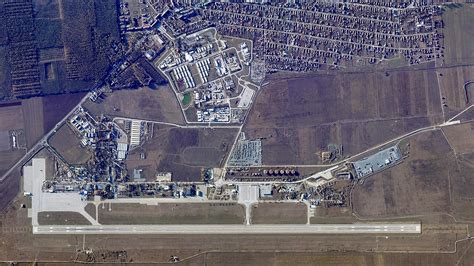
Romania’s National Security Council Authorizes Strategic Deployment
The approval followed a three-hour meeting of Romania’s Supreme Council of National Defense, the country’s top security authority responsible for coordinating defense and national security policy. During the session, Romanian leadership reviewed three major issues shaping the country’s strategic environment:
- The military situation in the Middle East and the expanding confrontation involving Iran
- The economic consequences of the conflict, particularly energy and trade disruptions
- The temporary deployment of additional American military capabilities on Romanian territory
Romanian President Nicușor Dan ultimately authorized the request, allowing U.S. forces to position operational support assets in Romania pending final parliamentary approval. Romanian law requires legislative consent whenever foreign military forces are deployed within national borders, making the parliamentary debate a necessary legal step rather than a political obstacle.
At the same time, Romanian authorities examined the humanitarian consequences of the escalating conflict. Approximately 5,700 Romanian citizens have returned home from affected regions since the crisis intensified, with nearly 3,700 individuals assisted directly by government evacuation operations coordinated by the Ministry of Foreign Affairs.
The council’s decision therefore balanced two priorities: protecting Romanian citizens abroad while strengthening the country’s strategic alliance with the United States.
Aerial Refueling Aircraft Extend the Reach of U.S. Air Power
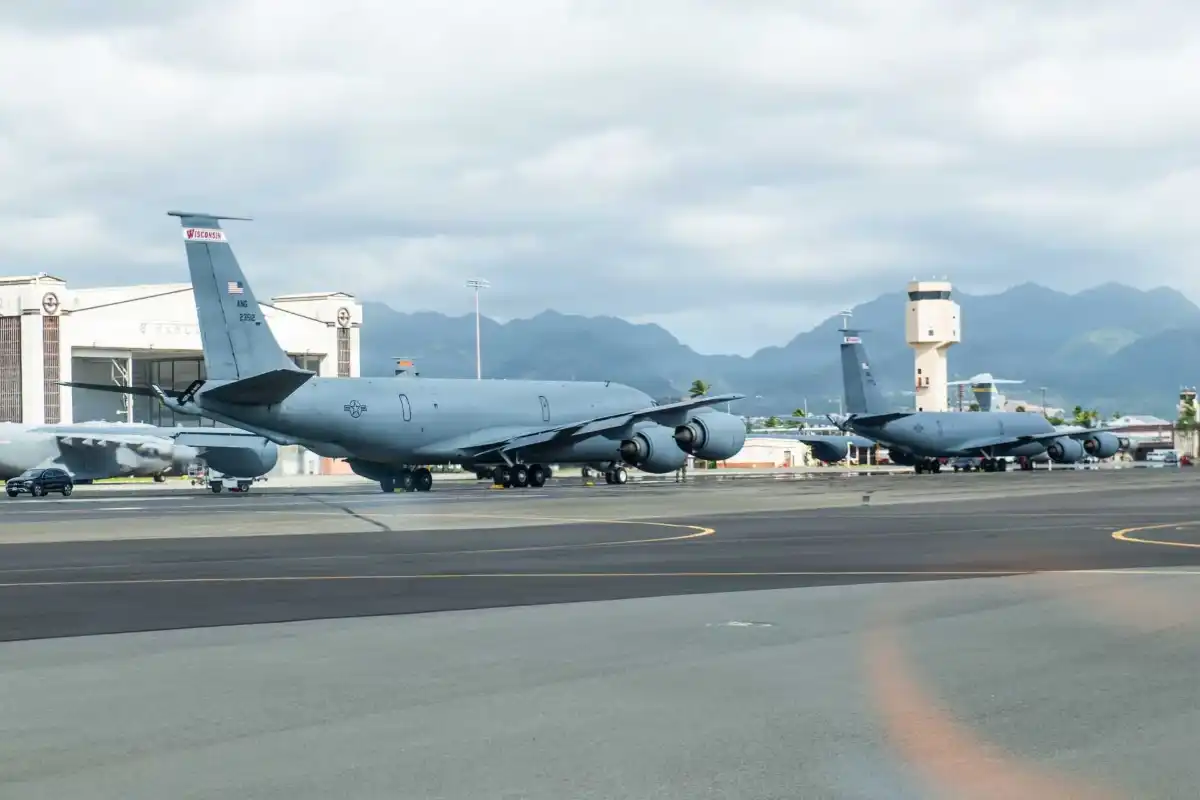
At the center of the deployment plan lies one of modern air warfare’s most critical capabilities: aerial refueling. The United States requested permission to station tanker aircraft capable of dramatically extending the operational range of fighter jets, surveillance platforms, and strategic bombers conducting missions across the Middle East.
Aircraft likely involved in the deployment include the KC-135 Stratotanker and the newer KC-46 Pegasus, both designed to refuel multiple aircraft in flight while operating thousands of kilometers from combat zones.
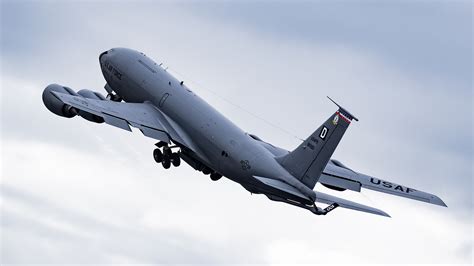
These tanker aircraft act as airborne fuel stations, allowing strike aircraft to remain in the air for extended periods and reach distant targets without landing. Without aerial refueling, aircraft departing from European bases would face severe range limitations when attempting to reach operational zones near the Persian Gulf or eastern Mediterranean.
Romania’s geographic position makes it especially valuable for this mission. Mihail Kogălniceanu Air Base lies approximately 1,500 to 2,000 kilometers from the Middle Eastern operational theater, placing it within practical reach of missions supported by tanker aircraft. Fighter jets or surveillance platforms departing Western Europe can rendezvous with tankers near Romanian airspace before continuing toward operational areas.
In essence, Romania becomes a midpoint energy hub in the sky, enabling aircraft from NATO territory to reach targets thousands of kilometers away while maintaining combat readiness.
Surveillance Systems and Satellite Communications Expand Battlefield Awareness
The American deployment includes more than refueling aircraft. Washington also requested authorization to deploy monitoring systems, intelligence platforms, and satellite communication equipment designed to strengthen command-and-control capabilities across the operational theater.
These systems perform several critical functions simultaneously. They allow commanders to track aircraft, naval units, and missile threats in real time, maintain secure communications across multiple continents, and coordinate complex multinational operations.
The satellite communication equipment will likely integrate with existing NATO infrastructure already operating in Romania, including the Aegis Ashore ballistic missile defense site located at Deveselu.
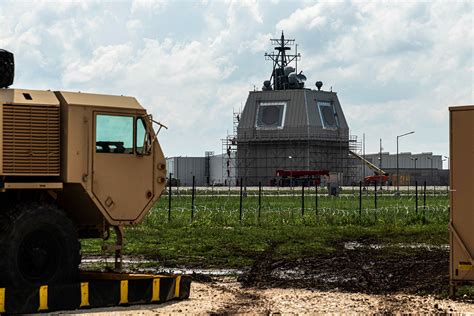
The Aegis Ashore system forms part of NATO’s broader missile defense architecture. Originally designed to intercept ballistic missiles launched from the Middle East, the installation uses SM-3 interceptor missiles and advanced radar systems capable of tracking high-speed threats across vast distances.
By connecting new surveillance and communication equipment to this existing network, U.S. planners can merge air operations, intelligence collection, and missile defense monitoring into a single integrated command system spanning Europe and the Middle East.
Such integration represents a defining feature of modern warfare: information dominance. Commanders rely on enormous streams of real-time data to monitor adversaries, guide aircraft to targets, and defend against missile or drone attacks.
Romania’s Geographic Position on NATO’s Eastern Flank
Romania occupies one of the most strategically valuable positions in Eastern Europe. The country sits on the western shore of the Black Sea, bordering Ukraine and lying close to key maritime routes connecting Europe with the Middle East and the Caucasus.
This geography explains why Mihail Kogălniceanu Air Base has become one of the most important American military hubs in the region.
Located near the port city of Constanța, the base lies roughly 400 kilometers from Russian-occupied Crimea and about 100 kilometers from the Ukrainian border. Its position places it directly on NATO’s eastern security perimeter, making it an ideal location for monitoring regional developments while supporting operations further south.
The base has hosted U.S. forces since 1999, serving as a staging point for missions in Iraq, Afghanistan, and other Middle Eastern operations. Today it houses the largest American military presence in Romania, with approximately 800 U.S. personnel stationed there out of the roughly 1,000 American troops currently deployed in the country.
Romania is investing heavily to expand the installation’s capabilities. A €2 billion modernization program aims to transform Mihail Kogălniceanu into one of NATO’s largest air bases by 2040, with infrastructure capable of supporting more than 10,000 personnel during major deployments.
The Global Network Surrounding Iran
The Romanian deployment does not exist in isolation. It forms one node in a vast global network of American military installations surrounding Iran and supporting operations across the Middle East.
Across the region, the United States maintains approximately 40,000 to 50,000 troops spread across around 19 major installations. These bases host aircraft, naval forces, missile defense systems, and logistics units required for sustained military operations.
Key facilities include:
- Al Udeid Air Base (Qatar) – The largest U.S. military installation in the Middle East and headquarters for regional air operations.
- Naval Support Activity Bahrain – Home of the U.S. Navy’s Fifth Fleet, overseeing maritime security across the Persian Gulf and Red Sea.
- Al Dhafra Air Base (United Arab Emirates) – Hosting reconnaissance aircraft, drones, and advanced fighter jets.
- Prince Sultan Air Base (Saudi Arabia) – Supporting air defense systems and fighter deployments.
- Ali Al Salem Air Base and Camp Arifjan (Kuwait) – Major logistics hubs for ground and air operations.
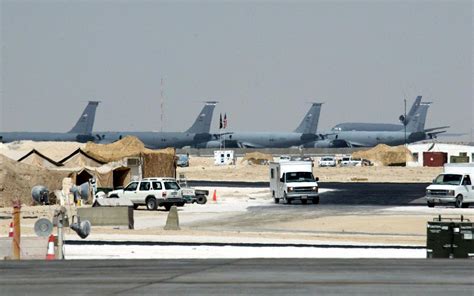
Additional facilities extend this network even further. Iraq hosts bases such as Ain al-Asad and Erbil, while Jordan and Oman provide logistical infrastructure and access to strategic airfields and ports near critical maritime chokepoints.
Together, these installations create a layered military architecture surrounding Iran, enabling operations from multiple directions while dispersing forces across a wide geographic area.
Europe’s Role in Supporting U.S. Military Logistics
The operational chain supporting Middle Eastern missions also stretches across Europe. Several NATO countries provide air bases, logistical support, and transit infrastructure enabling American forces to move equipment and aircraft toward the operational theater.
Among the most important European installations is Ramstein Air Base in Germany, the largest U.S. Air Force hub outside the United States. Ramstein functions as the primary gateway connecting North America, Europe, and the Middle East, handling enormous volumes of cargo aircraft and military personnel.
Aircraft operating through Ramstein include:
- C-17 Globemaster III strategic transport aircraft
- C-5M Super Galaxy heavy cargo planes
- C-130 Hercules tactical transports
- E-3 Sentry AWACS airborne early warning aircraft
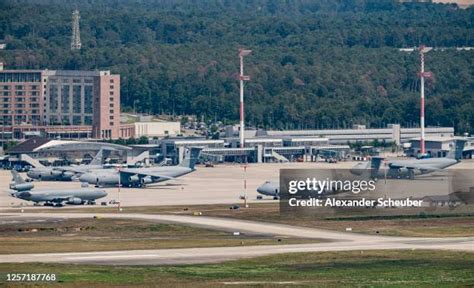
Other European installations also play key roles. The United Kingdom hosts several major U.S. facilities, including RAF Fairford, RAF Lakenheath, and RAF Mildenhall. These bases support strategic bombers, stealth fighters, and aerial refueling operations that can be directed toward the Middle East.
Further south, Souda Bay in Greece serves as a critical Mediterranean hub for both the U.S. Navy and Air Force. Located on the island of Crete, the installation supports fighter jets, transport aircraft, and naval vessels operating in the eastern Mediterranean and Red Sea.
The geographic distribution of these bases allows aircraft departing Western Europe to stage, refuel, and reposition across multiple locations before reaching operational zones.
Political Divisions Within Europe
Not every European country has agreed to support direct operations against Iran. Spain notably refused to allow U.S. forces to use its military bases for attacks targeting Iranian territory, reflecting political divisions across Europe regarding the extent of involvement in the conflict.
Nevertheless, many NATO members continue to provide logistical assistance, transit access, or defensive infrastructure supporting broader alliance operations.
Romania’s decision places it among the countries willing to expand operational support, reinforcing its reputation as one of NATO’s most reliable eastern flank partners.
Existing NATO Presence in Romania
Romania already hosts a substantial allied military presence. Following a force posture adjustment in October 2025, the United States reduced part of its rotational brigade deployment across Eastern Europe. Despite this reduction, around 3,500 NATO troops remain stationed in Romania, including American forces.
These troops operate from multiple installations:
- Mihail Kogălniceanu Air Base
- Câmpia Turzii Air Base
- Deveselu Missile Defense Site
Together, these locations support training exercises, logistical operations, intelligence activities, and air deployments tied to NATO’s eastern defense posture.
The United States also maintains Area Support Group Black Sea, a logistical command responsible for coordinating support operations for American forces across Romania and neighboring countries.
Strategic Implications of the Deployment
Romania’s approval of the American request underscores the growing interconnectedness of NATO’s European infrastructure with military operations in the Middle East. Modern conflicts rarely occur in isolation; they depend on extensive global networks of bases, logistics systems, intelligence platforms, and allied political cooperation.
By allowing the deployment of tanker aircraft, surveillance systems, and support personnel, Romania effectively becomes a strategic bridge linking European infrastructure with operational theaters thousands of kilometers away.
For the United States, the decision expands the depth and flexibility of its operational planning, ensuring aircraft can reach distant targets while maintaining strong communication and intelligence networks.
For Romania, the move reinforces its position as a critical NATO partner on the alliance’s eastern flank, strengthening defense cooperation while increasing the country’s strategic significance in global security architecture.
As tensions involving Iran continue to reshape military planning across multiple continents, the quiet decision taken in Bucharest illustrates how modern warfare is sustained not only by front-line forces but by an intricate web of alliances, infrastructure, and strategic geography stretching across the globe.