The U.S. Air Force’s adoption of artificial intelligence (AI) is not just a futuristic concept—it is an active, rapidly evolving reality shaping how the service plans, trains, fights, and sustains its operations. While headlines often focus on autonomous drones or advanced fighter jets, the most transformative uses of AI are often less visible, quietly embedded in logistics systems, decision-making frameworks, and training environments.
What makes these applications so powerful is not simply their technological sophistication, but how they address long-standing operational challenges. From managing vast stockpiles of munitions to predicting mechanical failures before they happen, AI is redefining efficiency, safety, and strategic advantage across the Air Force.
At the same time, the integration of AI is not without tension. Concerns around operational security, ethical deployment, and overreliance on automation continue to shape how the technology is implemented. The Air Force’s approach reflects a careful balance: leveraging AI’s speed and analytical power while keeping human judgment firmly in control.
Below are five ways the U.S. Air Force is using AI—some of which you may not even realize are already in play.
1. AI-Powered Munitions Storage Optimization
Managing munitions is far more complex than stacking crates in a warehouse. The U.S. Air Force handles massive inventories of explosives, each governed by strict safety regulations dictating how they must be stored, spaced, and accessed. A single miscalculation could have catastrophic consequences.
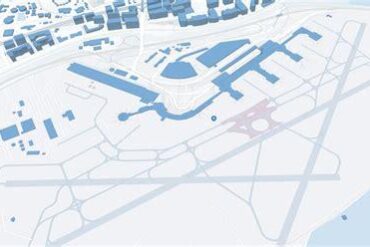
To tackle this, the Air Force is deploying AI-driven storage planning tools, including systems like Automated Master Storage Planning (AMSP) developed in collaboration with advanced analytics firms such as Virtualitics. These platforms ingest vast datasets—ranging from storage facility layouts to safety compliance rules—and generate optimized storage configurations.
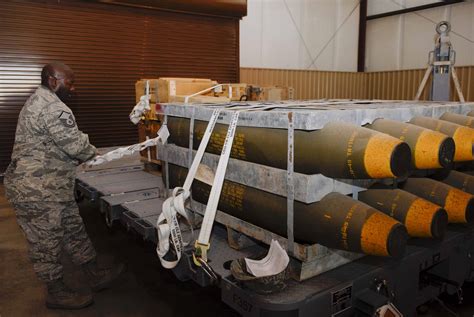
What makes this system particularly valuable is its ability to simulate and visualize storage arrangements in 3D, allowing planners to see exactly how munitions should be positioned. It can dynamically adjust layouts as mission requirements change, ensuring that the right equipment is always accessible without compromising safety.
The real breakthrough lies in how AI handles complexity. Human planners can interpret regulations, but AI can process thousands of constraints simultaneously, identifying optimal configurations that would otherwise take days—or weeks—to develop manually. This results in faster deployment readiness and reduced risk.
Beyond storage, these systems can also flag underutilized assets and recommend redistribution, effectively turning logistics into a strategic advantage rather than a bottleneck.
2. AI-Assisted Battle Management and Decision Advantage
In modern warfare, decisions are often made in fractions of a second. The difference between success and failure can hinge on how quickly and accurately a target is identified and engaged. AI is increasingly stepping into this high-stakes environment—not to replace human decision-makers, but to enhance them.
At facilities like the Shadow Operations Center-Nellis, the Air Force has conducted advanced experiments such as the Decision Advantage Sprint, focusing on human-machine teaming. These exercises explore how AI can assist in one of the most critical tasks in combat: selecting the right weapon for a given target.
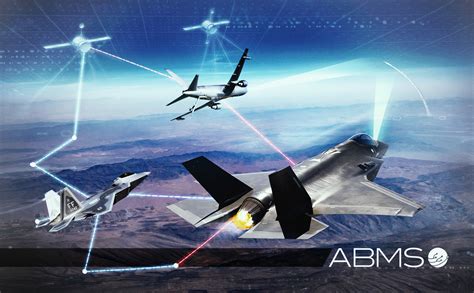
AI systems excel at analyzing enormous volumes of data in real time. During these tests, AI algorithms generated dozens of potential engagement solutions almost instantly, far outpacing human operators in speed. In fact, the systems were capable of producing up to 30 times more options than their human counterparts.
However, more options do not automatically mean better decisions. This is where human expertise remains indispensable. Operators evaluate the AI-generated solutions, considering context, rules of engagement, and potential consequences—factors that AI cannot fully comprehend.
The result is a powerful synergy:
- AI provides speed and breadth of analysis
- Humans provide judgment and accountability
This collaborative approach ensures that decisions are both fast and informed, reducing the likelihood of errors while maintaining ethical oversight. It represents a shift from automation to augmentation, where AI becomes a force multiplier rather than a replacement.
3. Predictive Maintenance with AI (PANDA System)
Maintaining the Air Force’s fleet is a monumental task. With thousands of aircraft, vehicles, and components in constant operation, unexpected failures can disrupt missions and endanger lives. Traditional maintenance models—based on fixed schedules or reactive repairs—are no longer sufficient.
Enter Predictive Analytics and Decision Assistant (PANDA), an AI-powered system designed to revolutionize maintenance operations. PANDA aggregates data from multiple sources, including historical maintenance records, onboard sensors, and real-time telemetry, to predict when equipment is likely to fail.
Instead of waiting for a component to break, PANDA identifies patterns and anomalies that signal potential issues. This allows maintenance teams to intervene before failures occur, reducing downtime and increasing operational readiness.
The implications extend beyond maintenance scheduling. PANDA also integrates with supply chain systems, forecasting which parts will be needed and when. This ensures that critical components are available at the right time, avoiding delays caused by shortages.
What makes this system particularly impressive is its scale. PANDA supports over 16 different platforms and operates within secure environments like Cloud One, ensuring that sensitive data remains protected.
In effect, AI transforms maintenance from a reactive chore into a proactive, intelligence-driven process, saving both time and resources while enhancing mission reliability.
4. Autonomous Drones and AI Wingman Systems
The image of AI in warfare often centers on autonomous drones, but the Air Force’s approach is more nuanced. Rather than fully replacing human pilots, it is developing semi-autonomous systems that work alongside them, enhancing capabilities while reducing risk.
One of the most notable examples is the XQ-58A Valkyrie, an unmanned aircraft designed to operate as a “loyal wingman” for manned fighter jets like the F-22 Raptor and F-15E Strike Eagle. These drones can perform a variety of roles, from reconnaissance to electronic warfare, all while being guided by AI.
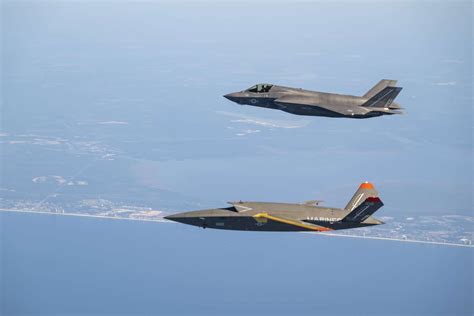
What sets these systems apart is their use of machine learning algorithms trained by the Air Force Research Laboratory. These algorithms enable the drones to adapt to dynamic conditions, make real-time adjustments, and support pilots in complex environments.
Despite their autonomy, these platforms are not left to operate independently. Human pilots retain ultimate control, ensuring that critical decisions remain under human authority. This balance addresses both operational effectiveness and ethical concerns.
The strategic advantage is clear. By deploying AI-powered drones alongside manned aircraft, the Air Force can:
- Extend mission range and capabilities
- Reduce risk to human pilots
- Increase flexibility in contested environments
As these systems continue to evolve, they are likely to become a cornerstone of future air combat, blending human skill with machine precision in ways that redefine aerial warfare.
5. AI-Enhanced Pilot Training and Simulation
Training a U.S. Air Force pilot is an intensive process that demands mastery of both technical skills and decision-making under pressure. With aircraft systems becoming increasingly complex, traditional training methods alone are no longer sufficient.
AI is stepping in to bridge this gap through tools like IP GPT, a specialized chatbot designed to assist pilots by providing instant access to flight manuals, procedures, and operational data. Unlike general-purpose AI systems, IP GPT is trained exclusively on aviation-specific information, ensuring accuracy and relevance.
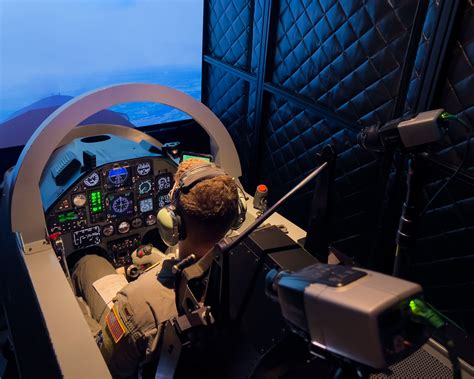
This allows student pilots to quickly find answers, review procedures, and reinforce their understanding without sifting through extensive documentation. Instructors also benefit, as AI can help organize lesson plans and track performance data more efficiently.
Beyond chatbots, AI is also being integrated into simulation environments. Programs developed in collaboration with institutions like MIT’s Computer Science and Artificial Intelligence Laboratory (CSAIL) use platforms such as RACECAR to simulate real-time decision-making scenarios.
These simulations expose pilots to AI-assisted environments, preparing them for the realities of modern aircraft systems where human and machine inputs must be seamlessly integrated. The goal is not just to teach pilots how to fly, but how to collaborate with AI under pressure.
The result is a new generation of airmen who are not only skilled aviators but also adept at leveraging AI as part of their operational toolkit.
The Bigger Picture: AI as a Force Multiplier
Across all these applications, a consistent theme emerges: AI is not replacing humans—it is amplifying their capabilities. Whether optimizing logistics, enhancing decision-making, or transforming training, AI acts as a force multiplier that enables the Air Force to operate more efficiently and effectively.
This approach also reflects a broader strategic philosophy. By keeping humans in the loop, the Air Force maintains control, accountability, and ethical oversight while still benefiting from AI’s speed and analytical power.
At the same time, the challenges cannot be ignored. Issues such as data security, algorithmic bias, and operational reliability remain critical considerations. The Air Force’s cautious yet ambitious adoption of AI demonstrates an understanding that technology must be implemented responsibly to realize its full potential.
What is clear, however, is that AI is no longer a distant possibility—it is an integral part of modern military operations. And as these systems continue to evolve, their impact will only grow, shaping the future of warfare in ways that are both profound and far-reaching.
In this rapidly changing landscape, the ability to effectively integrate AI may well determine who holds the advantage in the skies.