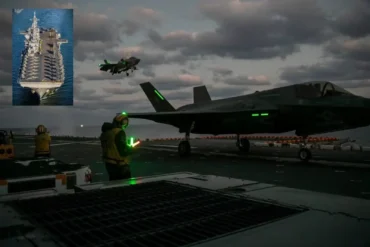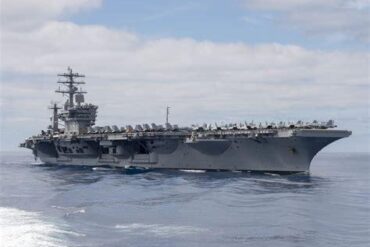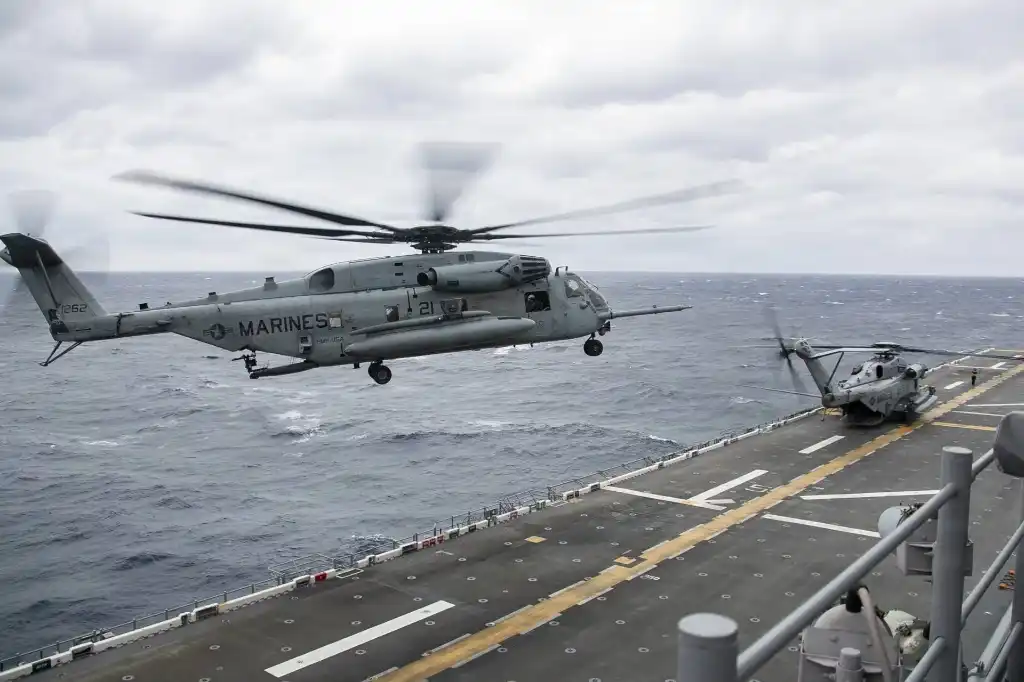
The U.S. Marine Corps has carried out a new round of CH-53 Super Stallion helicopter flight operations aboard the USS Tripoli (LHA 7), reinforcing the growing role of aviation-centric amphibious forces across the Indo-Pacific. Conducted on January 20, 2026, in the U.S. 7th Fleet area of responsibility, the operations highlighted how Marine heavy-lift aviation integrates seamlessly with forward-deployed naval platforms to support expeditionary warfare, crisis response, and sustained regional presence.
Operating from the flight deck of the America-class amphibious assault ship, Marine aviators demonstrated the ability to embark, launch, recover, and sustain heavy helicopters at sea under routine operational conditions. These evolutions were not symbolic displays. They reflected the daily mechanics of how the Marine Corps intends to maneuver forces across vast maritime distances without reliance on fixed land bases, a requirement that has become central to modern Indo-Pacific strategy.
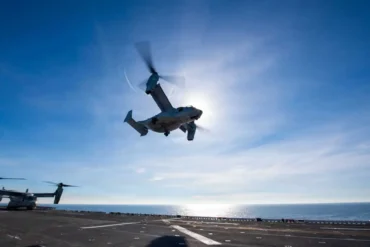
The flight operations were conducted in coordination with Marine Medium Tiltrotor Squadron 265 (VMM-265), a unit tasked with providing aviation lift in direct support of Marine Air-Ground Task Forces. By combining tiltrotor and heavy-lift capabilities on a single aviation platform, the Marines and Navy showcased a flexible, layered approach to ship-to-shore movement that emphasizes speed, mass, and operational resilience.
Heavy-Lift Aviation as an Expeditionary Enabler
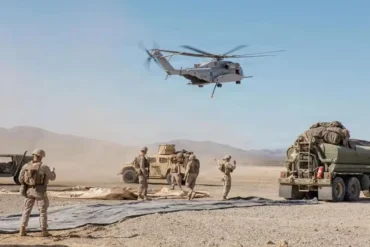
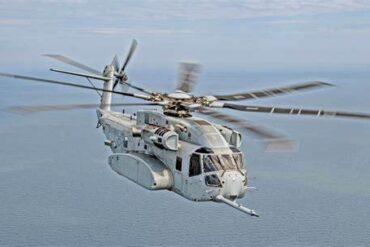
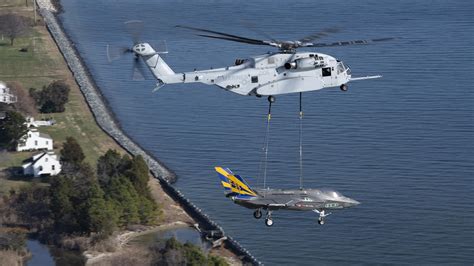
The CH-53 Super Stallion remains one of the most capable rotary-wing aircraft in U.S. military service, purpose-built for expeditionary warfare. Designed to move heavy loads from ship to shore and onward to inland objectives, the helicopter fills a niche that lighter platforms cannot. Its ability to transport vehicles, artillery, and sustainment supplies allows Marine commanders to project combat power rapidly while minimizing exposure at sea.
Powered by twin General Electric T64 turboshaft engines, the Super Stallion features a six-bladed main rotor optimized for lifting extreme external loads. The aircraft can carry more than 16 tons of cargo externally or transport up to 37 fully equipped Marines internally, making it indispensable during amphibious assaults, distributed operations, and humanitarian missions alike. Its reinforced landing gear and corrosion-resistant structure are tailored for the harsh realities of sustained shipboard use.
Equally important is the aircraft’s avionics suite. Advanced navigation systems, automatic flight controls, and compatibility with night vision equipment enable operations in degraded visual environments and over open water. Aerial refueling capability extends the helicopter’s reach far beyond the horizon, a decisive advantage in the Indo-Pacific, where distance itself is often the dominant operational challenge.
USS Tripoli and the Evolution of Amphibious Warfare
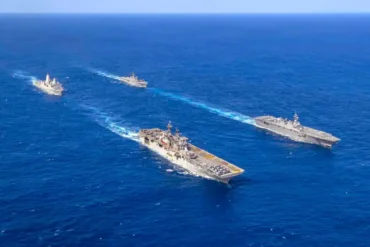
Commissioned as part of the America-class family, USS Tripoli represents a deliberate shift in amphibious ship design. Unlike earlier assault ships that balanced aviation with well-deck operations, Tripoli is optimized primarily for air operations. Displacing more than 45,000 tons, the ship features a full-length flight deck, expanded aviation fuel capacity, and maintenance spaces designed to sustain high sortie rates.
This aviation-centric design aligns closely with evolving Marine Corps concepts such as distributed maritime operations and expeditionary advanced base operations. By emphasizing vertical lift over traditional surface connectors, USS Tripoli enables rapid maneuver across contested littorals while reducing vulnerability to anti-ship threats. The ship’s ability to host helicopters, tiltrotors, and short takeoff and vertical landing aircraft makes it a versatile sea-based hub for both combat and non-combat missions.
During the January flight operations, CH-53 crews conducted repeated deck landings, refueling cycles, and aircraft handling drills. These evolutions tested not only the flight deck’s structural resilience but also the coordination between Navy deck crews and Marine aircrews. Such integration is critical, as safe and efficient deck operations underpin every sortie generated at sea.
VMM-265 and the Ship-to-Shore Mission
Marine Medium Tiltrotor Squadron 265 plays a central role in enabling Marine mobility across maritime spaces. While best known for operating the MV-22 Osprey, the squadron’s integration with heavy-lift helicopters like the CH-53 multiplies its effectiveness. Tiltrotors provide speed and range, while Super Stallions deliver mass and heavy equipment, together forming a balanced aviation lift package.
This combination supports a wide range of missions, from amphibious assaults and expeditionary strikes to disaster relief and non-combatant evacuation operations. In humanitarian scenarios, the CH-53’s lift capacity allows rapid delivery of relief supplies to areas where ports and airfields are damaged or nonexistent. In high-end conflict, the same capacity enables the movement of critical combat systems inland, complicating adversary targeting and expanding operational options.
Strategic Implications in the Indo-Pacific
USS Tripoli operates as part of U.S. 7th Fleet, the Navy’s largest forward-deployed fleet and a central instrument of U.S. deterrence in the Indo-Pacific. Regular flight operations involving Marine heavy-lift aviation signal both readiness and resolve, demonstrating that U.S. forces can operate persistently across the region’s vast maritime geography.
From a broader perspective, the pairing of CH-53 Super Stallions with aviation-focused amphibious ships supports U.S. defense modernization by reducing dependence on fixed infrastructure. Sea-based aviation platforms can reposition rapidly, sustain operations in contested environments, and provide commanders with flexible response options across the conflict spectrum.
As operational concepts continue to evolve, the January 2026 flight operations aboard USS Tripoli offer a clear snapshot of how the Marine Corps and Navy intend to fight and operate in the future. Heavy-lift helicopters, advanced amphibious ships, and tightly integrated air-sea teams remain central to U.S. readiness, deterrence, and power projection in an increasingly complex Indo-Pacific theater.