Ryanair’s rise to the top of European short-haul aviation looks almost like a contradiction. The airline sells a product that many travelers openly complain about: tight seats, paid baggage, remote airports, strict boarding rules, and few traditional comforts. Yet those very characteristics are closely connected to the economics that have made Ryanair one of Europe’s most formidable airline businesses. Instead of treating discomfort as a defect that must be eliminated, the carrier has repeatedly treated unnecessary comfort as a cost that passengers should pay for if they actually want it.
The result is an operating system built around low unit costs, high aircraft utilization, standardized equipment, secondary airports, dense cabins, and ancillary revenue. Each decision reinforces the others. A lighter and simpler cabin can be reset quickly; a quick turnaround allows more daily flying; more flying spreads aircraft ownership costs across additional passengers; secondary airports reduce infrastructure expenses; and an inexpensive headline fare attracts customers who may later purchase optional services. What appears uncomfortable from the passenger perspective can therefore be remarkably comfortable on an airline accountant’s spreadsheet.
The model works because every operational sacrifice is evaluated in financial terms: if a feature does not improve safety, efficiency, demand, or revenue, Ryanair has little reason to keep it.
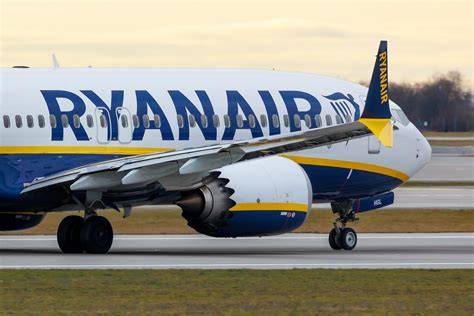
Ryanair’s No-Frills Cabin Is a Cost-Control Machine
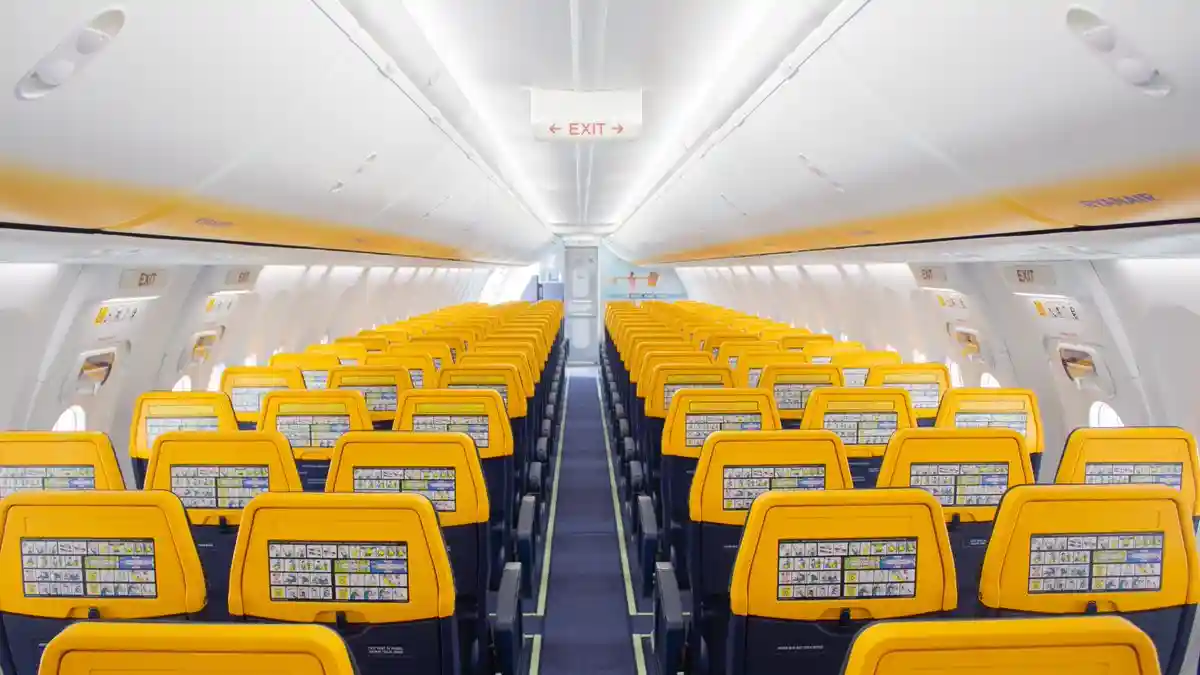
The most visible expression of the strategy is inside the aircraft. Ryanair has favored lightweight, non-reclining seats that remove mechanisms found on conventional airline seats. For passengers, a seat that cannot recline can feel like an obvious downgrade. For an airline operating thousands of sectors, however, eliminating mechanical components can mean fewer parts to maintain, less weight to carry and fewer opportunities for equipment failures.
Ryanair has also simplified the space around each passenger. Traditional seatback pockets, printed material and other cabin accessories create additional cleaning and handling work. By incorporating safety information into the seat structure, the airline reduces loose materials that must be collected or replaced. The cabin becomes easier to inspect and reset, which matters when an aircraft is expected to depart again within minutes rather than sit at a gate for a leisurely cleaning cycle.
This is why the famous Ryanair cabin should not be understood merely as an attempt to squeeze travelers. The cabin is an operational tool. Every component that disappears has the potential to remove weight, maintenance, cleaning, replacement, procurement or handling costs. When multiplied over a fleet numbering hundreds of aircraft, apparently minor design decisions become meaningful financial levers.
The 25-Minute Turnaround Changes the Economics
Aircraft are among the most expensive assets an airline owns, but they generate revenue only while flying. An aircraft sitting at an airport is still consuming capital, while airport charges, crews and other costs continue accumulating. Ryanair’s answer has been to keep its aircraft moving as aggressively as operationally practical.
Its highly publicized 25-minute turnaround philosophy is central to this approach. Passengers leave, cabin crews complete essential checks, new passengers board and the aircraft departs again with very little dead time. The simplicity of the cabin helps make that process possible because there are fewer pockets, mechanisms and loose items requiring attention.
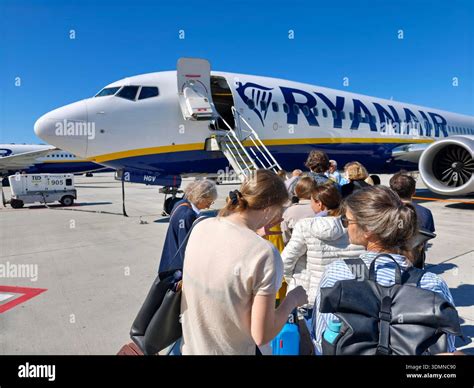
A fast turnaround does more than make an airport schedule look impressive. It allows an individual aircraft to complete additional sectors during the day. That means the same expensive airframe can carry more passengers without the airline needing to purchase another aircraft simply to achieve the same amount of annual flying. Higher utilization spreads fixed costs over greater output, one of the most powerful principles in transportation economics.
This also explains why passenger inconvenience can sometimes be financially valuable. Walking across an apron, boarding through stairs or spending less time connected to a jet bridge may not improve the travel experience, but those processes can reduce dependence on expensive terminal infrastructure. Ryanair’s objective is not to make every minute pleasant. It is to make every minute productive.
Why Ryanair Chooses Secondary Airports
Ryanair’s airport strategy is another major part of the puzzle. Rather than concentrating its network around the most prestigious and congested airports, the airline has built a huge presence at secondary and regional airports. London Stansted instead of Heathrow and Brussels South Charleroi instead of Brussels Airport are classic examples of a broader philosophy.
Major airports provide obvious advantages, especially for business travelers and passengers connecting between flights. But those advantages come with a price. Landing fees, handling costs, terminal charges and congestion can make primary airports significantly more expensive to use. Secondary airports, by contrast, often have a strong incentive to attract large volumes of passengers.
That bargaining position can give Ryanair considerable leverage. The airline brings traffic, jobs and visibility to airports that may otherwise struggle to fill capacity. Airports can therefore compete aggressively for Ryanair service through lower charges and commercial incentives. The arrangement works because Ryanair does not need the same level of premium infrastructure as a traditional hub carrier.
Remote stands are particularly revealing. Instead of routinely relying on jet bridges, aircraft can park away from the terminal and passengers can use onboard stairs. From the passenger’s point of view, walking outside in cold weather or rain is hardly luxurious. From the airline’s point of view, however, avoiding unnecessary infrastructure can contribute to lower airport and handling costs.
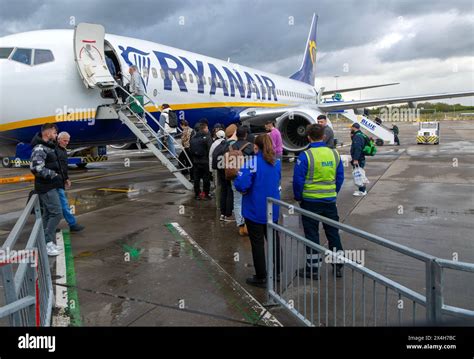
The inconvenience is therefore not random. It fits the business model. Ryanair has spent decades asking a simple question: what does a passenger actually need for a short European flight, and what can be removed without preventing the aircraft from safely transporting that passenger?
The Real Profit Engine Is Ancillary Revenue
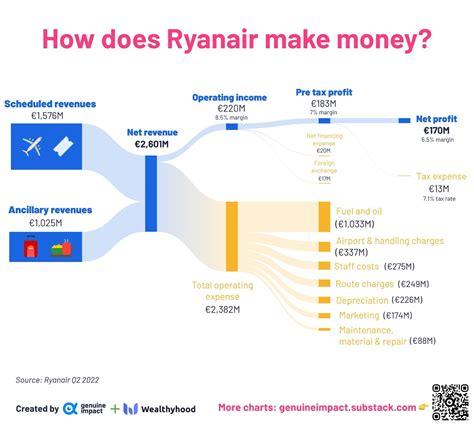
The low headline fare is one of Ryanair’s most powerful marketing weapons, but it does not tell the entire financial story. The airline has built an enormous ancillary revenue machine around the basic ticket. Passengers can pay separately for baggage, seat selection, priority services and other extras, allowing Ryanair to advertise a low entry price while generating additional revenue from travelers who want a more convenient experience.
The financial numbers illustrate how significant this strategy has become. In its FY2026 results, Ryanair reported approximately €15.54 billion in total operating revenue, including €10.56 billion from scheduled passenger fares and about €4.99 billion from ancillary revenue. Ancillary revenue therefore represented roughly one-third of total operating revenue, demonstrating that optional services are not a side business. They are a fundamental component of the carrier’s economics.
The genius of the system is that passengers effectively choose their own level of comfort. One traveler may accept the smallest permitted bag and an automatically assigned seat to preserve the lowest possible fare. Another may pay for priority boarding, a reserved seat and additional baggage. Ryanair does not have to provide the second passenger’s preferences to everyone else and then recover the average cost through a higher ticket price.
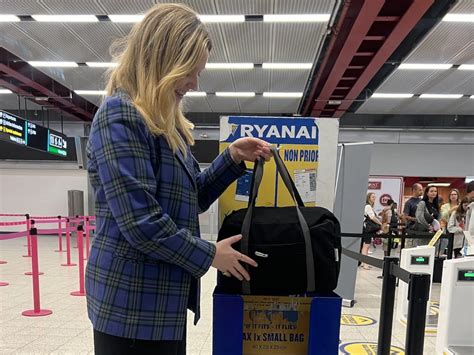
That distinction is crucial. Unbundling allows the airline to monetize differences in passenger willingness to pay. Instead of charging every traveler for the same package, Ryanair charges customers for the specific extras they value. The base fare can remain aggressively low, while the overall revenue per passenger rises through optional purchases.
This model also changes consumer psychology. A ticket advertised at an exceptionally low price creates a strong incentive to book immediately. Once the passenger has committed to the trip, additional purchases become easier to justify. Paying for a suitcase or choosing a preferred seat can feel less significant when the original fare appeared dramatically cheaper than alternatives.
A Huge, Standardized Fleet Keeps Costs Down
Ryanair’s economics would be much harder to sustain without fleet standardization. The airline has built its operation around the Boeing 737 family, reducing the complexity associated with maintaining multiple aircraft types. Common aircraft create advantages across pilot training, engineering procedures, spare parts, scheduling and crew deployment.
By March, the operating fleet had grown beyond 640 aircraft, including the integration of 210 Boeing 737 MAX 8-200 aircraft. The MAX 8-200 is particularly well suited to the carrier’s strategy because it combines improved fuel efficiency with a high-density cabin configuration.
The aircraft can accommodate more seats within essentially the same basic cabin footprint, with a seat pitch of around 28 inches in the referenced configuration. More seats allow the airline to spread flight costs across a larger passenger base. At the same time, improved fuel efficiency helps reduce the cost of operating each seat over the distance flown.
Ryanair’s future fleet strategy follows the same logic. The planned Boeing 737 MAX 10 deliveries are intended to provide additional capacity while preserving the benefits of a closely standardized fleet. Larger aircraft can increase the number of passengers carried on suitable routes without requiring a proportionate increase in departures, airport slots or crew resources.
The underlying principle is remarkably consistent: maximize productive capacity while minimizing complexity. The airline is not trying to build the most luxurious aircraft cabin in Europe. It is trying to turn each aircraft into a highly utilized revenue-producing asset.
Why Passengers Keep Coming Back
The most fascinating part of Ryanair’s model is that the complaints have not stopped the growth. Passengers regularly criticize baggage rules, seating, airport locations, boarding procedures and additional charges. Labor disputes and regulatory scrutiny have also created reputational challenges. Yet demand for inexpensive European air travel remains extraordinarily strong.
Ryanair has understood this trade-off with unusual clarity. The company does not need passengers to love every part of the experience. It needs them to believe that the total price is compelling enough to make the inconvenience worthwhile.
This is also why the airline’s business model can be misunderstood. It is not simply about making flying unpleasant. The deeper strategy is to remove costs that passengers do not consider essential and then charge separately when they want those costs restored. The discomfort is a consequence of the economic design, not the ultimate objective.
Ryanair Turned Discomfort Into a Competitive Advantage
Ryanair’s rise demonstrates how powerful cost leadership can become when every part of an organization follows the same principle. The seat design supports quick cleaning. Quick cleaning supports faster turnarounds. Faster turnarounds improve aircraft utilization. Secondary airports reduce airport costs. A standardized fleet reduces complexity. High-density aircraft increase capacity. Low fares attract passengers. Ancillary services then recover revenue from customers who want additional convenience.
None of these decisions would be revolutionary on its own. Their power comes from operating together as a single system.
The result is an airline that has transformed passenger inconvenience into an economic advantage. Its 208.4 million passengers in FY2026 and €2.26 billion profit after tax show the scale of that achievement, even as the company continues to face criticism and regulatory pressure.
Ryanair’s lesson for aviation is therefore uncomfortable in a different sense. Passengers may say they want better flying, but their purchasing decisions reveal exactly how much they are willing to sacrifice for a lower price. Ryanair built its empire around that gap between what travelers complain about and what they actually buy.
As the airline moves toward its longer-term growth ambitions, the blue-and-yellow model remains one of the clearest examples of how stripping a product down to its economic essentials can create extraordinary profitability. Ryanair did not win European short-haul aviation by pretending discomfort did not exist. It won by understanding that, for millions of passengers, a cheap ticket makes discomfort tolerable—and every tolerated inconvenience can become another saving, another revenue opportunity, or another aircraft rotation.