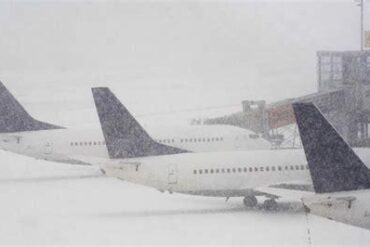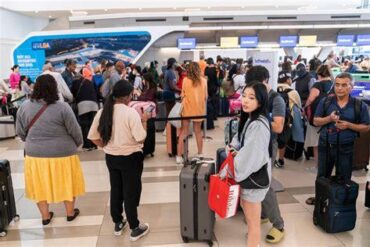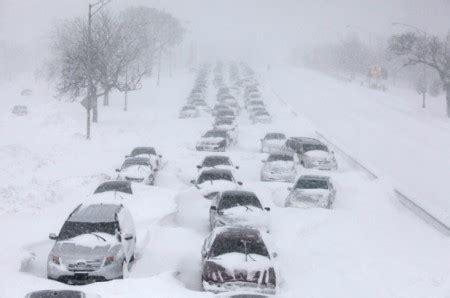
Winter Storm Fern delivered a sharp reminder of how vulnerable modern aviation remains to extreme weather, unleashing widespread disruption across the eastern United States and pushing airline operations to the brink. As heavy snow, ice, and bitter temperatures swept through key population centers, the storm did more than snarl traffic and knock out power. It triggered one of the most disruptive aviation weekends in recent memory, grounding aircraft, stranding passengers, and exposing the fragile interdependence between airlines, airports, and weather systems.
By the time the weekend concluded, the human toll was already severe. Reports confirmed at least seven fatalities linked to the storm, while more than 800,000 residents lost power amid collapsing infrastructure. In the skies, the numbers were equally sobering. Data from FlightAware shows that tens of thousands of flights were delayed or canceled, with the United States accounting for the overwhelming majority of global disruptions during the storm’s peak.
A Storm That Tested the System From the Start
Friday, January 23, marked the opening act of Fern’s assault on aviation. While conditions were deteriorating, airlines still managed to keep a significant portion of their schedules intact, relying on delays rather than mass cancellations. This was a day defined by hesitation rather than surrender, as carriers attempted to preserve network integrity while bracing for worse to come.
Regional operators bore the brunt of early disruption. SkyWest Airlines recorded 711 delayed flights, representing 28% of its daily operations, yet only 117 flights were canceled, roughly 4% of its schedule. This imbalance reflected a broader industry strategy: delay aggressively, cancel sparingly, and hope the weather window improves. At airports, the pattern was similar. Dallas/Fort Worth International Airport (DFW) emerged as Friday’s most disrupted hub for arrivals, posting 166 inbound delays compared with 122 inbound cancellations.
Airlines also moved quickly to manage customer expectations. American Airlines, DFW’s dominant carrier, issued travel advisories allowing passengers to rebook without change fees, a move designed to reduce congestion at customer service desks and preemptively defuse frustration.
Saturday’s Collapse at Major Hubs
Saturday, January 24, marked the turning point, when Winter Storm Fern tightened its grip and operational resilience gave way to triage. Cancellations surged past delays as freezing conditions intensified, particularly in the southern and central United States, regions less accustomed to sustained winter extremes.
American Airlines endured its worst day of the storm, canceling 1,068 flights, a staggering 35% of its daily schedule, alongside nearly 500 delayed services. Other carriers followed closely behind. Southwest Airlines, Envoy Air, SkyWest, and PSA Airlines all posted hundreds of cancellations, underscoring how deeply the storm cut across both mainline and regional operations.
Dallas/Fort Worth Becomes the Epicenter of Disruption
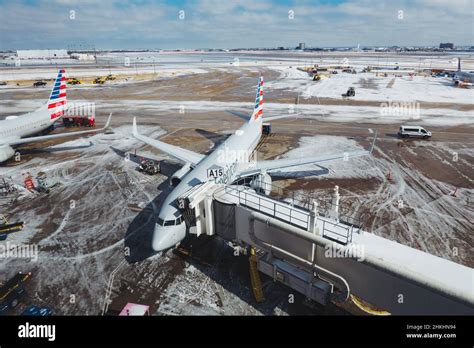
No airport symbolized the chaos more vividly than Dallas/Fort Worth International Airport. On Saturday alone, 775 outbound flights were canceled, representing an extraordinary 86% of departures, while an additional 7% were delayed. Inbound traffic fared little better, with 714 arrivals canceled, amounting to 80% of scheduled landings.
Other major hubs were not spared. Charlotte Douglas International Airport, Nashville International Airport, Chicago O’Hare, and Atlanta Hartsfield-Jackson each recorded triple-digit cancellation totals, reflecting a storm footprint that stretched across multiple airline networks and time zones.
Sunday Brings Historic Cancellation Levels
Sunday, January 25, delivered the storm’s most punishing blow. Across the United States, 11,599 flights were canceled in a single day. Globally, there were 12,589 cancellations, meaning the U.S. alone accounted for more than 92% of worldwide aviation disruptions.
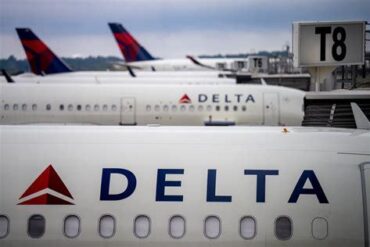
American Airlines again topped the list with 1,898 cancellations, wiping out 58% of its schedule, while also logging 754 delays. Yet American was not alone in four-figure territory. Delta Air Lines canceled 1,484 flights, Southwest Airlines grounded 1,347, and United Airlines scrapped 1,019 services. Even carriers just below that threshold, such as Republic Airways, came alarmingly close.
The concentration of cancellations revealed how interconnected airline networks amplify disruption. Once hub airports like DFW, Chicago O’Hare, and Atlanta falter, knock-on effects ripple nationwide, grounding aircraft and crews far beyond the storm’s physical boundaries.
A Harsh Lesson in Weather Vulnerability
Winter Storm Fern will be remembered not just for its intensity, but for how decisively it overwhelmed aviation defenses. De-icing equipment, crew scheduling buffers, and contingency planning all faced their limits under sustained, multi-day stress. For passengers, the weekend became a case study in patience tested and plans undone. For airlines and airports, it was a sobering audit of resilience in an era of increasingly volatile weather.
As conditions gradually improved after the weekend, carriers began the long process of restoring schedules and repositioning aircraft. Yet Fern’s legacy lingers as a stark warning: in a system built on precision timing, extreme winter weather remains one of aviation’s most unforgiving adversaries.