Canberra has quietly crossed a threshold that reshapes its place on the international aviation map. With a single announcement, the Australian capital moves from being a well-connected domestic hub to a city with genuine long-haul ambition, linking directly to one of the region’s most sought-after leisure destinations without a stop or a transfer. The launch of a nonstop service to Bali marks a decisive shift in how Canberra International Airport is positioning itself for the next decade.
For travelers in the Australian Capital Territory, Bali has long been a favorite that required a connection through Sydney, Melbourne, or Brisbane. That ritual is about to end. From late June, the journey becomes simpler and more deliberate, reflecting a growing expectation that smaller capital cities deserve direct access to high-demand international markets.
This new route is more than a convenience play. It is a signal that airlines now see sufficient, sustained demand in Canberra to support longer international sectors, and that the airport itself has matured into an operation capable of handling them efficiently and reliably.
A 2,800-Mile Leap That Redefines Canberra’s Reach
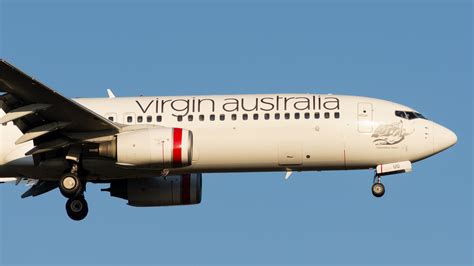
Virgin Australia’s new nonstop service to Ngurah Rai International Airport in Bali spans roughly 2,821 miles, making it the longest nonstop route ever operated from Canberra. The flight time places it firmly in medium-haul territory, pushing past the airport’s existing international services and establishing a new benchmark for what is operationally feasible from the capital.
The route launches on June 22, operating three times per week, and immediately becomes Canberra’s only direct link to Asia. That distinction matters. For the first time since previous attempts faded, the city regains a nonstop connection into a major Southeast Asian tourism and transit market, restoring balance to its international portfolio.
Carefully Timed Flights Built for Real Travelers
Scheduling reveals a thoughtful understanding of Canberra’s market. Departures leave in the mid-afternoon, allowing business travelers and holidaymakers alike to avoid early morning airport runs, while returns operate overnight, delivering passengers back to the capital in time for the working day. This structure turns Bali from a logistical exercise into a genuinely efficient getaway.
Across the first year of operation, the service adds around 40,000 seats between Canberra and Bali. That capacity is significant without being reckless, suggesting confidence tempered by discipline. Virgin Australia has openly hinted that frequencies could rise if demand proves resilient, leaving room for organic growth rather than forced expansion.
Aircraft Choice Signals Confidence With Flexibility
At launch, flights will be operated by the Boeing 737-800, seating between 170 and 182 passengers across two classes. This aircraft balances range capability with operating economics, allowing the airline to test the route without excessive risk. From late August, the service transitions to the Boeing 737 MAX 8, bringing improved fuel efficiency and refined passenger comfort.
This phased aircraft strategy matters. It shows Virgin Australia is not merely experimenting, but planning for sustainability. The MAX 8 upgrade signals an expectation that the route will mature quickly, benefiting from lower per-seat costs and a more modern onboard experience.
Learning From Past Attempts Without Repeating Them
Canberra’s link to Bali is not entirely unprecedented. Batik Air briefly operated the route in 2024 before withdrawing after just four months, citing operational and commercial challenges. That short-lived experiment left the capital without any nonstop Asian service and raised questions about long-term viability.
What differentiates this new attempt is context. Virgin Australia brings deeper domestic feed, stronger brand recognition in Australia, and a scheduling model aligned with Canberra’s travel patterns. The route also launches into a post-pandemic market where leisure travel remains structurally strong, particularly to destinations like Bali with enduring appeal.
Strengthening an International Network, Not Isolating It
Bali now joins a small but strategic set of international links from Canberra. Fiji Airways continues to operate thrice-weekly services to Nadi, opening onward connections across the South Pacific and into North America, including Los Angeles, San Francisco, Dallas/Fort Worth, and Vancouver. Qatar Airways, meanwhile, maintains a daily service to Doha via Melbourne, reconnecting Canberra to the Middle East and Europe through one of the world’s largest hubs.
Within this context, the Bali route is not an outlier. It complements existing services by adding a pure leisure heavyweight, diversifying demand and reinforcing Canberra’s credibility as an international departure point.
The Longest Flight, With Symbolic Weight
By distance alone, Canberra–Bali overtakes the existing Canberra–Nadi service and surpasses historic routes once operated by Singapore Airlines and Qatar Airways. Symbolically, it represents the normalization of long-range, nonstop international flying from Australia’s capital, reshaping expectations of what the city can sustain. As demand evolves, this service sets a precedent for future links that expand choice, resilience, and global visibility for Canberra. In coming years.