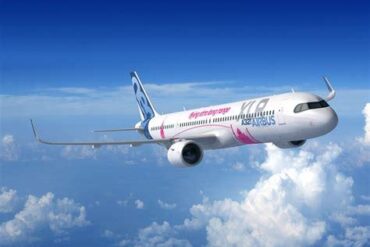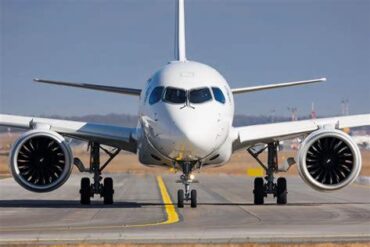
The aviation industry rarely changes overnight. Instead, transformation tends to arrive subtly—through incremental innovations that, over time, reshape the very foundations of how airlines operate. The Airbus A321XLR is one of those rare exceptions. It hasn’t arrived with the spectacle of a brand-new widebody program, yet it is quietly rewriting the economics, geography, and strategy of global air travel.
What makes the A321XLR extraordinary is not just its range, but its strategic precision. It targets a gap that has existed for decades—a space between oversized widebody aircraft and short-range narrowbodies. Airlines have long struggled with routes that generate just enough demand for nonstop service, but not enough to justify deploying aircraft like the Boeing 787 Dreamliner or Airbus A330. The result has historically been inefficient operations, seasonal service, or reliance on connecting hubs.
The A321XLR eliminates that compromise. It introduces a new level of route-level precision, enabling airlines to operate long-haul flights with smaller aircraft while maintaining profitability. In doing so, it is not merely improving aviation—it is reshaping the map of global connectivity.

Why the A321XLR Exists: Solving Aviation’s Most Persistent Problem
For decades, airlines have faced a structural dilemma when expanding long-haul networks. Large aircraft offer capacity but require consistently high demand. Smaller aircraft offer flexibility but lack the range to cross oceans. This imbalance forced airlines into inefficient decisions—either overcapacity or under-connectivity.
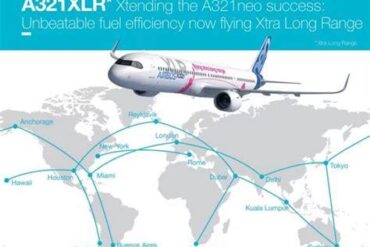
The Airbus A321XLR resolves this with remarkable clarity. With a range of approximately 4,700 nautical miles, it unlocks city pairs that were previously dismissed as commercially unviable. These are not fringe routes; they represent a vast layer of global demand sitting just below the threshold required for widebody operations.
Instead of funneling passengers through mega hubs like London, Paris, or Frankfurt, airlines can now connect secondary cities directly. This reduces travel time, improves passenger experience, and—critically—lowers operating risk. The shift is subtle but powerful: airlines are no longer forced to “bet big” on every long-haul route.
What emerges is a more granular network model, where airlines deploy capacity with surgical precision rather than brute force.
Engineering the Range: How Airbus Extended the Limits of a Narrowbody
The brilliance of the A321XLR lies in how it achieves its range without reinventing the aircraft entirely. Instead of designing a new platform, Airbus evolved the proven A321neo architecture with targeted, high-impact enhancements.
At the heart of this transformation is the Rear Centre Tank (RCT)—a permanent fuel storage system integrated into the fuselage. Unlike previous auxiliary tanks, which were removable and less efficient, the RCT maximizes fuel capacity while maintaining structural integrity. This allows the aircraft to carry significantly more fuel without compromising operational performance.
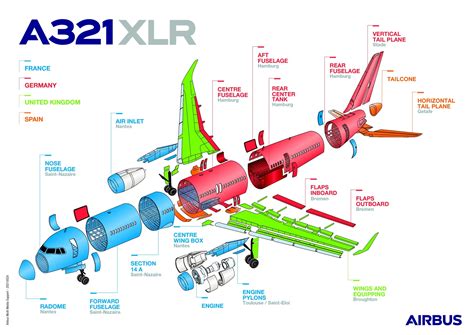
Structural reinforcements further enable the aircraft to operate at higher maximum takeoff weights. Strengthened landing gear and optimized wing configurations ensure that the aircraft can handle long-haul missions without sacrificing runway flexibility. This is crucial, as many secondary airports have shorter runways or operational constraints.
Equally important are the engines. The A321XLR is powered by next-generation options like the Pratt & Whitney GTF and CFM LEAP-1A, both designed to deliver exceptional fuel efficiency and reduced emissions. These engines are not just incremental upgrades—they are fundamental enablers of the aircraft’s economic viability.
The result is a narrowbody that behaves, in many respects, like a widebody—yet operates with dramatically lower costs.
Airlines Are Rewriting Strategy Around the A321XLR
The adoption of the A321XLR is not just about adding a new aircraft to the fleet. It represents a fundamental shift in airline strategy.
Traditionally, long-haul growth required large capital commitments and high-risk route launches. Airlines had to fill hundreds of seats consistently to justify operations. The A321XLR changes that equation by allowing airlines to scale capacity to demand, rather than forcing demand to meet capacity.
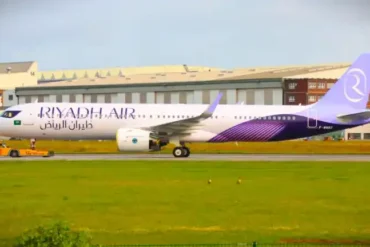
Carriers such as American Airlines, Iberia, and Aer Lingus are already leveraging the aircraft to expand transatlantic networks. These airlines are not simply adding routes—they are redefining what constitutes a viable route.
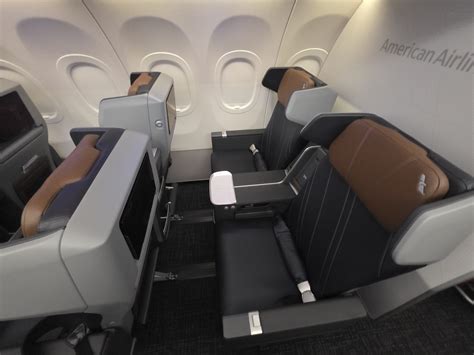
Consider the implications. A route that previously required seasonal service with a widebody can now operate year-round with a narrowbody. A city pair that once depended on connecting traffic can now sustain nonstop flights. The barriers to experimentation are significantly lower, enabling airlines to test new markets with reduced financial exposure.
This is particularly important in an era where demand patterns are increasingly fragmented. Business travel, leisure demand, and seasonal fluctuations no longer align in predictable ways. The A321XLR gives airlines the flexibility to adapt in real time.
The Rise of Secondary City Connectivity
Perhaps the most transformative impact of the A321XLR is its ability to connect secondary cities directly. This is where its influence becomes most visible—and most disruptive.
For decades, international air travel has been dominated by hub-and-spoke systems. Passengers traveling between smaller cities were often forced to connect through major hubs, adding time, complexity, and inefficiency to their journeys.
The A321XLR changes this dynamic by enabling point-to-point long-haul travel on a scale never before possible.
Routes such as Dublin to North America, Edinburgh to New York, and Madrid to Boston are becoming increasingly viable as year-round services. These are not experimental routes—they are economically sustainable operations enabled by the aircraft’s efficiency.
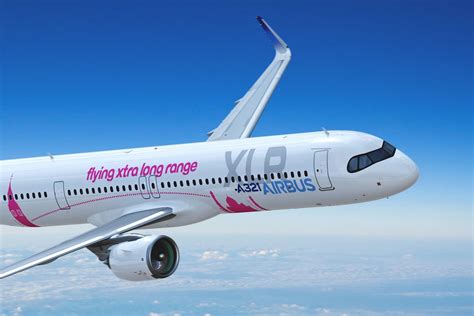
This shift has broader implications. It reduces congestion at major hubs, distributes traffic more evenly across the network, and enhances regional connectivity. For passengers, it means fewer layovers and more direct options. For airlines, it means access to previously untapped markets.
Over time, this could lead to a fundamental rebalancing of global air traffic, where secondary cities play a much larger role in international travel.
A Complement, Not a Replacement for Widebodies
Despite its capabilities, the A321XLR is not designed to replace widebody aircraft entirely. Instead, it occupies a strategic middle ground.
Aircraft like the Airbus A350 and Boeing 787 remain essential for high-demand routes connecting major global hubs. These aircraft offer higher passenger capacity, greater cargo volume, and enhanced onboard space—features that are critical for routes with sustained, heavy demand.
What the A321XLR does is remove the inefficiencies at the edges of the network. It allows airlines to deploy widebodies where they are truly needed, while using narrowbodies for routes that fall below that threshold.
This creates a more balanced fleet strategy, where each aircraft type is used to its full potential. Instead of forcing widebodies onto marginal routes, airlines can now optimize their networks with far greater precision.
The result is not replacement, but optimization.
Passenger Experience: Narrowbody, But Not Compromised
One of the most surprising aspects of the A321XLR is how it redefines passenger expectations for narrowbody aircraft.
Traditionally, long-haul travel has been associated with widebody cabins, offering spacious layouts and multiple aisles. The idea of crossing the Atlantic on a single-aisle aircraft might seem like a step backward. Yet the A321XLR challenges that assumption.
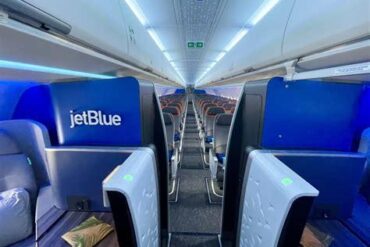
Airlines are equipping these aircraft with premium cabins, lie-flat seats, and advanced inflight entertainment systems. In many cases, the onboard experience rivals that of widebody aircraft—particularly in business class.
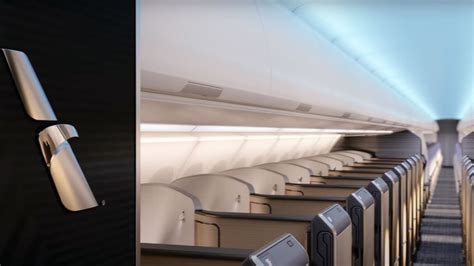
For passengers, the benefits extend beyond the cabin. Direct flights eliminate the need for connections, reducing travel time and the risk of delays. Smaller aircraft also enable more frequent departures, giving travelers greater flexibility.
In essence, the A321XLR delivers a more personalized, efficient travel experience, even if it comes in a smaller physical package.
Fuel Efficiency and the Sustainability Imperative
In an era defined by rising fuel costs and environmental scrutiny, efficiency is no longer optional—it is essential. The A321XLR addresses this with remarkable effectiveness.
Compared to older aircraft, it delivers significantly lower fuel burn per seat, making it one of the most efficient long-haul options available. This translates directly into lower operating costs and reduced carbon emissions.
For airlines, this is a critical advantage. Sustainability is no longer just a regulatory requirement—it is a competitive differentiator. Aircraft that can balance performance with environmental responsibility are becoming increasingly valuable.
The A321XLR sits at the intersection of these priorities, offering a solution that is both economically and environmentally aligned.
The Future: A New Map of Global Aviation
The long-term impact of the A321XLR will not be measured solely in aircraft deliveries or route launches. Its true significance lies in how it reshapes the structure of global aviation.
As more airlines integrate the aircraft into their fleets, the number of nonstop routes between secondary cities will continue to grow. Regions that were once peripheral to international networks may become directly connected hubs in their own right.
This evolution will be gradual, but its effects will be profound. The dominance of mega hubs may diminish as traffic becomes more distributed. Airlines will gain greater control over their networks, and passengers will benefit from more direct, efficient travel options.
The A321XLR is not just another aircraft—it is a strategic tool that enables a new way of thinking about air travel. It allows airlines to move beyond the constraints of traditional fleet planning and embrace a more flexible, responsive approach.
And that is why it stands as one of the most game-changing aircraft in the world today—not because it is the largest, fastest, or most technologically radical, but because it solves the right problem at exactly the right time.