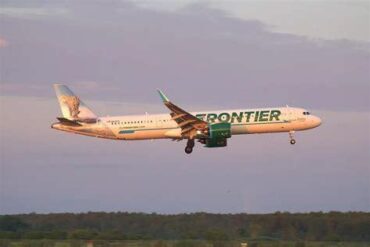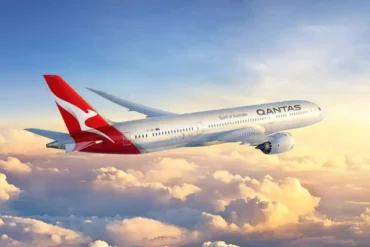
Europe’s airline map looks deceptively diverse. Dozens of national carriers crisscross the continent, paint tails with flags, and anchor major hubs from Paris to Frankfurt to Istanbul. Yet beneath that variety lies a striking structural pattern: almost every European country supports only one true legacy airline—a full-service, long-haul network carrier with alliance membership, premium cabins, corporate contracts, and deep historical roots. Germany has Lufthansa. France has Air France. Spain consolidated around Iberia. Even Italy, despite its size, has repeatedly struggled to sustain a stable flag carrier.
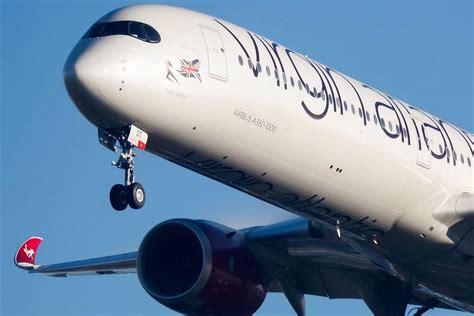
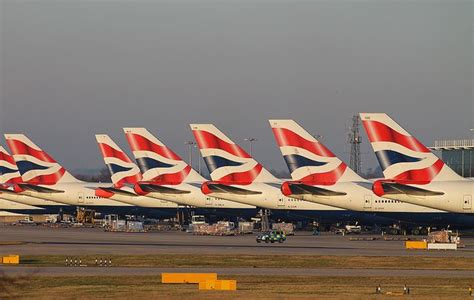
The United Kingdom stands alone. It is the only European nation that has successfully sustained two legacy airlines at scale: British Airways and Virgin Atlantic. Both operate long-haul networks, court business travelers, invest heavily in premium products, and anchor themselves in global alliances. This is not an accident of branding or luck. It is the outcome of history, regulation, geography, economics, and a uniquely British appetite for competition.
Understanding how this happened requires peeling back layers of post-war aviation policy, market liberalization, corporate rivalry, and consumer behavior. The result is one of the most fascinating case studies in global commercial aviation.
The Legacy Airline Model and Why It Rarely Duplicates
A legacy airline is not simply old. It is defined by structure. These carriers operate hub-and-spoke networks, offer multiple cabin classes, maintain frequent-flyer programs, and rely heavily on high-yield corporate traffic. They are capital-intensive, politically entangled, and historically protected.
Most European markets never developed space for more than one such airline. National governments traditionally designated a single flag carrier, shielding it from competition through bilateral air service agreements. When deregulation arrived in the 1990s, consolidation followed. Airlines merged, failed, or were absorbed into multinational groups. The economics favored scale, not duplication.
That makes Britain’s outcome unusual. Instead of consolidation eliminating challengers, the UK produced a stable duopoly in the long-haul premium segment.
Britain’s Outsized Aviation Gravity
The UK’s aviation ecosystem is not merely large; it is structurally exceptional. London is the world’s most connected aviation city, not by number of passengers alone, but by breadth of global destinations. Heathrow functions as a magnet for intercontinental traffic, corporate travel, finance, diplomacy, and tourism.
This matters because legacy airlines thrive on density and diversity of demand. London offers both in abundance. It generates enough premium traffic to sustain overlapping networks without collapsing yields. Few other European cities can claim the same.
Moreover, the UK’s economy has long been oriented toward global services rather than manufacturing. Finance, law, media, consulting, and technology all depend on frequent long-haul travel. That demand does not disappear when a second airline enters the market. Instead, it fragments—creating room for competition rather than collapse.
British Airways: The Institutional Giant
British Airways emerged from consolidation rather than entrepreneurship. Formed in 1974 through the merger of BOAC and BEA, it inherited route rights, aircraft, infrastructure, and political legitimacy. By the time global deregulation accelerated, BA was already embedded as the UK’s dominant aviation institution.
Its hub at London Heathrow (LHR) became one of the most valuable pieces of real estate in aviation history. Slot scarcity at Heathrow created a natural barrier to entry, reinforcing BA’s dominance. In most countries, that would have ended the story.
Yet Britain’s regulatory environment, while protective, was not absolutist. Incremental liberalization—especially on transatlantic routes—left cracks in the wall.
Virgin Atlantic: The Challenger That Wouldn’t Die
Virgin Atlantic’s survival is the single most important reason the UK has two legacy airlines. Founded in 1984, the airline did not emerge from state planning or consolidation. It emerged from entrepreneurial defiance.
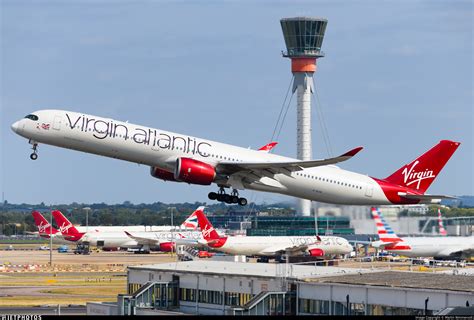
Initially operating from London Gatwick, Virgin targeted the most lucrative long-haul market available: the North Atlantic. This was a bold move. Transatlantic routes were dominated by entrenched incumbents with political backing and deep pockets.
Virgin’s early profitability was rare and revealing. It proved that demand on UK-US routes exceeded what a single carrier could efficiently serve. That excess demand became the oxygen Virgin needed to grow.
Regulation Opened the Door—Barely
The turning point came in 1991, when revisions to the Bermuda II Agreement loosened restrictions on who could fly from Heathrow to the United States. Virgin’s entry into Heathrow fundamentally altered the market. It was no longer a boutique challenger. It became a direct competitor for corporate contracts, premium passengers, and alliance relevance.
This regulatory shift is critical. In most European countries, liberalization came too late or consolidation came too fast. In the UK, the timing allowed a challenger to entrench itself before the window closed.
Competition Turned Hostile—and Public
British Airways did not welcome this intrusion. The rivalry between BA and Virgin became legendary, spilling into courts and headlines. BA’s infamous “dirty tricks” campaign—designed to undermine Virgin’s reputation—backfired spectacularly, ending in a costly libel settlement.
The episode mattered beyond the money. It framed Virgin as the anti-establishment alternative, a narrative that resonated with British consumers and corporate buyers alike.
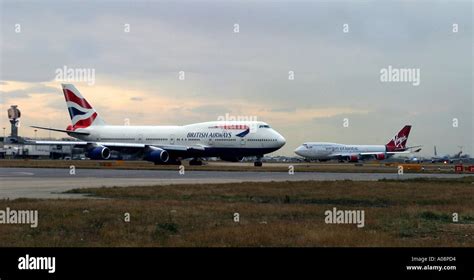
From that moment, the rivalry became structural. Neither airline could eliminate the other without destroying value. Both were now permanent fixtures.
Two Different Legacy Models, One Market
What makes the UK sustainable is not just size, but differentiation. British Airways and Virgin Atlantic evolved into distinct legacy models.
BA positioned itself as the institutional global connector, with a vast short-haul feeder network, deep alliance integration through Oneworld, and a conservative corporate identity.
Virgin focused almost exclusively on long-haul premium travel, investing heavily in business-class innovation, brand experience, and customer loyalty. It outsourced short-haul connectivity through partnerships rather than building its own costly feeder network.
These differences reduced direct duplication while preserving competition where it mattered most: premium long-haul routes.
Alliances Cemented Virgin’s Status
For years, critics argued Virgin was not a “true” legacy airline due to its lack of short-haul operations. That argument collapsed when Virgin joined SkyTeam in 2023. Alliance membership completed the legacy checklist: global connectivity, reciprocal loyalty benefits, and coordinated corporate sales.
At that point, Britain officially became Europe’s only country with two alliance-backed legacy carriers.
Heathrow’s Paradoxical Role
Heathrow is both the problem and the solution. Slot scarcity limits growth, but it also locks incumbents in place. Once Virgin secured a critical mass of Heathrow slots, it became almost impossible to dislodge.
In other countries, challengers were squeezed out before reaching this threshold. In the UK, Virgin crossed it just in time.
COVID-19 Tested the Model—and It Held
The pandemic nearly broke Virgin Atlantic. A $1.3 billion rescue package, fleet restructuring, and the introduction of cargo operations were required to survive. Yet survival itself proved the depth of the market.
If Britain could not sustain two legacy airlines, COVID-19 would have ended the experiment. Instead, Virgin emerged leaner, aligned with SkyTeam, and strategically focused on profitable long-haul routes.
That outcome confirmed something fundamental: the UK market is not artificially supporting two legacy airlines—it genuinely needs them.
Why No Other European Country Replicated This
France lacks a second hub city with comparable global demand. Germany’s federal structure still funnels intercontinental traffic into Frankfurt and Munich under Lufthansa’s dominance. Southern European markets are more price-sensitive and seasonal, favoring leisure carriers over premium networks.
Only the UK combined early deregulation, extraordinary long-haul demand, a massive financial sector, and a challenger with enough capital, branding, and persistence to survive institutional resistance.
A Rare and Fragile Equilibrium
Britain’s two-legacy-airline system is not guaranteed forever. Heathrow capacity constraints, environmental policy, and shifting corporate travel patterns all pose risks. Yet for four decades, this equilibrium has endured.
It endures because it delivers value: choice for passengers, discipline for incumbents, and resilience for the market.
In European aviation, that makes the United Kingdom not just an outlier—but a case study in how competition, when timed and structured just right, can coexist with legacy power rather than be crushed by it.