Introduction
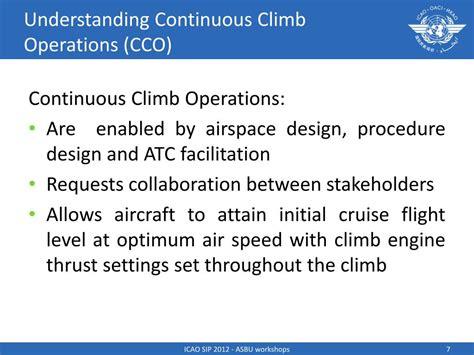
Continuous Climb Operations (CCO) is a flight technique designed to enhance aircraft performance by using optimized airspace and procedures. This method, supported by air traffic control (ATC), allows planes to follow a flight path that saves fuel while minimizing noise and emissions.
Description
The ideal vertical profile for departing aircraft involves a continuous climb at an optimal fuel-saving rate. Climbing to the most efficient altitude consumes a significant portion of the flight’s total fuel. CCO helps aircraft reach their cruising altitude swiftly and efficiently, maintaining the best airspeed and engine thrust settings. As a result, this approach lowers overall fuel consumption and emissions during the flight. When CCOs are implemented, ATC must manage airspace effectively to prevent conflicts between arriving and departing flights without imposing level or speed restrictions.
Advantages of CCO
CCO offers numerous benefits:
-
Fuel Efficiency: Aircraft perform better, leading to less fuel consumption.
-
Reduced Workload: Flight crews and controllers experience less strain since the procedures require fewer interventions.
-
Fewer Communications: CCO-based procedures typically need fewer radio transmissions compared to vector-based departures, as the complete trajectory is pre-planned in the Standard Instrument Departure (SID).
-
Environmental Benefits: Less fuel burn results in lower emissions and reduced aircraft noise due to optimal climb thrust and altitude.
Restrictions
In practice, achieving a fully optimal CCO may be challenging due to several factors:
-
Limited Airspace: Busy airspaces may not have enough vertical space for safe climbs, especially with other traffic.
-
Terrain and Obstacles: Lower-performing aircraft might face clearance issues with terrain and obstacles.
-
Environmental Regulations: Noise abatement measures could restrict the ideal climb path.
-
ATC Procedures: Existing radar protocols and SID designs may limit continuous climbs.
-
Weather Conditions: If weather avoidance is necessary, CCO procedures are often suspended since planes cannot follow the published climb paths.
Despite these challenges, CCO can still deliver significant advantages, even in shorter climbing segments.
CCO Design Considerations
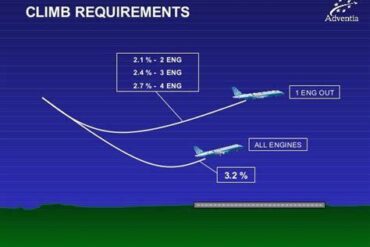
A successful CCO should ideally be part of a Standard Instrument Departure (SID) to provide a clear procedure for flight crews and controllers. After takeoff, the route should facilitate the most efficient vertical climb while also ensuring the shortest distance to the destination. An unrestricted ascent to cruising altitude without speed constraints is preferable. However, some speed limits might be necessary in congested areas or where terrain poses challenges. These restrictions may reduce flexibility but enable CCO implementation where it might not otherwise be feasible.
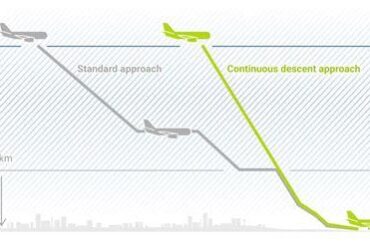
It’s important to note the different design philosophies between CCO and Continuous Descent Operations (CDO). In environments where surveillance is used, CCO designs should account for potential tactical adjustments initiated by ATC. Typically, CDOs should maintain their planned routes without shortcuts because they are already descending at idle power. Conversely, allowing ATC to make tactical shortcuts during a CCO can save time and distance.
According to ICAO Doc 9993, the best-case scenario for departure routes would eliminate any restrictions that hinder an aircraft from following its optimal flight profile. Both arrivals (STAR) and departures (SID) should avoid lateral or vertical conflicts. However, achieving this ideal situation might not always be possible, necessitating a balance between arrival and departure routes. Performance variations among aircraft during climbs can be more pronounced than during descents, making it challenging to design a single SID that works for all. One solution could involve creating different SIDs tailored to various aircraft performance classes. Compromises, such as short intermediate level-offs or less-than-optimal climb rates, may also be necessary. ICAO emphasizes that the overall efficiency for all aircraft in the system must always be a priority.