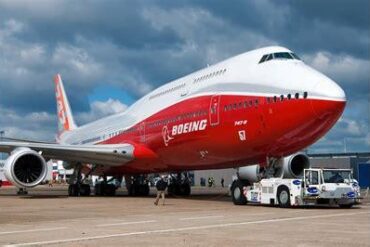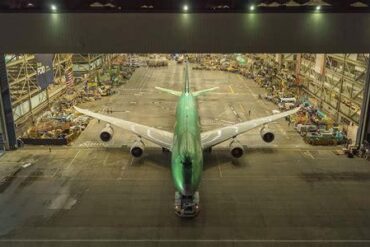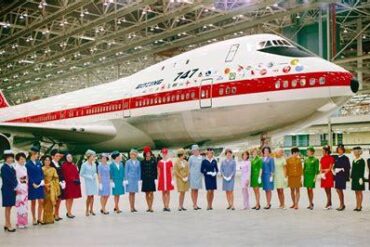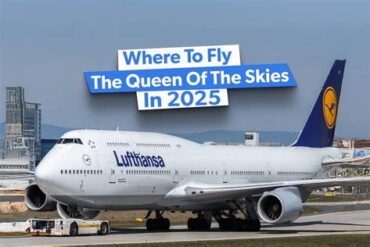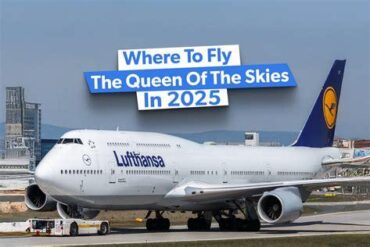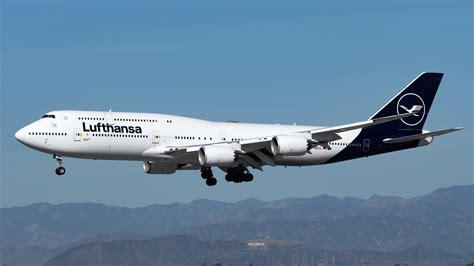
In an era where most global carriers have retired the Boeing 747, Lufthansa stands apart as the last stronghold of the iconic “Queen of the Skies.” The German airline continues to operate not one but two distinct variants of the Boeing 747 — the older 747-400 and the more modern 747-8 Intercontinental. This dual operation strategy, seemingly at odds with modern efficiency trends, is rooted in fleet pragmatism, hub constraints, premium market economics, and the complexities of aircraft availability.
A Symbol Beyond Nostalgia
Lufthansa’s attachment to the Boeing 747 transcends mere sentiment. Since the mid-20th century, long-haul travel has been central to Lufthansa’s identity, with Frankfurt Airport growing into a global mega-hub. The 747, with its unmistakable silhouette, became a symbol of German engineering excellence and global ambition. The airline’s operational commitment to both the 747-400 and 747-8 reflects a strategic understanding of market needs, not resistance to change.
The 747-8, introduced into Lufthansa’s fleet in the early 2010s, was never about nostalgia. Instead, it was chosen for its unique blend of passenger capacity, cargo space, and premium service suitability. Lufthansa sought an aircraft that could bridge the capacity of the Airbus A380 without its operational burdens, while delivering higher yields through large premium cabins.
By contrast, the 747-400, which entered Lufthansa service in the 1990s, was designed during a period when ultra-long-haul capabilities and massive passenger uplift were paramount. Although aging, it continues to play a role in Lufthansa’s global strategy due to practical necessity and market demands.
Built in Different Eras for Different Purposes
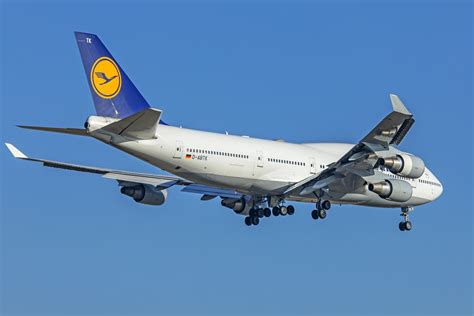
The 747-400 emerged during the golden age of quadjets. Airlines needed aircraft that could fly farther, carry more, and reduce cockpit complexity. It was Boeing’s response to a rapidly globalizing world. Featuring digital avionics, winglets, and modern engines, the 747-400 represented a technological leap. Lufthansa, having contributed to its development, tailored the variant to meet its evolving transcontinental goals.
The 747-8, by contrast, was Boeing’s strategic counter to Airbus’ A380. Rather than start from scratch, Boeing stretched the legacy 747 airframe and infused it with 787 Dreamliner technologies — including new-generation GEnx engines, redesigned wings, and improved aerodynamics. The result was a high-capacity aircraft optimized not just for size, but also for efficiency, range, and premium cabin layouts.
Complementary Missions, Not Redundancy
Lufthansa operates the 747-8 as its flagship aircraft — the crown jewel of its ultra-long-haul fleet. With 8 First Class suites and 80 Business Class seats, it caters to corporate-heavy routes and premium destinations including Los Angeles, Buenos Aires, Tokyo Haneda, and Shanghai. The aircraft’s performance sweet spot lies in its ability to maximize revenue per slot at congested airports like Frankfurt, while delivering strong belly cargo returns.
Meanwhile, the 747-400 plays a utilitarian role, deployed to high-demand destinations across India and Africa, such as Mumbai, Delhi, Nairobi, and Bengaluru. Though nearing three decades of service, the 747-400 is fully depreciated, making it cost-effective for maintaining route presence and seat supply amid fleet renewal delays. It acts as an indispensable bridge until newer aircraft can fully assume long-haul duties.
Why Modern Twinjets Can’t Replace Them — Yet
The rise of the Airbus A350 and Boeing 787 has redefined modern long-haul flying. These twinjets offer superior fuel efficiency, lower maintenance costs, and smaller environmental footprints. However, they are not direct replacements for Lufthansa’s 747 fleet.
The 747-8 delivers a level of passenger and cargo capacity that modern twins struggle to match on per-slot basis. With Frankfurt’s slot scarcity, the ability to operate a single aircraft carrying hundreds of premium passengers while hauling significant cargo is a crucial differentiator.
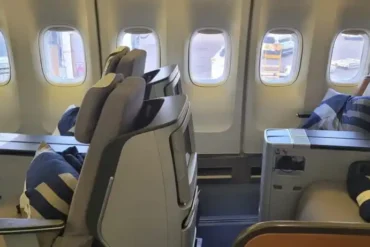
Furthermore, the Business Class-heavy layout of the 747-8 — with more than 80 lie-flat seats — is tailored to premium markets with consistent corporate travel demand, such as transatlantic and East Asian routes. The 747-8’s unique combination of range, yield, and payload makes it strategically irreplaceable for now.
The 777X Delay: A Temporary Lifeline for the 747-400
Lufthansa’s continued use of the 747-400 is less about choice and more about circumstantial necessity. The long-awaited Boeing 777X, originally slated for delivery in the mid-2020s, has been repeatedly delayed, now expected no earlier than 2027. Simultaneously, Lufthansa’s orders for A350s and 787s are being fulfilled slower than projected.
These logistical bottlenecks have forced Lufthansa to extend the 747-400’s tenure. Rather than reduce long-haul capacity or scale back key routes, the airline leverages the 747-400 as a high-capacity workhorse, enabling continuity and consistency in its global operations.
The Cost of Dual Jumbo Operations
Operating two different quadjet types comes with unavoidable downsides. The 747-400’s maintenance costs are steadily rising, with parts becoming scarcer and fuel efficiency trailing behind modern aircraft. The type requires more intensive MRO planning, and as global operators phase out the 747-400, supply chains thin, increasing complexity.
Even the 747-8, though vastly improved, is not exempt from scrutiny. As a four-engine aircraft, it consumes more fuel per seat than A350s and 787s. Additionally, its unique status within Lufthansa’s fleet makes redeployment and crew scheduling more rigid, reducing operational flexibility.
Cabin Configuration: Premium vs Capacity
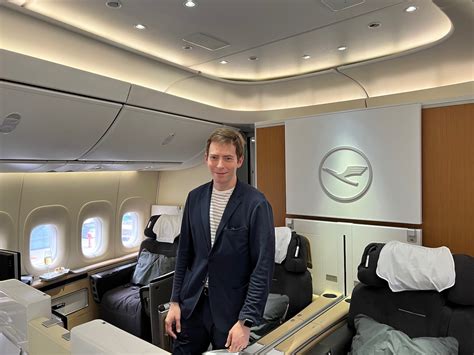
The interior configuration of the two variants highlights their divergent missions. Lufthansa’s 747-8 features:
- 8 First Class suites
- 80 Business Class seats
- 32 Premium Economy
- 244 Economy
By comparison, the 747-400 carries:
- 67 Business Class seats
- 32 Premium Economy
- 272 Economy
This stark contrast underscores the 747-8’s premium yield focus, while the 747-400 is designed for maximum seat uplift, making it more viable for markets where volume trumps yield.
Lufthansa’s Strategic Outlook for the 2030s
Looking ahead, Lufthansa plans to retire its 747-400s by 2026–2027, aligning with the expected arrival of the 777X and accelerated deliveries of the 787 and A350. However, the 747-8 is here to stay, likely serving into the early to mid-2030s as Lufthansa’s primary flagship.
This extended presence reflects a unique convergence of market needs and operational strategy:
- Premium-heavy routes requiring high Business Class capacity
- Cargo-intense destinations where belly volume is crucial
- Slot-restricted airports where seat-per-slot efficiency matters
- Brand prestige tied to a recognizable and revered aircraft
Few other airlines retain such conditions. Hence, while others have moved on, Lufthansa continues to find value in the Queen of the Skies — not as a legacy burden, but as a carefully wielded asset.
Lufthansa: The 747’s Final Guardian
With other operators like British Airways, Korean Air, and Air India phasing out their 747 fleets, Lufthansa stands as the last major airline to uphold the Boeing 747’s legacy in dual generations. Its willingness to deploy two variants reflects an agile, if unconventional, approach to network management in a fast-changing aviation landscape.
While environmental pressures and fuel costs will eventually push even the 747-8 out of service, its continued success on Lufthansa’s flagship routes affirms the enduring relevance of the jumbo jet — when paired with the right market and strategy. In doing so, Lufthansa ensures that the Boeing 747 remains more than an icon of the past. It remains a living, flying emblem of adaptability, resilience, and premium long-haul aviation.