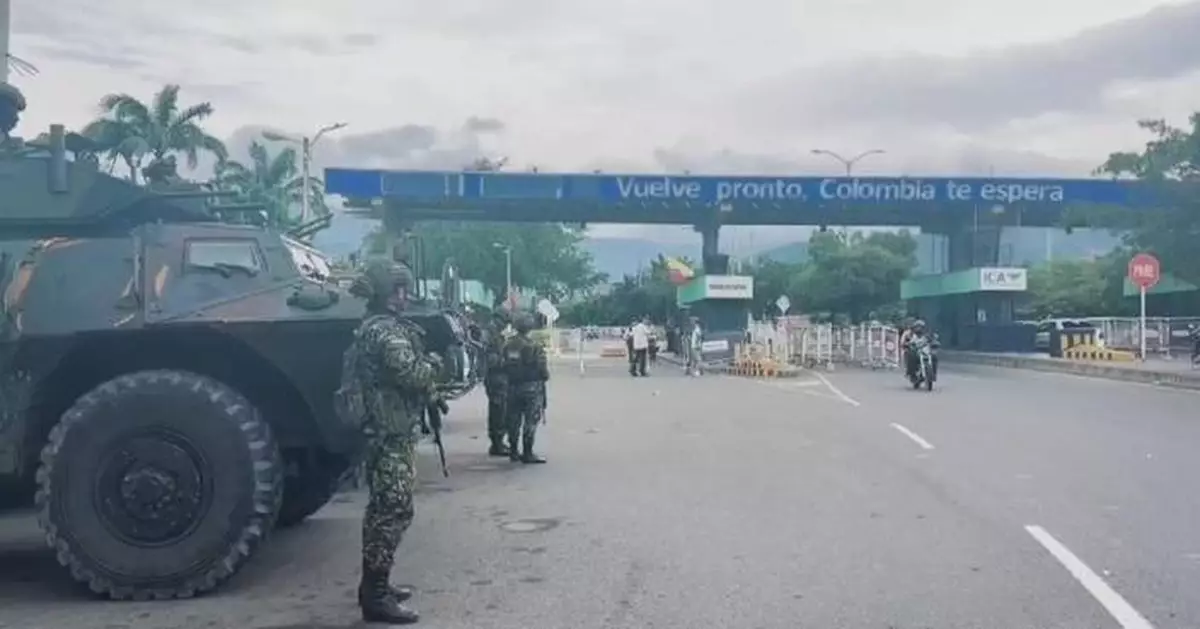
In a stunning escalation of geopolitical tensions in Latin America, Colombia has deployed military forces to its eastern border in the aftermath of a U.S.-led military operation that resulted in the capture of Venezuelan President Nicolás Maduro. The operation, ordered by U.S. President Donald Trump, has not only triggered widespread international condemnation but also raised the specter of regional instability in a zone historically sensitive to foreign interventions.
Colombia’s Strategic Border Response
Colombian President Gustavo Petro responded swiftly to the news of the U.S. incursion. Describing the strike as an “assault on the sovereignty of Latin America,” Petro ordered the deployment of Colombian security forces to the Venezuelan border to deter possible spillovers of violence and humanitarian displacement. He emphasized the need for dialogue while also taking assertive action to “preserve stability at the border.”
Petro’s administration has requested an urgent session with the Organization of American States (OAS) and the United Nations, aiming to review the legality of the American military action. In his address on X (formerly Twitter), Petro signaled deep concern that the unfolding crisis could become a flashpoint for violence, terrorism, and a potential refugee surge.
Colombian Defense Strategy in Action
Defense Minister Pedro Sanchez stated that all security capabilities had been activated. The deployment focuses on monitoring illegal armed groups, such as the National Liberation Army (ELN) and other dissident factions, that may exploit the chaotic situation along the border.
Security analysts warn that these groups could use the crisis to launch attacks, smuggle arms, or recruit fighters, further exacerbating instability in already volatile regions. The move reflects Colombia’s strategic imperative to contain chaos within Venezuela’s borders while avoiding direct military engagement with either Venezuela or the United States.
The U.S. Military Operation and Maduro’s Capture
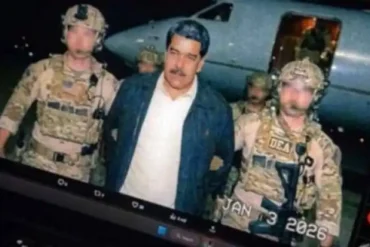
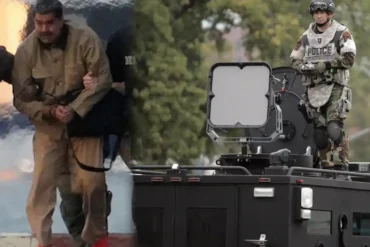
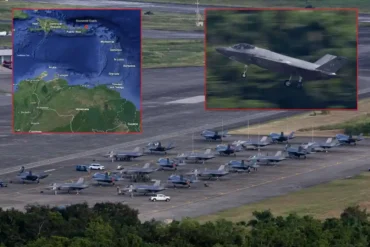
The international community was jolted when President Donald Trump confirmed that U.S. forces had executed a large-scale strike on Venezuelan soil. The operation resulted in the capture of President Nicolás Maduro and his wife, both of whom were reportedly flown out of the country under U.S. custody.
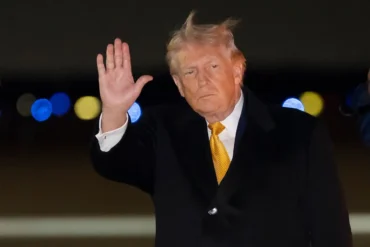
Trump announced via Truth Social that the mission was successful and conducted in coordination with U.S. law enforcement agencies. While the operation’s legal basis remains unclear, its political implications are far-reaching.
Russia’s Swift Condemnation and Global Backlash
Russia quickly entered the fray, issuing a sharp rebuke of U.S. actions. The Russian Foreign Ministry demanded “immediate clarification” regarding what it termed the abduction of Venezuela’s legitimate head of state. Moscow’s statement expressed deep alarm over what it views as a breach of international law and a dangerous precedent in foreign policy.
The capture of Maduro has intensified fears of global power entanglements and proxy conflicts developing in South America. Russia, a key ally of both Maduro and former Venezuelan leader Hugo Chávez, maintains significant military and economic ties with Caracas. As such, the stakes for international diplomacy are now extraordinarily high.
A Legacy of U.S. Intervention in Latin America
The U.S. strike and removal of Maduro are the latest in a long lineage of American military interventions across Latin America. From Cold War power plays to anti-drug operations, the U.S. has consistently sought to reshape regional political landscapes.
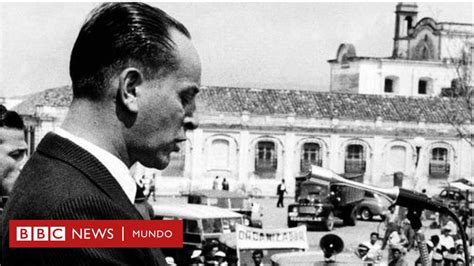
- In 1954, the U.S. orchestrated a coup in Guatemala, deposing President Jacobo Árbenz to protect corporate interests.
- The 1961 Bay of Pigs invasion in Cuba aimed to overthrow Fidel Castro, resulting in failure and a hardened Cuban resistance.
- In 1965, U.S. forces intervened in the Dominican Republic to suppress leftist movements.
- During the 1970s, Washington provided overt and covert support to dictatorships in Chile, Argentina, and Brazil, often under the banner of anti-communism.
This trend continued into the 1980s, with massive funding for the Contras in Nicaragua, and deep involvement in El Salvador’s civil war, leaving tens of thousands dead. The 1983 invasion of Grenada and the 1989 removal of Manuel Noriega in Panama further illustrate a consistent U.S. policy of regime change when leaders conflicted with Washington’s strategic objectives.
Humanitarian and Political Consequences
President Petro’s warning of a looming humanitarian crisis is not hyperbolic. Venezuela is already enduring economic collapse, hyperinflation, and widespread food and medical shortages. With its president captured and military command structure likely in disarray, the likelihood of mass displacement and civil unrest has surged.
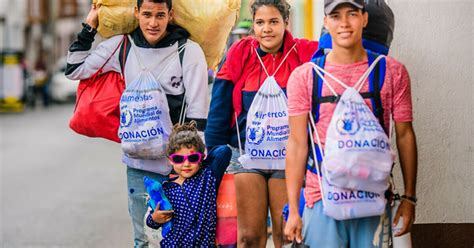
Colombia has already absorbed more than 2.5 million Venezuelan migrants over the past several years. A new influx of refugees would further strain resources, inflame political tensions, and potentially destabilize regional governance structures.
The Future of Venezuela’s Governance
In the wake of Maduro’s removal, Venezuela’s power vacuum has created intense uncertainty. Without a clear succession plan, rival factions within the military or political elite may attempt to seize control. The absence of institutional stability, combined with foreign interference, presents a high risk of internal conflict.
Opposition leaders in exile and within Venezuela have remained largely silent or ambiguous in their responses, possibly fearing backlash or seeking to negotiate power-sharing arrangements with international actors.
International Legal and Moral Implications
Petro’s demand for an OAS and UN session underscores a critical point: under what legal framework did the United States justify its strike? Without explicit international authorization or an imminent security threat, the move may violate international sovereignty norms and the UN Charter.
The U.S. justification remains unclear beyond Trump’s assertion of protecting U.S. interests. While Washington has long criticized Maduro’s leadership as dictatorial and corrupt, this action raises the question of whether a precedent has been set for unilateral regime change.
Regional Unity or Fragmentation?
The crisis now tests the unity of Latin American nations. While Colombia has condemned the U.S. action, others may either remain silent, cautiously supportive, or fall along ideological lines. Nations with leftist leadership may rally behind Petro’s position, while others reliant on U.S. economic or military support might hedge their responses.
What remains evident is that the region stands at a crossroads between multilateral diplomacy and escalating militarization. The next steps taken by regional blocs, especially the OAS, CELAC, and the UN, will be crucial in determining whether the crisis escalates further or is contained through coordinated diplomacy.
Conclusion: A New Chapter of Uncertainty
The U.S. military strike on Venezuela and the capture of Nicolás Maduro mark a seismic event in Latin American history. Colombia’s deployment of troops, Russia’s immediate response, and the unresolved legal questions surrounding the intervention point to a rapidly evolving crisis that may reshape global perceptions of sovereignty, power, and diplomacy in the Western Hemisphere.
The future of Venezuela hangs in the balance, with potential outcomes ranging from civil conflict to internationally brokered political transition. As regional actors and global powers converge, the international community must urgently weigh the implications of force versus diplomacy, and whether peace in Latin America can be preserved in an era increasingly defined by unpredictability.