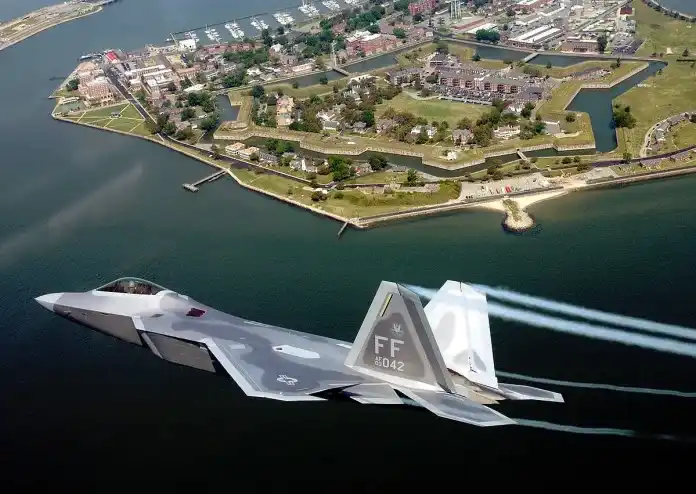
In 2013, an incident unfolded over international airspace near Iran that remains one of the most vivid demonstrations of American air superiority. An F-22 Raptor, the U.S. Air Force’s most advanced stealth fighter, silently and invisibly crept beneath an Iranian F-4 Phantom, a relic of the Cold War era, leaving the Iranian pilot both vulnerable and stunned. This unprecedented maneuver, long cloaked in secrecy, reaffirmed the technological supremacy of fifth-generation stealth fighters in a world still populated by aging fourth-generation jets.
The F-22’s encounter with the Iranian F-4 Phantoms was more than a show of muscle — it was a precise, calculated exhibition of air dominance. At the time, the Iranian jets were attempting to intercept a U.S. MQ-1 Predator drone conducting surveillance just outside Iran’s airspace. The United States had learned from earlier provocations — particularly a 2012 incident when Iranian Su-25 Frogfoot jets opened fire on a similar drone — and began assigning high-value escorts for its unmanned aerial vehicles.
The Setup: A Routine Mission With a Hidden Raptor
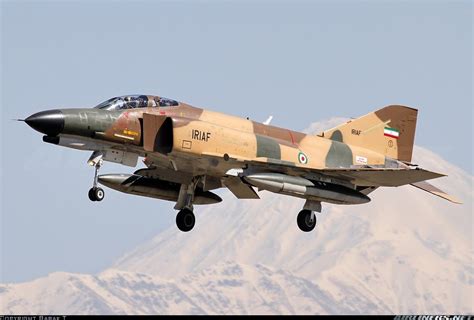
What began as a routine surveillance mission quickly turned into a textbook example of strategic air operations. Two Iranian F-4E Phantoms, aircraft originally supplied by the U.S. to Iran during the Shah’s regime in the 1970s, took to the skies with orders to confront the drone. Confident in their numerical advantage and firepower, the Phantom pilots had no clue they were being stalked.
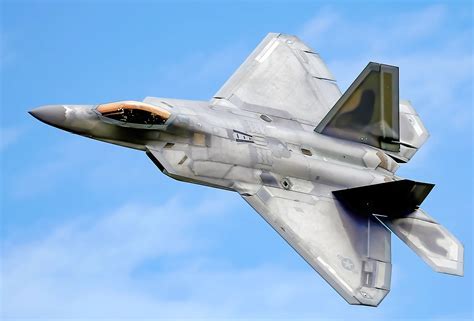
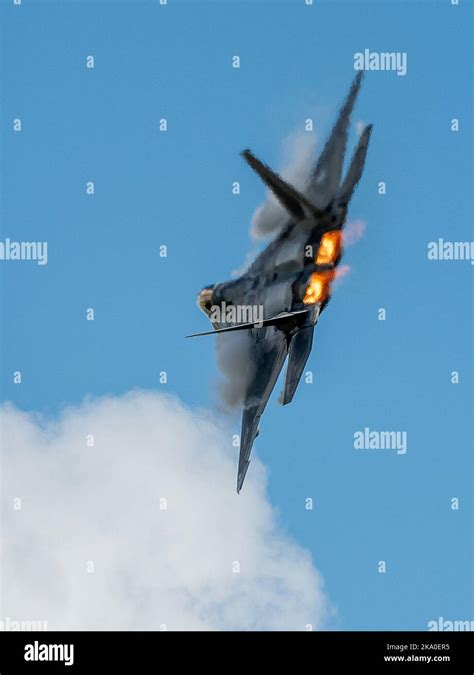
Hovering high above and behind the formation was the F-22 Raptor, operating under HVAAE (High-Value Air Asset Escort) protocols. Utilizing advanced radar-absorbent materials, angular shaping, and infrared suppression, the Raptor remained completely invisible to Iranian radar and visual contact.
According to former U.S. Air Force Chief of Staff General Mark Welsh, what happened next would go down in aviation history. The F-22 pilot closed in, dipping beneath the belly of the lead Phantom to visually inspect its weapons loadout, a maneuver so daring and stealthy that it mirrored scenes from Hollywood blockbusters.
The Moment of Truth: Silent Power Meets Cold War Metal
While undetected, the Raptor loitered under the Iranian aircraft, scanning its armament. Then, in a calculated move, the F-22 climbed up beside the left wing of the lead Phantom, startling the pilot who likely had no prior warning.
The American pilot calmly transmitted a message: “You really ought to go home.” This wasn’t just a warning. It was a stark reminder of the technological gap that separates fourth-generation legacy aircraft from fifth-generation stealth fighters like the F-22. The Iranian jets promptly abandoned their pursuit.
This stunning mid-air encounter never made global headlines at the time due to operational secrecy, but it epitomized the Raptor’s unrivaled capabilities in stealth, maneuverability, and battlefield control.
Design Superiority: How the F-22 Achieved the Impossible
The F-22’s success in this mission can be attributed to three core design advantages:
- Stealth Architecture: With a radar cross-section (RCS) akin to that of a bumblebee, the Raptor is almost invisible on radar.
- Thrust Vectoring & Supercruise: Capable of flying at supersonic speeds without afterburners, the Raptor can outmaneuver anything in the air.
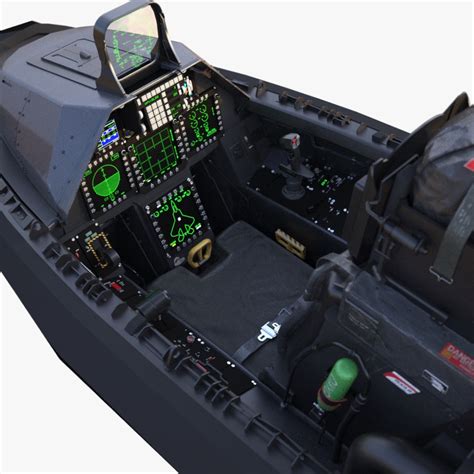
- Advanced Situational Awareness: With fusion sensors and 360-degree data sharing, F-22 pilots enjoy a godlike view of the battlespace.
In contrast, the Iranian F-4s, although upgraded over the years, still rely on analog avionics, basic radar, and visual tracking, making them easy prey for a modern stealth fighter. The air combat doctrine that defines victory in today’s skies is based not on firepower alone but on who sees first, who fires first, and who remains unseen.
Wider Implications: A Warning Beyond the Skies
This episode did not merely end with an Iranian withdrawal. It sent a message across the region and the world. The United States had weaponized invisibility. In an environment where dogfights are rare and beyond-visual-range (BVR) engagements dominate, the ability to stalk enemy aircraft undetected is a psychological and tactical advantage.
At the time, U.S. officials refrained from officially naming the aircraft involved. Only later, through accounts from senior military leaders and leaked briefings, did the full scope of the operation emerge. General Welsh’s statement—detailing how the F-22 closed in under the Iranian jets and calmly advised retreat—was a unique public admission of the F-22’s real-world combat readiness, despite it not having yet seen formal combat duty.
Escalation & Modern Context: Lessons From a Forgotten Dogfight
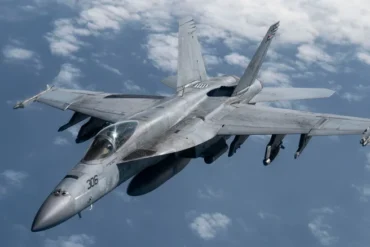
In the years that followed, the United States continued to adjust its drone escort strategy. Depending on proximity to hostile airspace, F/A-18 Super Hornets were deployed from carrier groups like the USS John C. Stennis, while F-22s were stationed at Al Dhafra Air Base in the UAE.
By 2024, the geopolitical landscape had further intensified. In response to rising threats from Iranian-backed groups and increasingly aggressive drone and missile attacks, the Pentagon again deployed F-22 squadrons to the Middle East. These deployments underscored how the Raptor, originally envisioned as an air-superiority tool, had evolved to play roles in drone defense, precision threat detection, and force projection.
The 2013 encounter resurfaced in public discourse amid the Iran-Israel conflict of 2025, where President Trump hinted at using the F-22s based in RAF Lakenheath, England, for precision operations over Iran. As war drums grow louder and UAVs become pawns in proxy wars, the need for stealth dominance is more urgent than ever.
Psychological Warfare: The Power of Being Unseen
Stealth fighters are not just military assets; they are psychological weapons. The sheer unpredictability and presence of an F-22 in the sky can alter enemy tactics, delay operations, and sow fear. Iranian pilots trained on older platforms, even with upgrades, simply cannot anticipate or respond to the kind of threat an F-22 presents.
The encounter also provided valuable tactical data for U.S. defense planners. It proved that enemy pilots flying legacy aircraft may not even realize when they’re being shadowed, leaving them defenseless. For Iran, this was a bitter lesson in vulnerability. For the U.S., it reaffirmed a doctrine of uncontested air dominance.
Stealth As Strategy: The F-22’s Ongoing Role in the 21st Century
While the F-22 was later formally deployed against ISIS targets in Syria in 2014, the 2013 Iran incident arguably marked its unofficial debut in operational stealth warfare. Its capacity to function both as an aggressor and a guardian — protecting valuable assets like surveillance drones — showcases its versatility.
Despite the introduction of newer platforms like the F-35 Lightning II, the F-22 remains irreplaceable in air-to-air combat scenarios due to its unmatched agility and lower radar profile. Even as defense strategies evolve to address unmanned threats, hypersonic missiles, and cyber warfare, the relevance of the F-22 endures.
In future confrontations, especially in contested environments like the South China Sea, the F-22 will remain the vanguard of U.S. deterrence, capable of paralyzing enemy air forces without ever being seen.
Conclusion: One Raptor, Two Phantoms, and a Lesson in Air Superiority
The 2013 incident was not merely a near-dogfight — it was an asymmetric chess match in the sky, where one side didn’t even know they were in checkmate until the moment passed. The F-22’s flawless execution of stealth, speed, and psychological leverage demonstrated that air superiority is not just about technology — it’s about how invisibility is wielded as power.
In a volatile world marked by surveillance warfare and shadow conflicts, the legacy of the Raptor’s phantom interception lives on, proving that sometimes, the loudest message comes from the jet no one ever saw.