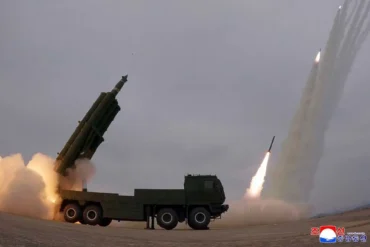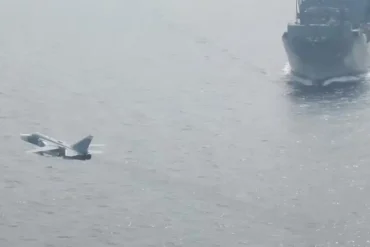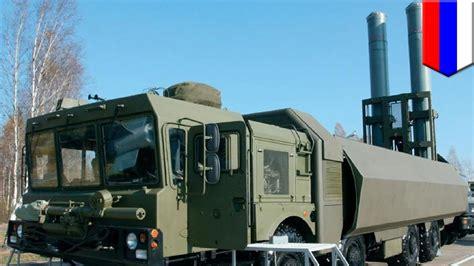
Russia has ignited fresh tensions in the High North by deploying its fearsome Bastion coastal missile launchers to the windswept shores of the Barents Sea, sending an unmistakable warning to NATO allies encroaching near its Arctic flank. The operation, part of a sweeping military drill codenamed “July Storm,” reveals a sharpened edge in Moscow’s Arctic policy—one that now rests on radar-guided cruise missiles, multi-theater naval coordination, and deliberate power projection.
July Storm: Russia’s Largest Naval Drill of the Year
The July Storm exercises, running from July 23–27, are the Russian Navy’s most extensive drills of 2025, spanning four critical maritime theaters—the Pacific, Arctic, Baltic, and Caspian Seas. Under the leadership of Admiral Alexander Moiseyev, Commander-in-Chief of the Russian Navy, the operation involves:
- 150 warships and auxiliaries
- 120 military aircraft
- 10 coastal missile units
- Approximately 15,000 personnel
The Northern Fleet’s participation, especially in the Barents Sea, underscores its strategic priority in the Russian military doctrine. From frigate Admiral Golovko to cruiser Marshal Ustinov, a flotilla of warships surged out of Kola Bay, backed by air-defense units rehearsing interceptions above the icy waters.
This multi-pronged exercise is not merely symbolic. The Defence Ministry emphasizes that it is testing “non-standard operational tasks,” including long-range precision strikes, integration of unmanned platforms, and deployment of new-generation weapons designed to keep adversaries guessing.
Why the Barents Sea Matters: A Cold Arena Heating Up
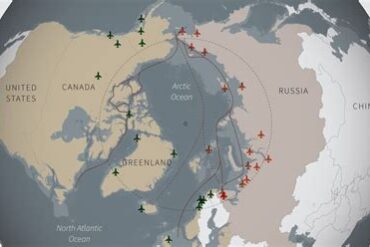
The Barents Sea, bordered by Russia and Norway, has transformed into a flashpoint in Arctic geopolitics. Once a relatively quiet expanse north of the Kola Peninsula, the region is now a militarized corridor, connecting Russia’s northern naval bastions to contested Arctic waters. Crucially, the Barents is the gateway for Russia’s nuclear ballistic missile submarines (SSBNs) to enter open ocean patrols—a central pillar of Moscow’s strategic deterrent.
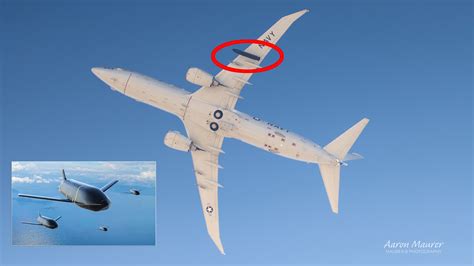
Over the past decade, Western militaries have intensified surveillance and presence in this theater. NATO aircraft—from Norway’s P-8 Poseidon to America’s RC-135 Rivet Joint—now patrol its skies with regularity, capturing telemetry and electronic signatures from Russia’s most sensitive assets. The deployment of Bastion missile launchers here is thus a strategic maneuver to reinforce Russia’s bastion defense doctrine—a layered shield designed to protect its submarine fleets from Western encroachment.
Bastion-P Missile System: Arctic Teeth for Coastal Defense
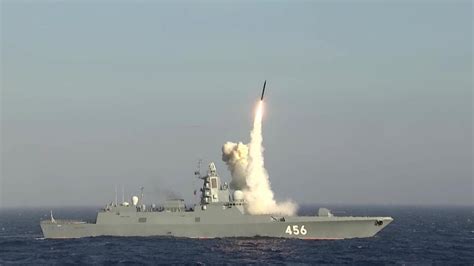
The K-300P Bastion-P, also designated as SSC-5 “Stooge” by NATO, is no ordinary missile system. This mobile coastal defense platform is armed with the P-800 Oniks supersonic cruise missile, capable of striking enemy vessels up to 300 kilometers away.
Each missile travels at 750 meters per second, flying mere meters above the sea surface during terminal phase to avoid radar detection. Its dual-mode seeker, combining active radar and infrared imaging, allows it to distinguish and track targets even under heavy jamming environments—a critical capability in any NATO engagement zone.
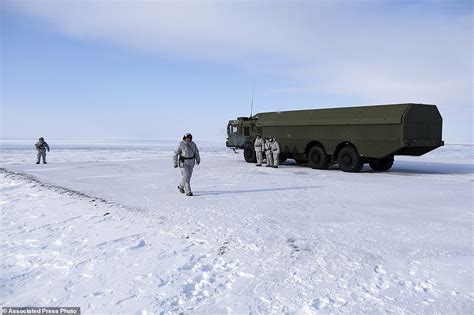
Each Bastion launcher carries two Oniks missiles, loaded into vertical launch containers, and mounted on high-mobility chassis that can traverse rugged Arctic terrain. Designed to be deployed in less than five minutes, these systems turn remote coastlines into lethal anti-ship kill zones.
Russia has used these platforms not just defensively but as strategic deterrents—previously seen on Crimean shores facing the Black Sea and now anchoring its northern frontier.
NATO Watches From Above: Surveillance in the Arctic
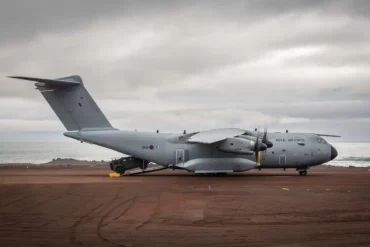
The Russian military’s movements have not gone unnoticed. During the height of the July Storm, a Norwegian P-8 Poseidon flew over the exercise zone’s western edge. The next day, a US RC-135 reconnaissance jet performed electronic sweeps near the Kola Peninsula, gathering signals intelligence on Russian operations.
This aerial choreography of observation speaks to a deeper cat-and-mouse dynamic now playing out across the Arctic. Every Russian deployment is met with Western surveillance. Every radar activation invites a scan. In this icy arena, silence is no longer a sign of peace—it’s a tactical pause.
The Arctic Bastion Strategy: Drawing the Line in Ice
At the heart of Russia’s deployment is a revitalization of its bastion defense concept, first developed during the Cold War. The idea is to lock down strategic maritime areas, particularly those that house SSBNs, using layered defenses—including submarines, surface ships, air defenses, and now, mobile missile systems.
By positioning Bastion systems near the Bear Gap, a narrow chokepoint between Nordkapp and Franz Josef Land, Russia aims to control naval access into the Arctic. Retired Indian Air Force pilot Vijainder K Thakur points out that this deployment is not a mere training ritual, but a geostrategic reinforcement against rising NATO pressure.
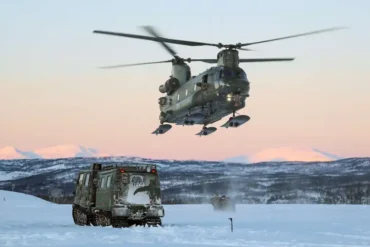
Moscow views recent Western actions—such as the U.S. Navy reactivating the Second Fleet in 2018 and NATO creating the Joint Force Command in Norfolk (2021)—as deliberate provocations. These moves, paired with Finland and Sweden joining NATO, have radically altered the strategic balance in the Nordic-Baltic region, turning the Baltic Sea into a quasi-NATO waterway.
The Shadow of Ukraine and the Arctic Council Freeze-Out
Russia’s military assertiveness in the Arctic also traces back to its broader diplomatic isolation since the 2022 invasion of Ukraine. After launching its so-called “special military operation,” Moscow was suspended from the Arctic Council—a once-symbolic forum for cooperation among Arctic nations.
This exclusion from Arctic diplomacy came just as Russia held the council’s rotating chairmanship, amplifying its perception of Western betrayal. In response, the Kremlin shifted emphasis from multilateral cooperation to unilateral assertion. The result is today’s heavily militarized Arctic posture.
Russia’s Measured Posture: Signaling, Not Escalation
Despite the fierce optics of Bastion deployments, analysts argue that Russia’s actions are more strategic signaling than escalation. Vijainder K Thakur contends that the Kremlin is drawing defensive lines, not expanding offensive fronts.
He compares NATO’s behavior to that of Pakistan’s military establishment—“keeping itself relevant through constant demonization of the adversary,” he says. In this view, the growing NATO presence in the Arctic is creating the very threat that Russia is now moving to counter.
Through July Storm, Moscow broadcasts that the Arctic is no longer a passive frontier. It’s a contested theater, and Russia intends to defend it with precision weaponry, mobile launchers, and assertive strategy. The melting polar ice may open new sea lanes, but it also unfreezes old rivalries.
Conclusion: From Ice to Iron—Russia’s Arctic Resolve
As the Barents Sea churns under the shadow of Bastion missiles, the message is stark: Russia is drawing its northern red line. With hypersonic-capable cruise missiles in place, electronic surveillance crisscrossing the skies, and a full navy-wide drill underway, the Arctic has become a live-fire signal post in the great-power rivalry between East and West.
Moscow’s moves are not impulsive—they’re architectural. Layer by layer, radar by radar, missile by missile, Russia is rebuilding its Arctic bastion. It’s not the Arctic of the past, where diplomacy and science dominated. Today, it’s a theater where military resolve is iced into the terrain, and every launch pad speaks a language NATO can’t ignore.