The MD 500 helicopter series stands as one of the most iconic and versatile light utility helicopters in aviation history. Initially developed in the 1960s, this American-made aircraft has continuously evolved, maintaining its relevance across both military and civilian operations for over half a century. Its enduring presence is a testament to exceptional engineering, operational adaptability, and a design that emphasizes both performance and reliability.
Origins Rooted in Military Innovation
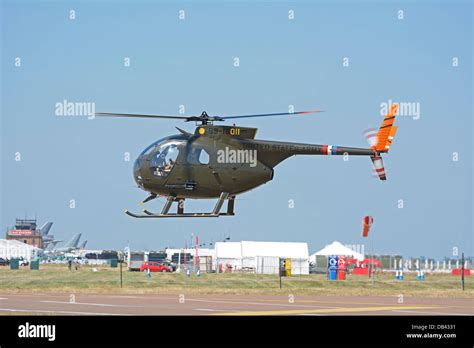
The MD 500’s story begins with the United States Army’s Light Observation Helicopter (LOH) competition during the early 1960s. The goal of the LOH program was to develop a compact, agile, and durable platform that could serve in a variety of reconnaissance and utility roles. Hughes Tool Company, then a relatively small player in the aviation market, entered the competition with what would become the OH-6A Cayuse—a revolutionary design characterized by its aerodynamic fuselage, exceptional maneuverability, and crashworthy structure.
After Hughes secured the LOH contract in 1965, civilian interest in the design surged. Hughes responded by developing the Hughes 500, a commercial variant of the OH-6A. The aircraft took its maiden flight on February 27, 1963, and was introduced into service in 1967. Over time, this model evolved into what we now recognize as the MD 500 series, encompassing various civilian and military configurations.
Corporate Evolution and Model Expansion
The MD 500 series has undergone numerous corporate transitions. Hughes Helicopters became Hughes Helicopters, Inc. in 1981 before being acquired by McDonnell Douglas in 1984. In 1997, following a merger with Boeing, the civilian line was divested to MD Helicopter Holdings Inc., which was subsequently acquired by Patriarch Partners, LLC in 2005. Today, the aircraft is produced by MD Helicopters, Inc., headquartered in Mesa, Arizona.
This evolution in corporate stewardship has resulted in the expansion of the MD 500 line to include the MD 500E, MD 520N, and MD 530F, each engineered to suit specialized performance requirements while preserving the airframe’s core characteristics—agility, speed, and reliability.
Operational Versatility and Global Adoption
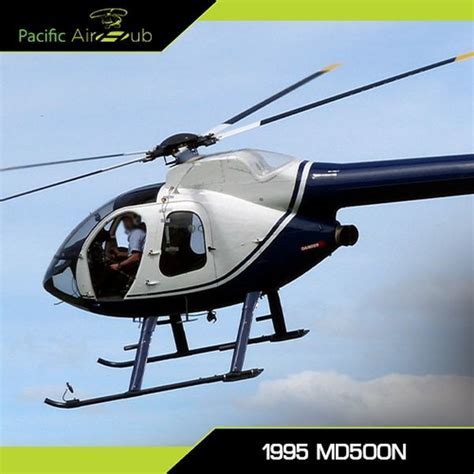
The MD 500 has built a reputation as a multi-mission workhorse. Its compact footprint, high power-to-weight ratio, and rugged construction allow it to perform exceptionally in hostile environments, including high-altitude and high-temperature regions. This makes it the preferred choice for military, paramilitary, and civil operations across the globe.
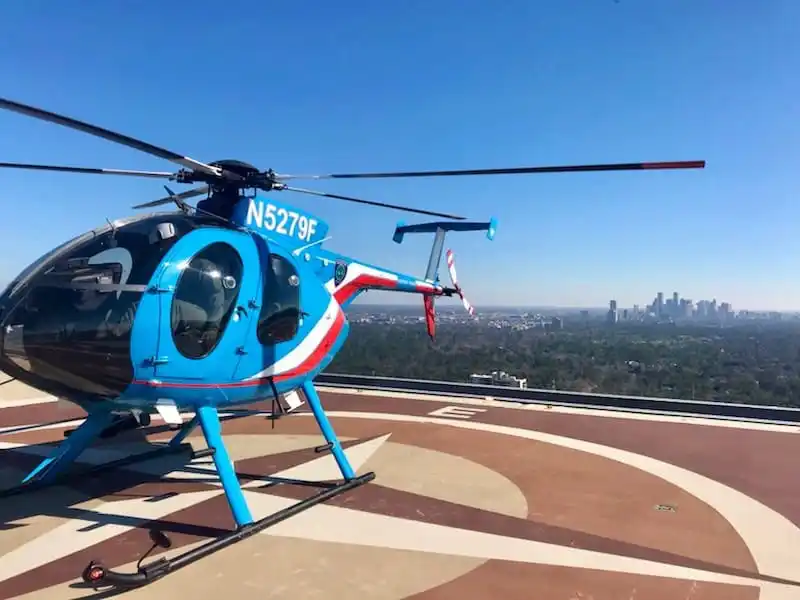
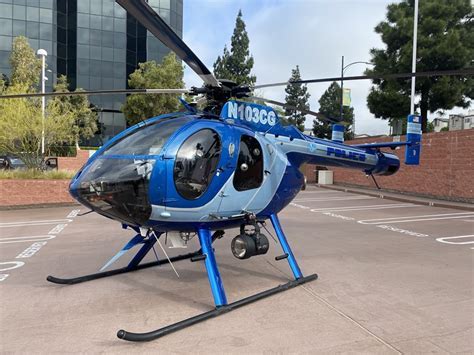
Military and law enforcement agencies regularly deploy the aircraft for reconnaissance, special operations, and border surveillance. It is widely used by police departments for SWAT deployment, pursuit operations, and search-and-rescue missions. Civilian operators utilize the MD 500 for executive transport, aerial photography, air ambulance services, and powerline inspections.
Model Breakdown: Technical Specifications and Capabilities
MD 500C: Early Civilian Workhorse
The MD 500C was one of the earliest models in the civilian line, emphasizing efficiency and agility. With a maximum takeoff weight of 2,250 lb (1,157 kg) and a 278 hp Allison 250-C20 turboshaft engine, the 500C offered a compact yet powerful platform for light utility applications.
Performance Highlights:
- Maximum Speed: 152 knots (175 mph / 282 km/h)
- Cruise Speed: 125 knots (144 mph / 232 km/h)
- Range: 375 miles (605 km)
- Service Ceiling: 16,000 ft (4,875 m)
- Rate of Climb: 1,700 ft/min (8.6 m/s)
These specifications made the 500C ideal for regional transit and tactical airlift in challenging conditions.
MD 500E: Improved Aerodynamics and Comfort
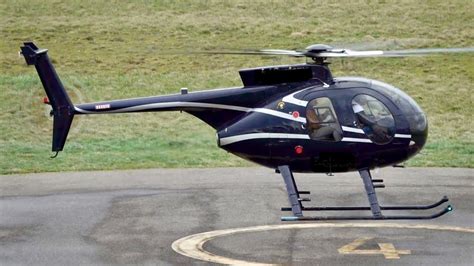
The MD 500E, a later variant, introduced enhanced cabin ergonomics, aerodynamic fairings, and a 420 hp Allison 250-C20B engine, resulting in better climb performance and smoother flight characteristics.
Key Metrics:
- Max Takeoff Weight: 3,000 lb (1,361 kg)
- Cruise Speed: 135 knots (155 mph / 250 km/h)
- Range: 267 miles (429 km)
- Rate of Climb: 1,770 ft/min (9 m/s)
The 500E’s improvements made it a preferred platform for VIP transportation, tactical surveillance, and precision utility work.
MD 530F: Power in Extreme Conditions
The MD 530F represents the high-performance pinnacle of the MD 500 series. Featuring a 650 hp Allison 250-C30 turboshaft engine, the aircraft is designed for “hot and high” operations, where thinner air at altitude or high temperature challenges engine output and lift capability.
Technical Advantages:
- Service Ceiling: 18,700 ft (5,700 m)
- Rate of Climb: 2,070 ft/min (10.5 m/s)
- Max Takeoff Weight: 3,550 lb (1,610 kg)
This variant is commonly used in mountain patrol, special forces insertions, and aerial law enforcement missions in alpine and desert terrain.
Enduring Design Features
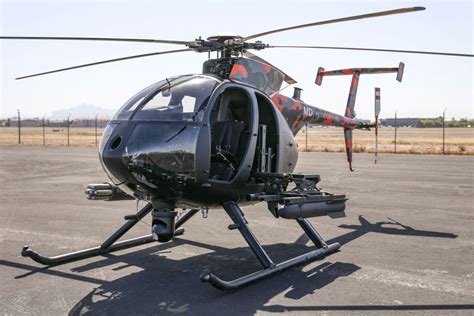
Across all its models, the MD 500 helicopter maintains a common design language—a sleek fuselage, teardrop canopy, and twin-blade tail rotor—which contributes to low drag, high visibility, and responsive handling. It also boasts shock-resistant skids, a high-mounted rotor system, and modular avionics, all of which improve pilot situational awareness and reduce maintenance burdens.
Another defining characteristic is its low noise signature, which, combined with high maneuverability, makes it an excellent platform for stealthy operations. Operators consistently report exceptional pilot feedback, ease of control, and flight stability, even in turbulent or urban environments.
Variants and Derivatives
The success of the MD 500 series also gave rise to several specialized derivatives. The MD 500 Defender, a militarized version, features weapons systems for light attack roles. The AH-6 “Little Bird”, used by U.S. Special Forces, is one of the most recognizable derivatives, often modified for close air support and troop transport during special operations.
Furthermore, the platform evolved into the MD 600 series, which includes stretched fuselage variants and increased seating capacity for expanded utility.
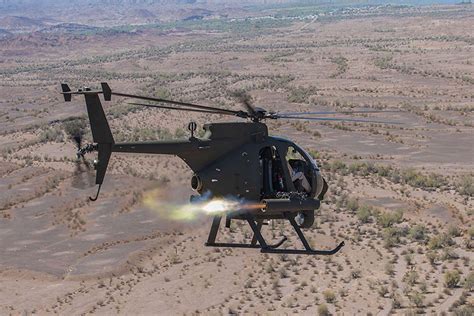
Production Legacy and Current Use
With over 4,700 units built since its introduction, the MD 500 remains one of the most successful light helicopters ever produced. It continues to see active service in over a dozen countries and has built a strong aftermarket support network that ensures operational longevity and spare parts availability for older units.
Despite the changing face of rotorcraft technology, the MD 500 series retains its place as a go-to solution for compact, reliable, high-performance helicopter missions.
Frequently Asked Questions (FAQ)
What is the difference between the MD 500E and MD 530F models?
The main differences lie in engine power and performance in high-stress environments. The MD 530F is equipped with a more powerful 650 hp engine and a larger rotor diameter, enabling it to excel in “hot and high” missions where thinner air reduces lift. The MD 500E, while also high-performing, offers improved cabin comfort and aerodynamics but is better suited for lower altitude operations.
Is the MD 500 still in production today?
Yes, the MD 500 series remains in active production by MD Helicopters, Inc. The company continues to manufacture and support several variants, including the MD 500E and MD 530F, with modernized avionics and mission-specific configurations.
What makes the MD 500 ideal for law enforcement use?
The MD 500’s maneuverability, compact footprint, and high speed make it ideal for urban pursuit, search-and-rescue, and aerial surveillance. Its ability to quickly accelerate and operate in tight spaces provides law enforcement agencies with a rapid-response tool that few other rotorcraft can match.
With a legacy carved from military excellence and adapted through decades of innovation, the MD 500 helicopter remains an indispensable platform for missions requiring speed, resilience, and precision. Its story is not only one of endurance but of transformation, continuing to meet the evolving demands of aerial operations worldwide.