The modernization of nuclear command and control infrastructure rarely captures public attention, yet it sits at the very center of strategic deterrence. In March 2026, the United States Navy took a significant step toward securing the future of its airborne nuclear communications capability by awarding a $225.1 million contract modification to Northrop Grumman for the development of the complete training architecture for the E-130J Phoenix II TACAMO aircraft. The contract underscores the importance of preparing aircrews and maintenance personnel long before the aircraft itself reaches operational deployment.
The E-130J Phoenix II program represents the Navy’s next-generation solution to a mission that has remained unchanged for decades: ensuring continuous communication between the U.S. National Command Authority and submerged ballistic missile submarines. In an environment where satellites may be jammed, ground networks destroyed, or command centers incapacitated, the TACAMO aircraft becomes a floating lifeline that carries nuclear command signals across vast distances through extremely low-frequency transmissions.
At first glance, the training component of such a program might appear administrative. In reality, it is mission-critical infrastructure, translating complex operational procedures into repeatable, reliable human performance. The newly funded training system will prepare crews to operate one of the most unusual and technically demanding aircraft missions in modern military aviation.
A Strategic Shift From the E-6B Mercury Fleet
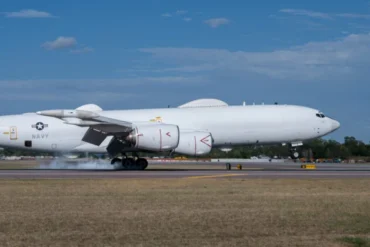
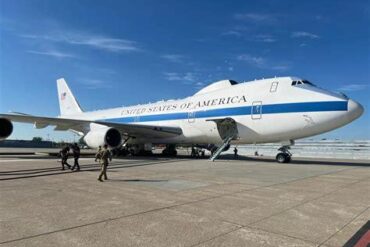
For more than three decades, the U.S. Navy has relied on the E-6B Mercury, a specialized aircraft derived from the Boeing 707 platform, to execute the TACAMO mission. The aircraft fleet consists of 16 jets that act as airborne transmitters capable of sending authenticated emergency action messages to nuclear-armed submarines operating deep beneath the ocean’s surface.
The aging 707 airframe, however, has become increasingly difficult to sustain. Maintenance complexity, dwindling spare parts, and aging avionics architectures have introduced logistical pressure on the fleet. These factors have pushed the Navy to begin transitioning toward a more modern, sustainable platform.
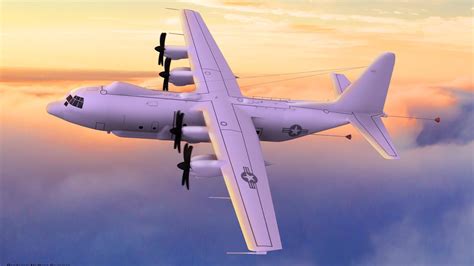
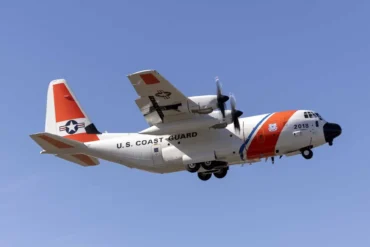
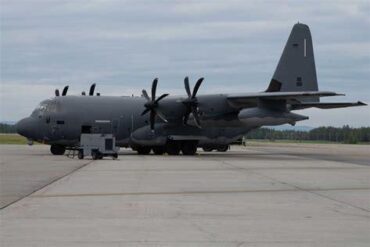
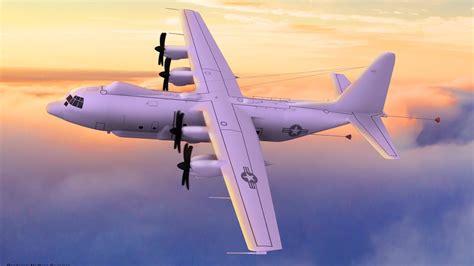
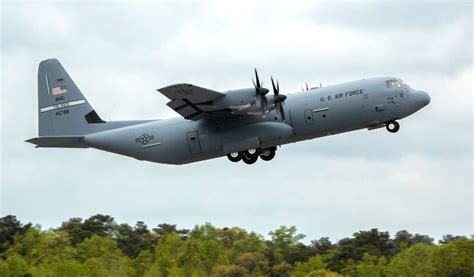
The E-130J Phoenix II program is designed to replace the Mercury fleet while preserving the essential TACAMO mission capability. Rather than building an entirely new aircraft, the Navy selected the Lockheed Martin C-130J-30 Super Hercules as the baseline airframe. The choice offers significant advantages, including a globally supported logistics ecosystem, rugged operational flexibility, and improved sustainment reliability compared to the aging 707-derived fleet.
While the airframe changes dramatically, the mission itself remains uncompromising: maintain guaranteed nuclear command connectivity under any conditions.
Understanding the TACAMO Mission
TACAMO—short for “Take Charge and Move Out”—is one of the least visible yet most essential components of the United States’ nuclear command, control, and communications architecture, commonly referred to as NC3.
The mission revolves around the ability to transmit Emergency Action Messages (EAMs) to nuclear forces when traditional communication channels may be compromised. These messages can carry orders ranging from readiness instructions to launch commands in the most extreme circumstances.
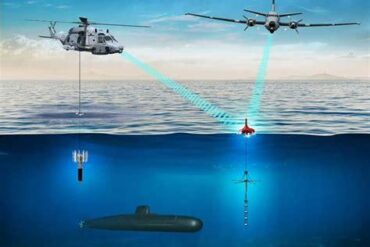
The challenge lies in communicating with submarines that intentionally remain hidden beneath the ocean surface.
Submerged ballistic missile submarines rely on Very Low Frequency (VLF) radio signals, which have wavelengths long enough to penetrate seawater at operational depths. Unlike higher-frequency radio systems used in aviation or satellite communications, VLF signals require enormous antennas and immense transmission power.
TACAMO aircraft solve this challenge by deploying miles-long trailing wire antennas from the rear of the aircraft. To ensure the antenna hangs nearly vertical—maximizing signal radiation—the aircraft must fly in slow, steeply banked circular orbits. The aircraft essentially becomes the top of a gigantic airborne antenna tower.
Operating in this configuration places unique aerodynamic and structural demands on the aircraft while also requiring extremely precise flight handling by pilots. Meanwhile, mission crews inside the aircraft manage cryptographic authentication systems, radio transmitters, and high-power communications equipment.
This combination of complex flight dynamics and high-stakes communication procedures makes training an absolute necessity.
The E-130J Phoenix II: A Modernized Communications Platform
The Phoenix II program integrates advanced mission systems onto the proven C-130J-30 airframe, creating a specialized aircraft optimized for strategic communications rather than cargo transport.
Northrop Grumman serves as the prime integrator for the aircraft’s mission system, coordinating a network of suppliers responsible for critical subsystems. Among the key contributors is Collins Aerospace, whose VLF communications technology forms the backbone of the aircraft’s submarine messaging capability.
The aircraft will feature:
- High-power VLF transmitters for submarine communication
- Advanced trailing wire antenna systems
- Hardened communications infrastructure
- Cybersecurity and electromagnetic protection
- Expanded onboard power generation and cooling systems
These modifications transform the cargo aircraft into a strategic nuclear communications relay platform, capable of operating in highly contested electromagnetic environments.
The program’s Engineering and Manufacturing Development phase includes three engineering development aircraft, along with options for additional test platforms and initial production units. The structure indicates that the Navy is preparing a direct pipeline from development to operational deployment.
Why Training Is Central to the Program
When discussing military aircraft programs, public attention typically gravitates toward hardware—the aircraft itself, its engines, or its weapons. Yet for missions tied to nuclear command authority, the human element becomes equally critical.
The new contract specifically funds the development of the full E-130J training ecosystem, covering everything from courseware and simulation environments to technical manuals and procedural instruction.
This training architecture will ensure crews understand:
- Authentication and handling of Emergency Action Messages
- Emissions control procedures
- VLF communications operations
- Trailing wire antenna deployment and recovery
- Flight envelope limitations during communications orbits
- Cyber and electromagnetic resilience protocols
The complexity of these tasks requires far more than classroom instruction. Instead, the Navy is investing in simulation-driven training environments that replicate operational conditions without relying on scarce operational aircraft.
Training Development Across Three U.S. Technology Hubs
The $225.1 million contract distributes work across multiple locations in the United States, reflecting the specialized expertise required for modern military training systems.
The work breakdown includes:
- Orlando, Florida (64%) – modeling, simulation, and advanced training systems
- Oklahoma City, Oklahoma (31%) – proximity to TACAMO operational units at Tinker Air Force Base
- Melbourne, Florida (5%) – Northrop Grumman program integration center
Orlando’s dominant role highlights its position as one of the world’s largest hubs for defense simulation technology. The city hosts numerous companies specializing in virtual training systems used across military aviation and naval operations.
Oklahoma City’s involvement ties directly to the TACAMO operational community. Tinker Air Force Base serves as the home of the Navy’s Fleet Air Reconnaissance Squadron, which operates the E-6B fleet and will eventually transition to the E-130J platform.
The geographic distribution ensures that training development remains closely linked with operational requirements rather than becoming an isolated engineering exercise.
Simulating the Nuclear Command Environment
Designing a training system for TACAMO crews involves far more than replicating aircraft controls. The training environment must recreate the procedural intensity and security discipline of nuclear command operations.
In a real mission, crews must rapidly receive encrypted emergency messages through survivable communication channels. Those messages must then be authenticated, decoded, formatted, and retransmitted using the VLF communications chain.
Each step involves strict verification protocols to prevent unauthorized or accidental transmission of nuclear commands.
The training system must therefore simulate:
- Secure communications networks
- Cryptographic authentication workflows
- Mission crew coordination procedures
- Communications planning and signal propagation modeling
- Antenna deployment mechanics
- Flight handling under VLF orbit conditions
These elements combine into a highly specialized training architecture designed to prepare crews for a mission that must work perfectly the first time.
Building Resilience Into the Nuclear Command Chain
The modernization of TACAMO capabilities reflects broader changes in strategic warfare. Modern conflicts increasingly target communications infrastructure, cyber networks, and satellite systems. In such an environment, maintaining redundant communication pathways becomes vital to nuclear deterrence stability.
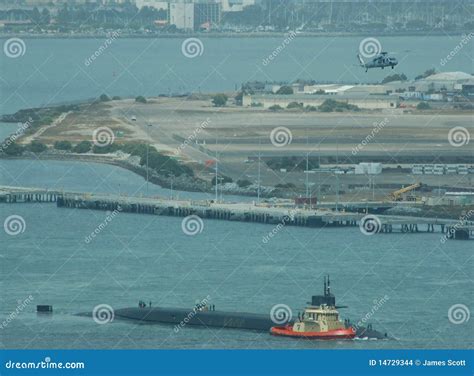
Submarine-based nuclear forces represent the most survivable component of the U.S. nuclear triad. Hidden beneath the ocean’s surface, ballistic missile submarines remain difficult for adversaries to detect or destroy. Yet their survivability depends on reliable communication with national leadership.
If satellite links were disabled or terrestrial networks destroyed, TACAMO aircraft could still relay launch instructions or command updates through VLF transmissions.
The E-130J Phoenix II ensures that this communication chain remains intact for decades to come.
From Aircraft Replacement to NC3 Transformation
Although the Phoenix II program appears on the surface to be an aircraft replacement initiative, its implications extend far deeper into the architecture of nuclear command and control.
By transitioning to the C-130J platform, the Navy gains several operational advantages:
- Greater logistical commonality with global C-130 fleets
- Improved maintenance support infrastructure
- Enhanced operational flexibility and basing options
- Increased sustainability for long-term operations
At the same time, the program aligns with broader U.S. defense efforts to modernize the NC3 ecosystem, ensuring the survivability of nuclear command systems across air, sea, space, and ground networks.
Importantly, the Navy is funding the training architecture in parallel with aircraft development, rather than waiting until late in the acquisition process. This approach reduces the risk that new aircraft could be delivered without fully trained crews ready to operate them.
In nuclear deterrence missions, that gap between hardware delivery and human readiness can represent one of the most dangerous vulnerabilities.
The $225 million investment in training therefore serves a much larger purpose: ensuring that when the E-130J Phoenix II enters service, the crews responsible for maintaining America’s most critical communication link will already possess the expertise required to execute their mission under the most extreme conditions imaginable.