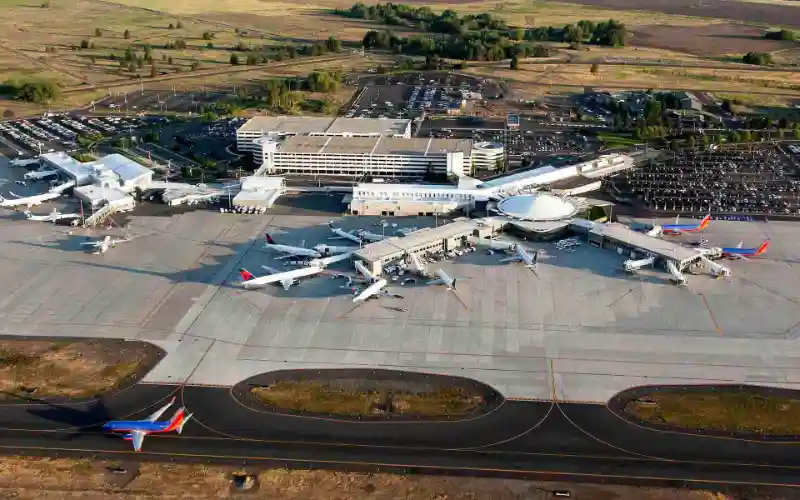
Spokane International Airport rarely dominates glossy travel rankings or viral social feeds, yet those who pass through quickly realize they have encountered something exceptional. Tucked into eastern Washington, Spokane International Airport (GEG) has quietly transformed itself into one of the most compelling examples of how a regional airport can blend architectural beauty, operational precision, and economic ambition into a single cohesive vision. What makes it remarkable is not just its aesthetic refinement, but the deliberate engineering beneath the surface—systems, materials, and planning choices that allow it to operate with a level of efficiency many larger airports struggle to achieve.
For decades, GEG served as a dependable gateway to the Inland Northwest, functional but constrained. Passenger numbers climbed steadily between 2017 and 2019, setting consecutive annual records. Then the pandemic briefly froze global aviation. Yet Spokane rebounded faster than many small-to-midsize airports across the United States, returning to more than four million passengers annually and setting its sights on a projected 6.2 million passengers per year by 2030. Growth of that magnitude demands infrastructure that anticipates tomorrow rather than reacts to yesterday. That necessity sparked the Terminal Renovation and Expansion program—known as TREX—a multi-year transformation designed to future-proof the airport.
By May 2024, the completion of the Concourse C West Terminal Expansion marked the halfway milestone of TREX’s first phase. The expansion is not merely a physical enlargement; it represents a rethinking of passenger flow, airline operations, energy management, and regional identity. Spokane did not aim to build the biggest airport in the Northwest. It aimed to build one of the smartest.
A Regional Airport Reimagined For The 2030 Travel Surge
The original terminal, though serviceable, lacked flexibility. Gate capacity could not easily expand. Passenger circulation pathways were increasingly strained during peak periods. Airlines needed more operational efficiency to support new routes. The airport’s leadership recognized that incremental fixes would not suffice; structural redesign was essential.
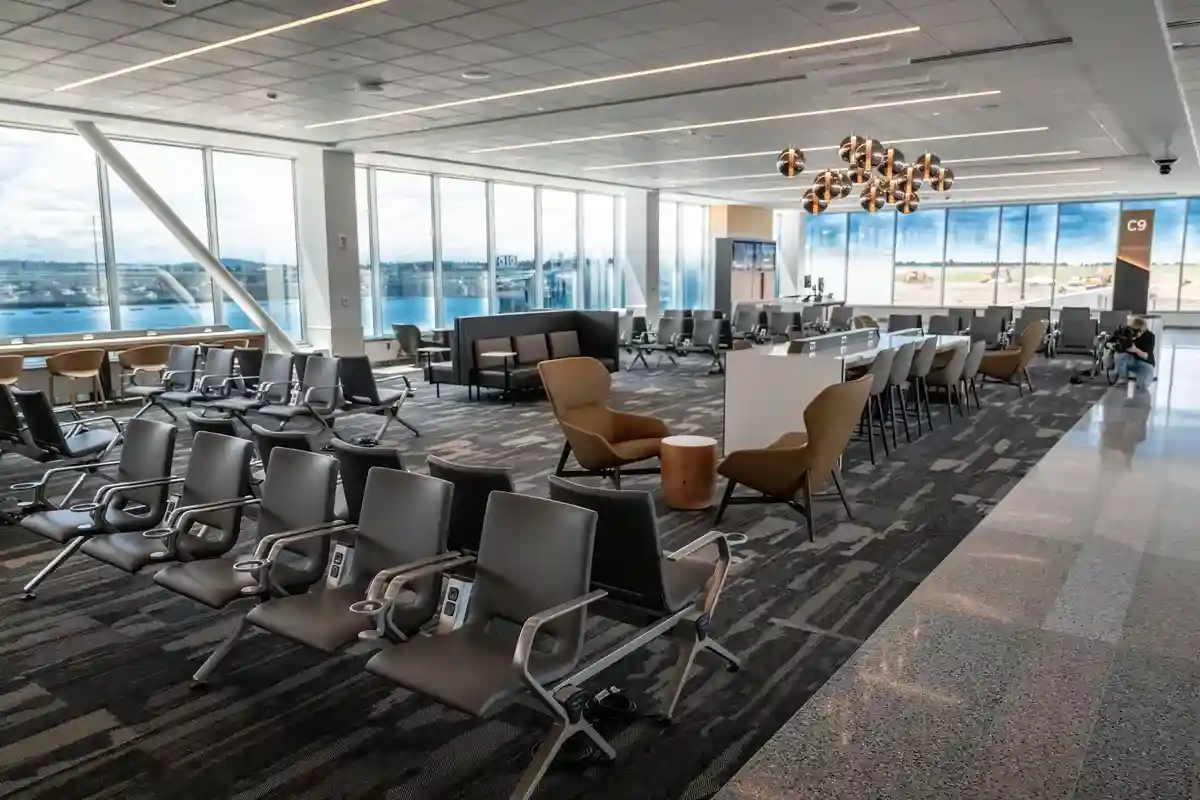
The Concourse C footprint expanded by approximately 144,000 square feet, representing a $150 million investment in strategic growth. Three new gates were added to the west side, while existing upper-level gates received upgrades. On the east side, aging boarding gates were replaced with three modern passenger loading bridges, smoothing aircraft turnaround processes. The ticketing hall was extended to include six additional airline counters, ensuring that check-in congestion does not become the hidden bottleneck of growth.
Efficiency in aviation often lives in the invisible choreography between ground crews, aircraft, security personnel, and passengers. By widening circulation corridors, relocating critical infrastructure, and modernizing mechanical and electrical systems, Spokane’s redesign reduces friction points that typically compound into delays. The result is not simply more space—it is smarter space.
Architectural Beauty Rooted In Place
Airports frequently blur into a generic aesthetic: glass, steel, polished floors, anonymous lounges. Spokane chose a different path. The new Concourse C leans unapologetically into regional identity.
Montanan basalt tiles line sections of the walls. Mother-of-pearl terrazzo floors shimmer subtly under natural light. Custom mosaics reference Inland Northwest landmarks. Spruce panels accentuate curved ceiling forms, echoing the forests that define eastern Washington’s landscape. The materials were sourced within a 500-mile radius, reducing shipping emissions while strengthening regional supply chains.

This is not decorative indulgence. Environmental psychology research consistently shows that natural materials, daylight access, and regional cues reduce traveler stress. Lower stress improves passenger flow, compliance with procedures, and overall dwell time satisfaction. Beauty, in this case, is operational strategy wearing an elegant coat.
Electrochromic Windows And Intelligent Climate Control
One of the more quietly revolutionary additions to Concourse C is the installation of electrochromic smart windows. These dynamic glass panels adjust tint levels in response to daylight intensity, minimizing glare while reducing the need for mechanical cooling.
Airports are notoriously energy-intensive. Vast glass façades invite sunlight that can overheat terminals, forcing HVAC systems to compensate. By leveraging green technology and software-driven daylight management, Spokane reduces energy consumption while maintaining passenger comfort. The glazing and upgraded curtain wall systems work in tandem with revamped lighting systems to create a calibrated interior environment that adapts throughout the day.
Energy efficiency is not only about sustainability metrics; it directly impacts operating costs. Lower long-term utility expenses free capital for service improvements and route development. In that sense, every smart window contributes to the airport’s competitive edge.
Accessibility And Human-Centered Design
True modernization includes inclusivity. The expansion incorporates in-floor hearing loops at gates, enhancing audio clarity for passengers with hearing aids. Multi-use information displays provide adaptable communication formats. Companion care rooms equipped with showers and changing stations acknowledge the diverse needs of travelers who require assistance.
A 315-square-foot nursing mother’s room offers private suites and a spa-like lounge environment—an amenity that signals thoughtful attention to traveler dignity. Restrooms were redesigned with larger stalls, outward-swinging doors for improved accessibility, and contemporary vanities that improve functionality without sacrificing aesthetics.
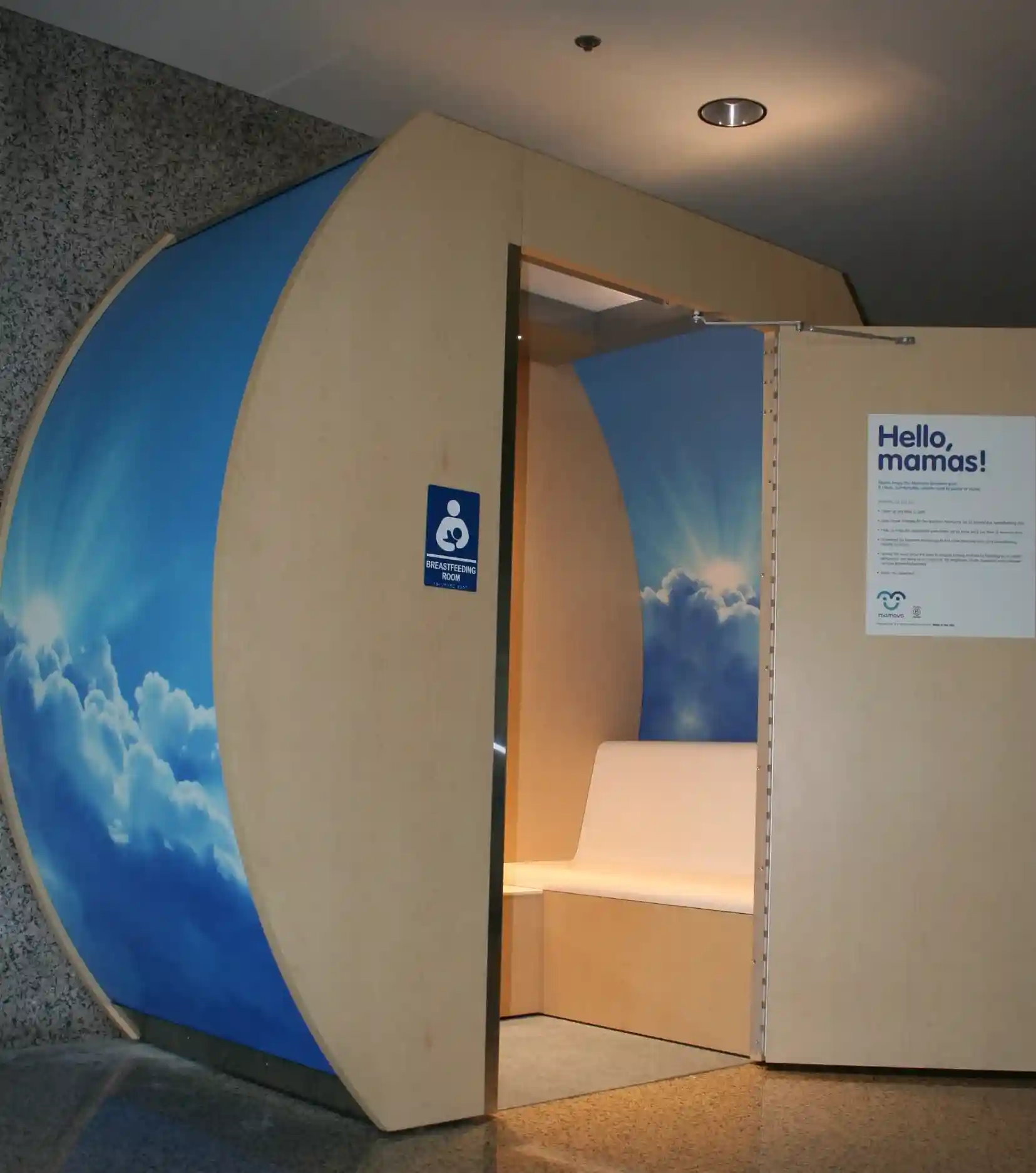
These features are not superficial upgrades. They streamline movement and reduce service interruptions. When passengers can navigate independently and comfortably, airport staff can focus on operational precision rather than reactive problem-solving.
Gate Hold Technology And Flow Management Precision
Behind the scenes, Spokane is investing in systems that influence aircraft movement beyond the terminal walls. The modernization of gate hold technology aligns with Federal Aviation Administration programs such as the Airspace Flow Program (AFP), Ground Delay Program (GDP), and Ground Stop (GS).
In practical terms, gate holds coordinate departure timing with en-route congestion, destination airport capacity, and weather disruptions. By managing Expected Departure Clearance Times—often referred to as “wheels up” times—the system reduces airborne holding patterns and prevents downstream gridlock.
Automation and predictive analytics increasingly assist in matching ground operations with airspace realities. Firms specializing in air traffic analytics use weather modeling and traffic forecasting to anticipate congestion before it cascades. When integrated effectively, such systems keep aircraft on the ground slightly longer to avoid much longer delays in the sky. The counterintuitive brilliance lies in strategic patience.
For passengers, this means fewer surprise delays mid-air and more reliable arrival windows. For airlines, it translates to fuel savings and improved schedule integrity. For air traffic controllers, it prevents sector saturation. Efficiency here is systemic, not cosmetic.
Underground Baggage Systems And Spatial Optimization
The redesigned baggage handling system moves below ground, reclaiming valuable surface area for passenger circulation. Subterranean routing reduces cross-traffic conflicts and allows for clearer wayfinding above.
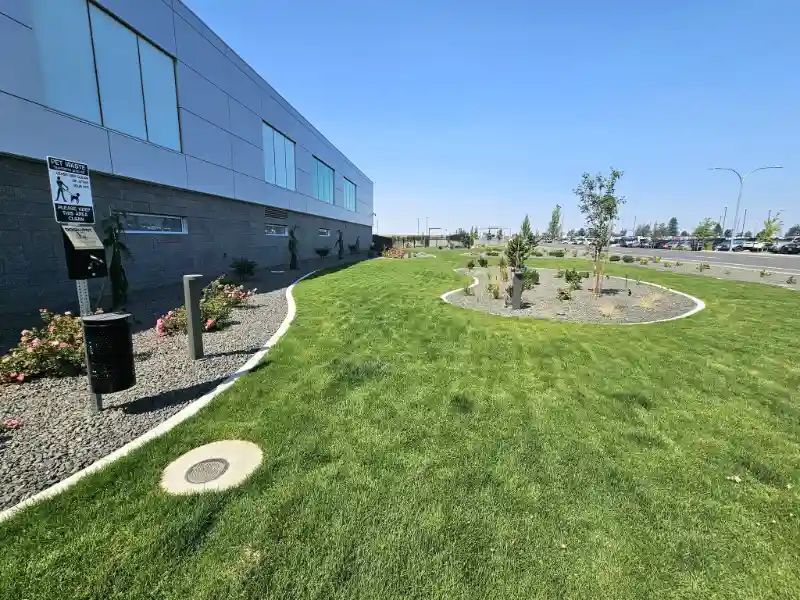
Escalators and elevators were upgraded, mechanical and plumbing systems modernized, and lighting reengineered to support both energy performance and visual comfort. The open-air plaza planned within the broader vision promises landscaped flower beds and welcoming public space that enhances both departure and arrival experiences.
When infrastructure retreats quietly into optimized pathways, the traveler perceives only ease. That invisibility is the mark of successful engineering.
Economic Multiplier Effects Across Washington State
Airports are not merely transit hubs; they are economic engines. The TREX expansion is projected to create nearly 1,200 new jobs and generate approximately $87 million in additional household revenue across the Spokane region. Statewide, the terminal addition is expected to contribute roughly $313 million in economic activity.
Funding for the project was structured through bonds, Passenger Facility Charge funds, federal CARES allocations, and an $11 million Bipartisan Infrastructure Law Airport Terminals Program grant awarded by the FAA. Local taxpayers did not shoulder the burden directly, a strategic financing decision that underscores fiscal prudence.
Design was led by Minneapolis-based Alliiance Co., while construction proceeds through a joint venture between Q&D Construction and Spokane-based Garco Construction. Local collaboration ensures that economic benefits circulate within the region rather than dissipating outward.
The airport’s branding phrase—“Generating Economic Growth”—is not rhetorical flourish. Connectivity drives commerce. Additional gates and expanded airline capacity increase Spokane’s appeal for business travel, tourism, and investment. Each new route is effectively a new corridor of opportunity.
A Model For Sustainable Regional Growth
Sustainability at Spokane is both environmental and structural. Sourcing raw materials within a 500-mile radius reduces transportation emissions. Smart glazing and lighting reduce operational energy demands. Efficient aircraft flow reduces fuel burn. Underground baggage systems optimize space without expanding footprint unnecessarily.
CEO Larry Krauter’s vision for landscaped plazas, basalt-lined walls, and spruce-accented ceilings reflects a belief that infrastructure should enrich daily life rather than merely process it. Airports often feel like transient non-places. Spokane insists on place-making.
As passenger numbers approach pre-pandemic highs and aim toward 6.2 million annually by the end of the decade, the airport’s expanded capacity positions it to attract and retain air service connecting eastern Washington to the global economy. Airlines such as Alaska Airlines and American Airlines benefit from upgraded gate facilities designed to streamline operations.
The transformation of Spokane International Airport demonstrates that beauty and efficiency are not competing values. They reinforce one another. Thoughtful architecture reduces stress. Intelligent systems reduce delays. Regional sourcing strengthens community resilience. Strategic financing preserves fiscal health.
In an era when mega-hubs dominate headlines, Spokane proves that a regional airport can quietly outperform expectations. It offers an instructive model for how mid-sized airports across America might adapt to rising demand without sacrificing character or control.
The next time a traveler glides across terrazzo floors that shimmer under filtered daylight, boards through a newly installed passenger bridge, and arrives on schedule thanks to predictive gate management, they may not consciously notice the engineering ballet unfolding around them. That subtlety is precisely the point.
Spokane International Airport has achieved something rare: it has become both a beautiful gateway and a highly tuned machine. In the complex ecosystem of American aviation, that balance may be the most impressive accomplishment of all.