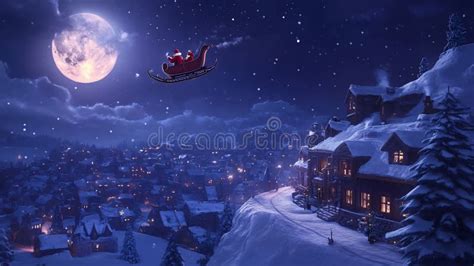
In the boundless theatre of festive imagination, Santa Claus has long stood as a paradox wrapped in red velvet: a timeless icon of generosity, yet also an impossible logistical enigma. The question that emerges each Christmas Eve—how fast would Santa have to fly to deliver gifts to every child on Earth?—is one that demands more than myth. It demands mathematics, physics, and a touch of magic.
Let us unpack this global mission using real-world data, supported by science and reason, while honoring the scale of a mythical tradition that billions celebrate.
The Astronomical Scope of Santa’s Mission
According to a theoretical analysis by Arnold Pompos, a physicist at Purdue University, Santa Claus would need to visit approximately 800 million children in 200 million distinct homes. These households are distributed across 3 x 10¹³ square meters of land, essentially covering nearly every habitable continent on Earth.
Time, of course, is Santa’s greatest enemy—and ally. The standard assumption gives him about 10 hours of darkness, between 8 p.m. and 6 a.m., to perform his deliveries. But due to Earth’s rotation and varying time zones, he gains an additional 24 hours. This effectively provides Santa with 34 continuous hours of delivery time.
Calculating the Required Travel Distance and Speed
Let’s start with the foundational number: the total distance Santa must travel is roughly 160 million kilometers (160,000,000 km). This staggering length is greater than the distance from the Earth to the Sun, which stands at about 149.6 million km. Considering Earth’s circumference is only 40,075 km, this is an operation that dwarfs even the most ambitious human expeditions.
With 34 hours available, we can determine the speed required:
Speed = Distance / Time
= 160,000,000 km / 34 hours
≈ 4,705,882 km/h
To put this into perspective, the fastest man-made object, NASA’s Parker Solar Probe, travels at approximately 700,000 km/h. Santa’s sleigh would need to go nearly 7 times faster.
How Santa’s Speed Compares to Known Velocity Benchmarks
Let’s situate Santa’s required velocity in real-world context:
- Speed of sound: 1,235 km/h
- Speed of a Boeing 747: 900 km/h
- International Space Station (ISS): 27,600 km/h
- Parker Solar Probe: ~700,000 km/h
- Speed of light: 1,079,252,848.8 km/h
At 4.7 million km/h, Santa’s sleigh moves at 0.44% the speed of light—a speed still within the theoretical limits of relativity, but completely impossible with any known physical transport method.
The Thermodynamic Catastrophe of Moving That Fast
Flying at 4.7 million km/h would not only challenge our understanding of materials science—it would annihilate everything we know. At such high speeds, air resistance becomes an existential threat. Friction with the Earth’s atmosphere would generate immense thermal energy, enough to incinerate most objects instantly.
Unless Santa’s sleigh is sheathed in an advanced thermal-resistant composite material unknown to modern science—or, more plausibly, protected by magical shielding—he, his reindeer, and the carefully wrapped gifts would be vaporized long before reaching the first rooftop.
Physically speaking, Newton’s laws and the second law of thermodynamics would offer no mercy. The force of acceleration and sudden deceleration would subject Santa to g-forces that would liquefy a human body.
The Delivery Rate: 1 Household Every 0.000612 Seconds
If Santa visits 200 million homes in 34 hours, he would need to visit one home every:
34 hours = 122,400 seconds
200,000,000 / 122,400 = ~1,634 homes/second
That’s 1 home every 0.000612 seconds. In this infinitesimal time frame, Santa must:
- Navigate to a rooftop or chimney
- Descend (or teleport) into the house
- Locate and place gifts
- Enjoy a cookie or glass of milk
- Return to his sleigh and take off
Even using quantum entanglement, this is a feat that redefines what’s physically achievable. Such a rate of success would require extreme parallelism, possibly a fleet of Santa clones or instantaneous presence in multiple locations—a phenomenon unaccounted for in standard physics.
Could Time Manipulation Explain Santa’s Success?
One intriguing solution is temporal dilation. In Einstein’s theory of Special Relativity, time slows down for objects moving close to the speed of light. At 4.7 million km/h, Santa would experience a small degree of time dilation, but nowhere near enough to stretch 34 hours into what would feel like weeks or months.
To significantly manipulate time, Santa would need to approach relativistic speeds, exceeding 90% of the speed of light. At that point, however, energy requirements surge into the realm of the cosmic. The energy required to accelerate a single object to such speeds approaches infinity.
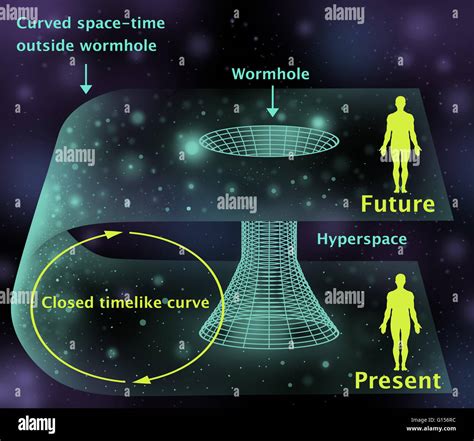
Thus, if Santa is not breaking the laws of physics, he is at the very least bending them. One could propose wormholes or tesseracts—spatial shortcuts in the fabric of the universe—as methods of reducing travel distance. While highly speculative, they are not entirely dismissed by modern theoretical physics.
The Reindeer Factor: Mythical Beasts or Quantum Machines?
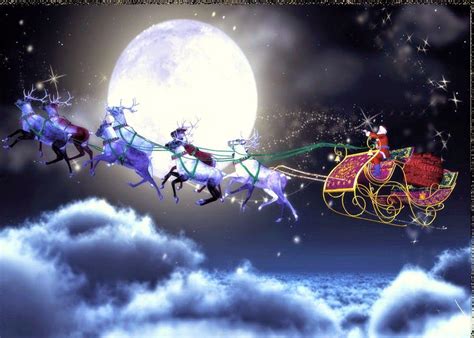
The sleigh is typically depicted as powered by eight to nine flying reindeer, including the famed Rudolph. These creatures, as beloved as they are improbable, would need to endure shockwave-inducing speeds and gravity-defying feats.
To perform this task, they must be:
- Capable of supersonic to relativistic speeds
- Immune to hypersonic shockwaves and thermodynamic destruction
- Operate in vacuum-like atmospheric pressures
- Possibly exist partially outside of linear time
Under standard biology, this is impossible. But if the reindeer are quantum-entangled organisms, behaving simultaneously in multiple locations with consciousness unaffected by time constraints, their behavior could, theoretically, explain the feat.
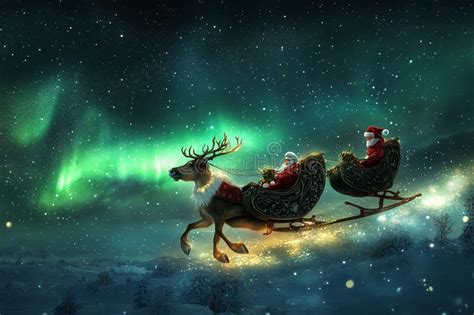
The Role of Magic and Multiversal Theory
Given the massive scientific violations, one must accept that Santa Claus does not operate in a purely Newtonian or Einsteinian framework. Instead, he exists in a hybrid model where magical realism meets quantum mechanics.
Alternatively, he could harness multiversal capabilities, delivering gifts across parallel dimensions simultaneously. If each clone or variant of Santa delivers to a subset of the world, the aggregate effect could simulate instantaneous global coverage.
While speculative, this theory removes the need for high-speed travel entirely and shifts the paradigm to one where existence is non-local and probabilistic, a concept at the heart of quantum superposition.
Conclusion: Beyond Science, Into Wonder
Though modern physics provides compelling calculations and staggering figures—4.7 million km/h, 1 household every 0.000612 seconds, 160 million kilometers of travel—the ultimate takeaway is that Santa’s flight is an expression of the limitless power of human imagination.
The fact that we ask these questions each year—armed with calculators, physics models, and a love of wonder—reveals our deepest desire not to debunk, but to understand. In every impossible number lies the heartbeat of belief, and in every calculation, a twinkle of stardust.