Flight delays are an unavoidable part of modern air travel, but the experience can be dramatically different depending on where a passenger is flying. A delayed departure in the United States may leave travelers relying heavily on an airline’s own customer-service policies, while a similar disruption in Europe can trigger a defined set of legal obligations. The biggest difference is the strength of passenger-protection rules, particularly when delays become long enough to disrupt an itinerary.
For travelers, understanding these differences matters most when a delay threatens a connection, creates an overnight stay, or forces a complete change of plans. In the US, the Department of Transportation generally emphasizes that airlines do not guarantee their published schedules. In Europe, regulations such as EU261 establish specific rights involving assistance, rerouting, refunds, and, in qualifying circumstances, financial compensation.
The contrast becomes especially important for international passengers. A US airline does not suddenly escape European passenger-rights legislation simply because it is American. When its flight falls within the geographic scope of EU261 or UK261, those rules can apply to the journey. This creates a complicated but important intersection between airline policies and passenger-protection law.
Why Flight Delays Are Treated Differently in the US and Europe
The fundamental difference is regulatory philosophy. European passenger-rights legislation establishes minimum standards that airlines must follow, whereas US federal rules generally leave much more room for individual airline policies.
The US Department of Transportation explicitly warns travelers that airlines do not guarantee their schedules. Weather, air-traffic restrictions, mechanical problems and other operational disruptions can make punctual operations impossible. As a result, passengers facing a significant delay often need to determine what their particular airline promises rather than assuming that federal law guarantees a cash payment.
European travelers operate under a different framework. EU261, formally the Air Passengers Rights Regulation, establishes obligations surrounding long delays, cancellations and denied boarding. Depending on the circumstances and flight distance, eligible passengers may receive assistance and potentially €250, €400 or €600 in compensation.
That does not mean every European delay automatically produces a cash payment. The cause of the disruption matters, as do the length of the delay and the specific circumstances of the journey. Extraordinary circumstances can limit or eliminate an airline’s compensation obligation.
What EU261 Means for Delayed Passengers
EU261 is one of the most significant pieces of passenger-protection legislation in global aviation. Its importance comes from the fact that it does more than establish voluntary customer-service standards. It creates legally enforceable rights for qualifying passengers.
For delays, the compensation structure is linked to distance. Flights of less than 1,500 kilometers can qualify for €250, while longer intra-EU flights and certain other journeys can qualify for €400. Flights outside those categories that exceed 3,500 kilometers can qualify for €600 when the relevant conditions are satisfied.
However, compensation and assistance are not identical concepts. A passenger may be entitled to care during a lengthy delay even when the eventual circumstances mean that financial compensation is not payable. Depending on the flight distance and expected waiting period, airlines may have to provide refreshments, communication facilities and, where necessary, accommodation and transportation.
This distinction is crucial because passengers sometimes assume that a delay either produces everything or nothing. EU261 is more nuanced than that. Different rights can arise at different stages of a disruption.
Rerouting and Refund Rights in Europe
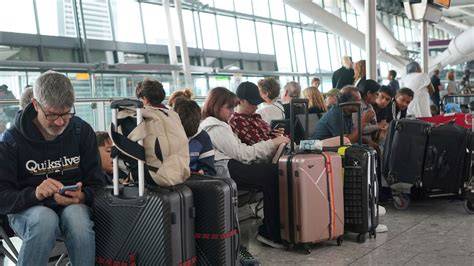
European rules also provide passengers with meaningful choices when a delay or cancellation destroys the original purpose of a journey. Depending on the circumstances, travelers may be able to request a refund, rerouting to their destination at the earliest opportunity, or rerouting at a later date subject to availability.
This becomes particularly valuable when a passenger has a complicated itinerary. Imagine a traveler flying from one European city to another with a critical onward connection. If the first flight is delayed for several hours, simply offering a seat on the original itinerary may no longer solve the problem.
Some European airlines take a more hands-on approach to these situations. Others may leave passengers to organize alternative transportation and subsequently seek reimbursement. The exact customer-service process can therefore differ considerably even though the underlying legal rights remain governed by EU261.
Airlines are also expected to inform passengers about their rights when qualifying disruptions occur. That makes the European system substantially different from a model in which passengers must discover every available remedy themselves.
Which European Airlines Experience the Most Delays?
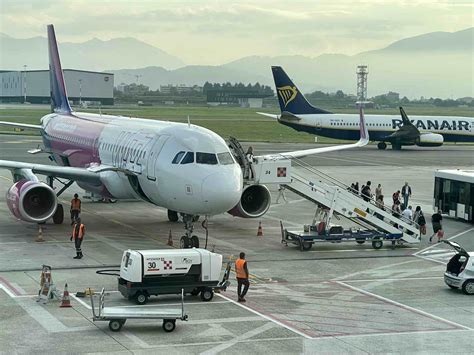
Delay rates can vary considerably among European carriers and across different periods, but the reference data illustrates how widespread operational disruption can become. Among the airlines listed, Vueling recorded a 42.1% delay rate, followed by Wizz Air at 39.7% and TAP Portugal at 38.4%.
The same data placed easyJet at 36.8%, Transavia at 35.2%, Ryanair at 33.5%, Eurowings at 32.1%, British Airways at 31.8%, ITA Airways at 30.5% and Air France at 29.3%.
These figures should not be interpreted as evidence that every delayed flight results in compensation. A delay rate measures operational punctuality, while EU261 compensation depends on factors such as the duration, cause and circumstances of the disruption.
Nevertheless, the numbers demonstrate why passenger-rights legislation matters. With hundreds of thousands of flights operated annually by some carriers, even a relatively modest percentage of disrupted services can affect a huge number of travelers.
How US Airlines Handle Flight Delays
The American system generally places greater emphasis on individual airline commitments than on a universal compensation formula.
The Department of Transportation’s guidance makes clear that schedules are not guaranteed. When a flight is delayed, passengers are encouraged to communicate with their airline, understand the nature of the disruption and determine what assistance may be available under the carrier’s policy.
This can produce significant differences between airlines. One carrier may provide meal vouchers after a certain delay, while another may offer hotel accommodation only under particular circumstances. Some may rebook passengers automatically; others may require travelers to contact customer service or use the airline’s application.
For US domestic flights, there is therefore no general EU261-style rule requiring airlines to pay every passenger a fixed amount simply because a flight arrived several hours late.
That difference can be frustrating for travelers who assume that a three-hour delay should produce an automatic payment. In the United States, delay length alone generally does not create the same standardized compensation entitlement found in Europe.
What US Flight Delay Statistics Reveal
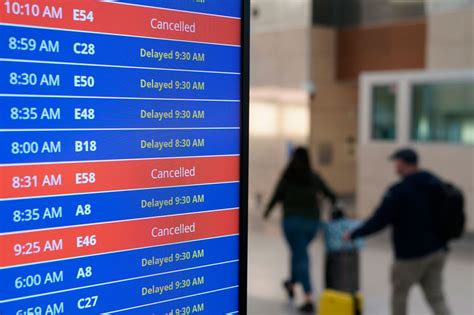
US operations can be disrupted by many different causes, and not all delays are within an airline’s control. Bureau of Transportation Statistics data cited in the reference material for June 2026 shows that 73.12% of domestic flights arrived on time.
Aircraft arriving late from a previous flight accounted for 9.94% of domestic flights, while air-carrier delays represented 7.36%. National aviation system delays accounted for 6.42%, and weather delays represented 1.03%. Cancellations accounted for 1.71%, while diversions represented 0.38%.
These figures help explain why airlines and regulators are reluctant to treat every delay as an identical event. A carrier may be affected by an aircraft arriving late, an air-traffic restriction, weather or another operational problem before its own flight can depart.
For passengers, however, the practical consequence remains the same: a missed connection can be just as disruptive regardless of who caused the original delay. That is where individual airline policies become particularly important.
United Airlines Provides a Useful US Case Study
United Airlines illustrates how a major American carrier can operate within both the US regulatory environment and international passenger-rights regimes.
For flights covered by EU261 or UK261, United must comply with the applicable European or British rules even though it is an American airline. The location and routing of the flight can therefore be more important than the airline’s nationality.
United’s own policies also establish conditions passengers must satisfy. Travelers are expected to check in on time, possess the required documentation and arrive at the gate with enough time to board. Passenger conduct can matter as well, particularly where safety, security or disruptive behavior becomes an issue.
This illustrates an important principle: passenger rights do not remove passenger responsibilities. A traveler who fails to comply with boarding requirements cannot necessarily expect the same protections as someone who was properly checked in and ready to travel.
The Montreal Convention Adds Another Layer
European regulations are not the only international rules relevant to delayed air travel. Article 19 of the Montreal Convention can provide a route for passengers seeking damages caused by delays.
Unlike EU261’s standardized compensation framework, the Montreal Convention is primarily concerned with damages resulting from international carriage. A passenger may seek reimbursement for proven losses when the airline failed to take reasonable measures to avoid the damage, subject to the convention’s rules and limitations.
This distinction matters. A passenger cannot simply treat the Montreal Convention as an automatic cash-payment system equivalent to EU261. The nature of the claim, the actual financial damage and the circumstances surrounding the delay can all matter.
In practice, this can make pursuing a claim more complicated than requesting a fixed statutory payment under European passenger-rights legislation.
Why US Passengers Have Fewer Automatic Protections
The United States has historically relied more heavily on airline competition and individual carrier commitments than Europe has. That approach gives airlines flexibility to design their own policies, but it also means passengers may face different outcomes depending on the carrier they booked.
American travelers may receive rebooking, meals, accommodation or other assistance, but these benefits can depend on the airline’s stated policy and the reason for the disruption.
The policy debate became particularly significant during the Biden administration, which pursued stronger protections for passengers affected by delays and cancellations. Proposed measures would have required airlines to provide compensation ranging from $200 to $775, depending on the length of the delay.
The Trump administration formally abandoned the proposed approach in November 2025 as part of a broader deregulatory agenda. Airlines for America welcomed the review, arguing that additional regulations could create burdens without necessarily solving the underlying problems affecting passengers.
What Happens When a US Airline Flies to Europe?
This is where the distinction becomes especially interesting. An American airline can be subject to European passenger-rights rules when operating qualifying flights involving Europe.
For example, a US carrier operating an eligible flight departing from an EU member state can fall within EU261. Certain flights arriving in the EU from outside the bloc can also qualify when operated by an EU-based airline.
The same broad principle applies to UK261 following Britain’s departure from the European Union. UK261 largely mirrors EU261, although compensation is expressed in British pounds rather than euros.
Consequently, passengers should not look only at the airline’s headquarters. They should examine the flight’s departure point, destination, operating carrier and applicable legislation.
Why Airline Delay Policies Still Matter
Legal rights provide a foundation, but airline policies can determine how smoothly passengers actually navigate a disruption. Two airlines operating under the same European legislation can provide very different experiences at the airport.
One carrier may automatically arrange a replacement flight, while another may tell passengers to identify a suitable alternative and submit receipts afterward. Both approaches can exist within the same legal framework, provided the airline ultimately fulfills its obligations.
For travelers, this makes documentation essential. Boarding passes, booking confirmations, delay notifications, receipts and communications with airline staff can all become valuable if reimbursement or compensation is later disputed.
What Passengers Should Do During a Major Delay
The most effective response is to establish exactly why the flight is delayed, how long the disruption is expected to last and what alternative transportation is available. Passengers should also check the airline’s official policy and determine whether European or international rules apply.
When traveling under EU261 or UK261, passengers should pay particular attention to their potential rights to care, rerouting and compensation. In the US, travelers should focus more heavily on the carrier’s contract of carriage and published delay policy.
Most importantly, passengers should avoid assuming that the first solution offered is automatically the only solution available. A delayed flight can trigger several different rights simultaneously, particularly when the disruption causes a missed connection or overnight stay.
The Real Difference Between American and European Airlines
The clearest distinction is simple: European passengers generally have stronger standardized legal protections, while American passengers more often depend on airline-specific policies and limited federal requirements.
EU261 gives qualifying travelers a structured framework for assistance, rerouting, refunds and potential compensation. UK261 provides a similar framework for eligible journeys involving Britain. US travelers, by contrast, usually need to examine the particular airline’s promises and the circumstances behind the disruption.
Neither system can eliminate delays. Aircraft will still arrive late, weather will still disrupt schedules and air-traffic systems will still become congested. But when something goes wrong, the legal environment can determine whether passengers are left negotiating for assistance or can point directly to a defined statutory right.
For anyone planning international travel, understanding that distinction before boarding can be just as valuable as choosing the right connection. A delayed flight is frustrating everywhere, but the rules governing what happens next can be worlds apart.