Airline pilots operating in and out of LaGuardia Airport have been raising increasingly urgent warnings about safety risks tied to air traffic control communication breakdowns, painting a troubling picture of an already strained aviation system nearing its operational limits. These concerns are not isolated complaints—they reflect a pattern of near-miss incidents, compressed margins, and rising workload pressure that aviation professionals say cannot be ignored any longer.
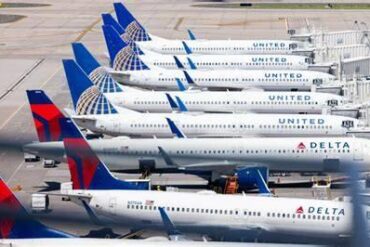
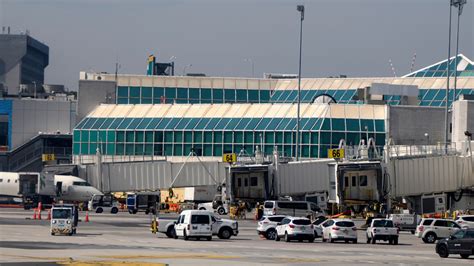
At the heart of the issue lies a dangerous combination: dense airspace, high traffic volume, and limited staffing. With roughly 400 aircraft movements per day, LaGuardia operates in one of the most tightly packed aviation corridors in the world. Every takeoff and landing requires precise timing and flawless communication, and when either slips—even briefly—the consequences can escalate rapidly.
Pilots have described receiving ambiguous, overlapping, or even conflicting instructions from air traffic controllers, particularly during critical flight phases such as approach and departure. These moments leave little room for interpretation, and yet crews are sometimes forced to make split-second decisions to avoid potential collisions.
Near-Miss Incidents Expose Fragile Safety Margins
Recent reports reveal that multiple aircraft at LaGuardia have come dangerously close to violating standard separation distances, which are typically maintained at three to five nautical miles horizontally. While onboard systems and pilot vigilance have so far prevented catastrophic outcomes, the frequency of these events has raised alarm across the industry.
Pilots recount scenarios where controller instructions conflicted with visible traffic, forcing them to override or question directions mid-operation. In such high-stakes environments, even a moment of hesitation can mean the difference between routine operations and disaster.
The concern is not just that these incidents are happening—but that they are happening repeatedly and under similar conditions. This pattern suggests systemic strain rather than isolated human error, pointing to deeper vulnerabilities within the air traffic management framework.
A System Under Pressure: Staffing Shortages and Rising Demand
The broader context reveals why these risks are intensifying. The Federal Aviation Administration has acknowledged a significant shortage of certified air traffic controllers, with thousands of positions unfilled nationwide. Training a controller takes two to three years, making rapid workforce expansion nearly impossible.
Meanwhile, passenger demand has surged back to near pre-pandemic levels, with over 800 million travelers annually in the United States alone. This resurgence places enormous strain on infrastructure that was already operating close to capacity.
Nowhere is this pressure more evident than in the New York metropolitan airspace, where LaGuardia shares tightly coordinated flight paths with John F. Kennedy International Airport and Newark Liberty International Airport. Aircraft are constantly merging, crossing, and sequencing within limited airspace, requiring near-perfect synchronization between pilots and controllers.
When Technology Becomes the Last Line of Defense
Modern aircraft are equipped with advanced safety systems like Traffic Collision Avoidance Systems (TCAS), designed to alert pilots when another aircraft is too close or on a collision course. While highly effective, TCAS is not intended to replace air traffic control—it is a last-resort safeguard.
In several of the reported incidents, it was either pilot intervention or onboard systems that prevented escalation, rather than the initial instructions from the ground. This reality raises a critical question: what happens if those final safety nets fail or are unavailable?
Complicating matters further, TCAS has limitations. It is less effective near the ground and does not account for ground vehicles, a factor highlighted by a recent high-profile accident involving an aircraft and an airport fire truck. Events like this underscore how layered safety systems can still leave gaps, particularly in high-density environments.
Pilot Voices: “The System Is Being Pushed Too Far”
Perhaps the most compelling evidence comes directly from those in the cockpit. In anonymized safety reports, pilots have described LaGuardia operations as increasingly tense and unforgiving, especially during adverse weather conditions.
One captain noted that the pace of operations is accelerating beyond safe limits, drawing comparisons to past incidents at other congested airports where warning signs were overlooked until it was too late. Thunderstorm disruptions, in particular, amplify the problem by forcing tighter sequencing and more complex rerouting—conditions where clear communication becomes even more critical.
These are not casual observations. They are professional assessments from highly trained individuals who operate within the system daily—and who are now signaling that the margin for error is shrinking.
FAA Response and the Push for Reform
In response to mounting concerns, the FAA has begun implementing targeted mitigation measures, including revised communication protocols and traffic flow restrictions at congested airports. Some facilities are also expanding simulator-based training to better prepare controllers for high-density scenarios.
However, these steps, while necessary, may not be sufficient. Aviation analysts argue that structural changes are needed, including investment in automation, decision-support tools, and potentially artificial intelligence to assist controllers in detecting conflicts before they escalate.
Historically, clusters of near-miss incidents have often served as precursors to major safety reforms. Past spikes in runway incursions, for example, led to the development of advanced ground radar systems and standardized phraseology. The current situation at LaGuardia may represent a similar turning point.
A Warning That Cannot Be Ignored
Despite the absence of a catastrophic accident tied directly to these recent reports, the warning signs are unmistakable. Aviation safety has always relied on layers of redundancy, but when multiple layers begin to show strain simultaneously, the risk profile changes dramatically.
LaGuardia’s challenges are not unique—but they are intensified by its environment, its traffic density, and its operational constraints. As demand continues to rise and staffing shortages persist, the system faces a critical test: can it adapt quickly enough to maintain its safety record?
The answer will depend on how seriously these warnings are taken—and how decisively action follows.