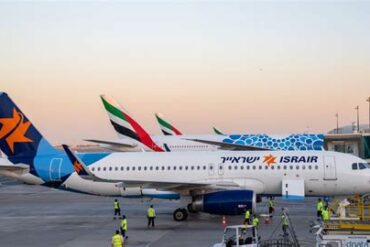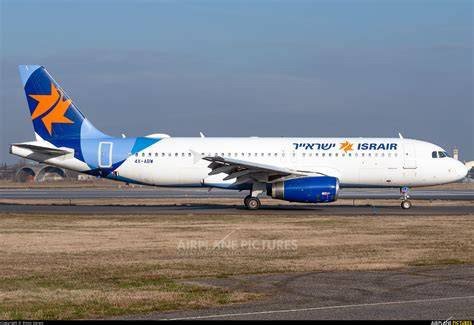
Israeli budget carrier Israir Airlines has received the final regulatory approval needed to begin flights to the United States, opening a significant new chapter for the small Israeli airline. The carrier says the Federal Aviation Administration (FAA) has granted its final authorization for transatlantic operations, clearing the way for Israir to launch its first North American service. New York is expected to become the airline’s first U.S. destination, with flights potentially beginning as early as October 19, 2026.
The approval is particularly significant because Israir has traditionally focused on leisure-oriented international flying, with a network concentrated largely around Europe and nearby destinations. Entering the U.S. market will therefore represent a major expansion in both geographic reach and operational ambition. It will also place Israir directly into one of the most competitive international markets for Israeli airlines, where established carriers already have strong customer recognition and substantial transatlantic experience.
Israir New York Flights Bring a New Israeli Competitor to the U.S. Market
Israir’s planned New York service will put it in direct competition with EL AL, Israel’s flag carrier, which already operates flights from Tel Aviv to both Newark Liberty International Airport (EWR) and John F. Kennedy International Airport (JFK). Israeli carrier Arkia also operates nonstop flights to JFK, meaning Israir will become the third Israeli airline seeking to connect Tel Aviv with the New York metropolitan area.
Israir has not yet confirmed which New York airport it intends to use. JFK would be a logical choice given the airport’s existing Israeli airline presence and extensive international connectivity, but the final decision will depend on regulatory, operational and commercial considerations. Whatever airport Israir selects, its arrival should increase competition on a route where demand is supported by business travel, tourism, family visits and the substantial links between Israel and the United States.
The competitive environment could become even more challenging. United Airlines and Delta Air Lines are expected to resume nonstop New York–Tel Aviv services in September after suspending operations amid regional geopolitical tensions. Their return would give travelers another pair of major U.S. airline options just as Israir attempts to establish itself across the Atlantic.
Two Airbus A330-200s Give Israir the Range for New York
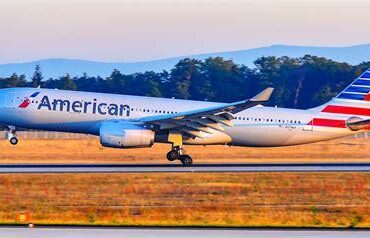
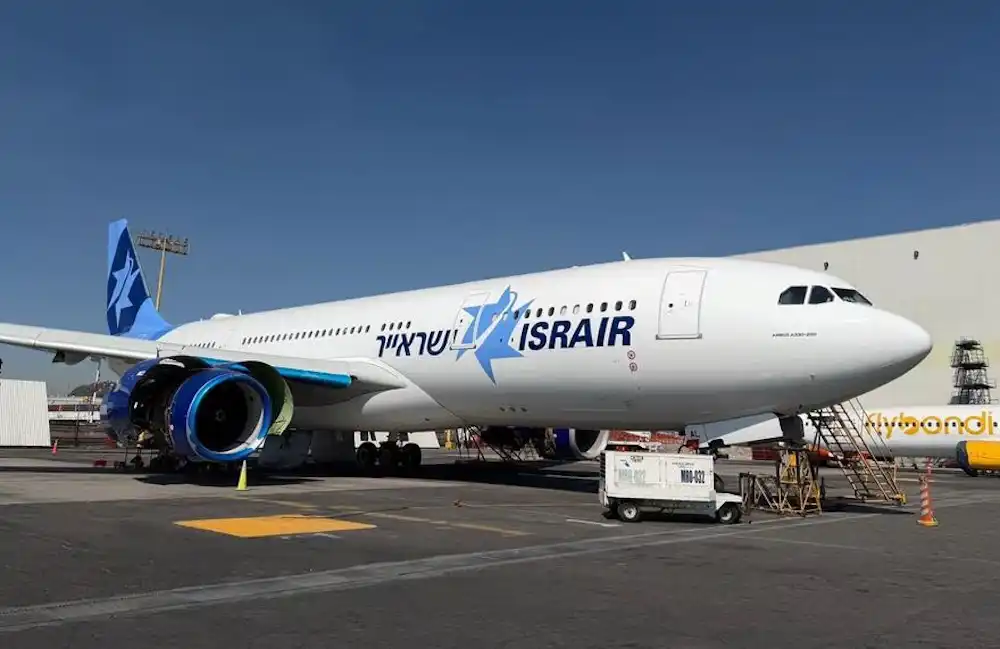
Israir’s U.S. expansion is possible because the airline recently added two Airbus A330-200 widebody aircraft to its fleet. Registered as 4X-BAK and 4X-BAL, the aircraft are approximately 16.5 years old and previously operated for US Airways and American Airlines before moving through Jetran and eventually joining Israir in May 2026.
These aircraft are considerably larger and longer-range than most of Israir’s existing fleet. The two A330-200s are currently the only aircraft in the airline’s fleet capable of operating the roughly 5,677-mile (9,136-kilometer) journey between Tel Aviv and New York. The flight is expected to take just under 12 hours in typical nonstop operation, making the aircraft central to Israir’s ambitions in the U.S. market.
Former American Airlines A330s Retain Their Three-Class Configuration
An especially interesting aspect of Israir’s new operation is the configuration of its A330-200 aircraft. Both jets were acquired from American Airlines and have retained the existing American Airlines cabin layout, giving Israir a three-cabin arrangement consisting of 20 business-class seats, 21 premium-economy seats and 206 economy seats.
That configuration gives the airline 247 seats per aircraft, providing considerably more capacity than its Airbus A320-200 fleet while also allowing it to offer premium seating on the long transatlantic route. The retention of the existing interior could also help Israir introduce the aircraft into service more quickly than if a completely new cabin installation were required.
The two aircraft have closely related histories. 4X-BAK carries manufacturer serial number 1095 and was delivered to US Airways in March 2010 before becoming an American Airlines aircraft in 2013. It subsequently passed to Jetran in June 2025 and was delivered to Israir in May 2026. The second aircraft, 4X-BAL, has serial number 1100 and followed a similar path, moving from US Airways to American Airlines before entering Jetran’s ownership and joining Israir in May 2026.
FAA Approval Removes a Major Barrier to Israir’s U.S. Expansion
For Israir, receiving the FAA authorization represents more than another regulatory milestone. The airline described it as the final and decisive step in the approval process, following authorization from aviation authorities in Israel and the United States. The approval means the carrier can now move toward the practical stages required to place its proposed New York flights on sale and into regular operation.
Israir has characterized the authorization as a sign of confidence from the American aviation authorities and says it is working with the FAA and other relevant agencies to prepare the new service. If the airline succeeds in launching the route in October, the operation will become Israir’s first destination in North America and one of the most consequential expansions in its history.
The timing also matters. Israir’s strategy appears to center on capturing leisure demand rather than simply copying the network model of larger full-service competitors. A lower-cost offering could appeal to travelers who prioritize fares and nonstop convenience, particularly during periods when transatlantic capacity remains constrained or ticket prices rise.
A Small Airline Taking a Major Step Across the Atlantic
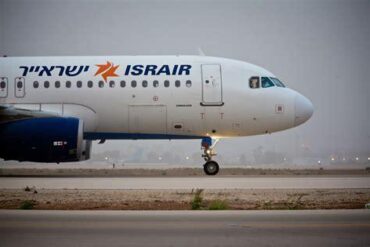
Israir currently operates a fleet of just 10 aircraft, consisting of the two A330-200 widebodies and eight Airbus A320-200 aircraft. That makes its planned U.S. expansion especially notable. Rather than building a large long-haul fleet first, the airline is using a very limited number of widebodies to test the commercial potential of transatlantic flying.
New York is a natural starting point because of the established demand between Israel and the United States. If the route performs well, Israir could eventually consider additional American gateways, giving the carrier an opportunity to transform its international network beyond its traditional European and regional markets.
For passengers, the arrival of another Israeli airline on the New York–Tel Aviv market could create more choice and potentially intensify competition on fares and schedules. For Israir, however, the challenge will be maintaining reliable long-haul operations with only two widebody aircraft while competing against airlines with substantially larger fleets and established transatlantic networks.
The planned October 2026 launch therefore represents both an opportunity and a test. With FAA approval now secured, Israir has cleared the most important regulatory hurdle. Its next challenge is turning two former American Airlines A330-200s into a sustainable transatlantic operation—and proving that a small Israeli budget carrier can successfully establish itself on one of the world’s most important international airline routes.