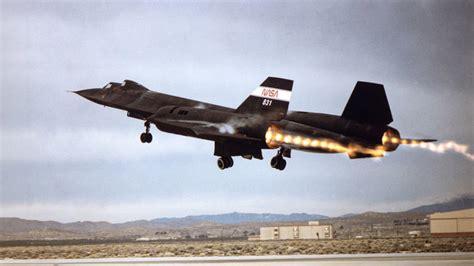
The SR-71 Blackbird did not make an ordinary final flight. On March 6, 1990, the legendary reconnaissance aircraft left California for what was supposed to be a delivery flight to the Smithsonian, but it turned the journey into one of the most spectacular demonstrations of speed in aviation history. In a little more than an hour, the Blackbird crossed a huge portion of the United States while setting four official speed records along the way.
The aircraft involved was SR-71A serial number 61-7972, flown by U.S. Air Force Lieutenant Colonel Ed Yeilding with Lieutenant Colonel Joseph Vida serving as the reconnaissance systems officer. The mission had a special purpose: after roughly 24 years of Air Force service and about 2,800 flight hours, this particular Blackbird was being delivered to the National Air and Space Museum. Instead of quietly entering retirement, however, it made its final Senior Crown flight at a speed that seemed almost impossible even by SR-71 standards.
The headline number is extraordinary. The Los Angeles-to-Washington portion took only 1 hour, 4 minutes, and 20 seconds, with an official average speed of approximately 2,145 mph. But that was only one of four records established during the journey. The aircraft also set records between the West Coast and East Coast, Kansas City and Washington, D.C., and St. Louis and Cincinnati. The result was a fitting farewell for an aircraft whose entire existence had been built around one extraordinary idea: go higher and faster than anything trying to catch you.
The SR-71 Blackbird’s Final Flight Became a Historic Record Run
The final flight of 61-7972 began in California before dawn, with the aircraft ultimately heading toward Washington-Dulles International Airport. Although the mission ended with the Blackbird entering museum custody, the flight itself was conducted as a genuine high-performance record mission. Yeilding and Vida were not simply ferrying an old aircraft across the country; they were giving the SR-71 an opportunity to demonstrate exactly why it had become one of the most remarkable aircraft ever built.
The official Los Angeles-to-Washington record covered roughly 2,300 miles and was completed in 64 minutes and 20 seconds. The Smithsonian records an average speed of 2,124 mph for the overall final flight, while the National Aeronautic Association record data gives the Los Angeles-to-Washington course an average of about 2,145 mph. Differences between commonly quoted figures come from the precise course and timing definitions used for individual records.
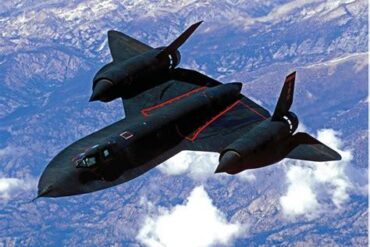
What makes the achievement particularly remarkable is that the SR-71 was not designed like a conventional fighter that could briefly sprint at extreme speed. Its entire aerodynamic and propulsion system was optimized around sustained Mach 3-class flight. The aircraft operated at altitudes around 80,000 feet, where the atmosphere was thin and the temperature environment was radically different from conditions near sea level. At those heights and speeds, even a small aerodynamic problem could become a major engineering challenge.
The Blackbird’s speed also created a fascinating paradox. At first glance, flying faster should simply consume more fuel. Yet the SR-71 was engineered so that its propulsion system became increasingly effective as speed increased. That characteristic was central to its ability to remain at extremely high speeds for extended periods rather than merely producing a short burst of acceleration.
Four Speed Records in a Single Flight
The four records established on March 6, 1990, were extraordinary individually, but their combination made the final flight legendary. Official record data lists the following performances:
- Los Angeles to Washington, D.C.: 2,299.7 miles in 64 minutes 20 seconds, averaging approximately 2,144.8 mph.
- West Coast to East Coast: 2,404 miles in 67 minutes 54 seconds, averaging approximately 2,124.5 mph.
- Kansas City to Washington, D.C.: 942 miles in 25 minutes 59 seconds, averaging approximately 2,176 mph.
- St. Louis to Cincinnati: 311.4 miles in 8 minutes 32 seconds, averaging approximately 2,189.9 mph.
These figures are the official record values commonly cited from the National Aeronautic Association record book and SR-71 historical records.
The numbers reveal something important about the aircraft. The Blackbird did not merely accelerate to a spectacular peak speed and then slow down. It maintained astonishing average speeds over substantial distances. An average of more than 2,100 mph over hundreds or thousands of miles requires an aircraft capable of sustaining extreme performance while managing fuel, engine operation, navigation, heating and structural loads simultaneously.
The St. Louis-to-Cincinnati section provides perhaps the clearest example. The Blackbird covered approximately 311 miles in only 8 minutes and 32 seconds, producing an average speed near 2,190 mph. That meant the aircraft was effectively crossing several hundred miles of American airspace in the time a conventional airliner might spend climbing through the lower atmosphere.
Why the J58 Engines Made the SR-71 So Fast
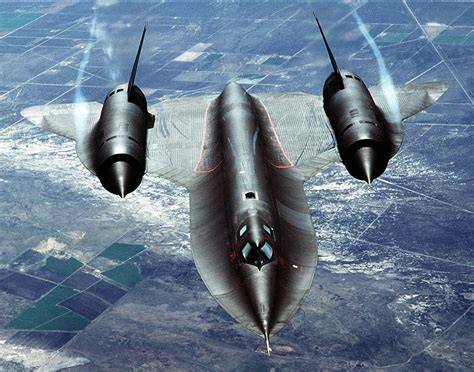
The Blackbird’s extraordinary performance depended heavily on its Pratt & Whitney J58 engines. These powerplants were not ordinary turbojets. Their operation was closely integrated with the aircraft’s unique inlet system, allowing the propulsion system to function in different ways as the aircraft accelerated.
At lower speeds, the J58 operated primarily as a turbojet. As the aircraft accelerated beyond approximately Mach 2, the inlet and engine system increasingly exploited ram compression. By the time the SR-71 reached its normal high-speed cruise regime, the propulsion system was effectively taking advantage of the enormous pressure created by the aircraft’s forward motion through the atmosphere.
That arrangement was crucial because the SR-71’s mission profile demanded more than raw thrust. The aircraft had to cruise at extreme speed for long periods, making propulsive efficiency at Mach 3 a fundamental requirement rather than a secondary consideration.
The aircraft also used specially formulated JP-7 fuel, selected for the extraordinary thermal environment surrounding the Blackbird. Starting the engines involved another unusual technology: triethylborane was used as an ignition source because conventional ignition systems were inadequate for the operating conditions.
The result was an aircraft in which the engines, fuel, aerodynamic inlets and airframe behaved almost like a single integrated machine. The SR-71’s speed was therefore not the product of one magical component. It was the consequence of an entire aircraft designed around the demands of sustained Mach 3 flight.
Flying at More Than 2,200 Miles Per Hour
During the final flight, the aircraft reached a reported peak speed of approximately 2,242 mph, a figure that is frequently associated with the record-setting mission. That was roughly Mach 3.3 under the atmospheric conditions involved.
At such speeds, the airframe experienced intense aerodynamic heating. The Blackbird’s titanium skin could reach temperatures above 600 degrees Fahrenheit, causing the aircraft to behave very differently from a conventional aluminum aircraft. Thermal expansion was not merely something engineers had to account for; it became part of the airplane’s operating design.
The SR-71 famously leaked fuel while sitting on the ground because its fuel tanks were not completely sealed in their cold, stationary condition. Once airborne and heated by high-speed flight, the titanium structure expanded and the joints became tighter. What might appear to be a flaw was actually a consequence of designing an aircraft for an environment far beyond ordinary aviation.
The Blackbird therefore represented a remarkable engineering compromise. It was difficult to maintain, demanding to operate and expensive to fly, but those sacrifices enabled it to perform missions that few other aircraft could even contemplate.
The Kansas City to Washington Record Shows the Blackbird’s Cruising Power
The Kansas City-to-Washington segment demonstrates how extraordinary the SR-71’s sustained performance really was. The aircraft covered approximately 942 miles in 25 minutes and 59 seconds, maintaining an average speed of around 2,176 mph.
For perspective, that distance represents a substantial portion of the continental United States. A modern commercial aircraft would normally require significantly more time because it operates at much lower speeds and follows a completely different flight profile. The SR-71, meanwhile, was already operating in the rarefied environment where its speed became its greatest advantage.
This is also where the concept of speed as defense becomes particularly important. The Blackbird was not designed to turn and dogfight with enemy fighters. It was not supposed to absorb weapons or maneuver around missiles like a conventional combat aircraft. Its strategy was radically different: fly so high and so fast that an enemy would have only a tiny window in which to detect, track and engage it.
The aircraft’s operational history demonstrated the value of that philosophy. Thousands of missiles were reportedly launched against SR-71s during their missions without successfully shooting one down. Although exact counts vary among historical sources, the central point remains clear: the Blackbird’s combination of altitude, speed, electronic countermeasures and reduced radar signature made it an extraordinarily difficult target.
Speed Was Only One Part of the SR-71’s Defense
It is tempting to reduce the SR-71’s survivability to its Mach 3 performance, but the reality was more sophisticated. The Blackbird combined speed, altitude, radar reduction and electronic warfare into a layered defensive system.
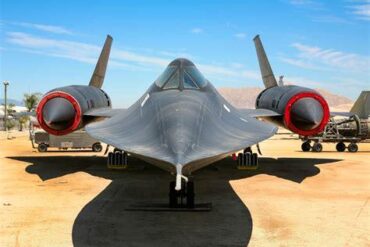
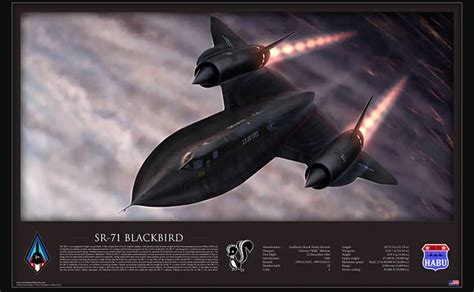
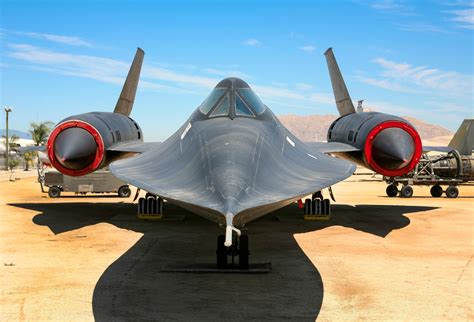
Its distinctive shape was not simply the result of aesthetics. The long fuselage, sharp chines and carefully angled surfaces helped manage aerodynamic behavior while also reducing the aircraft’s radar signature. The Blackbird was not a modern stealth aircraft in the same sense as an F-117 or B-2, but it incorporated early low-observable principles into its design.
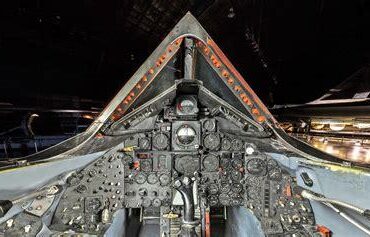
The reconnaissance systems officer in the rear cockpit also played an important role. Electronic warfare equipment could detect and analyze radar emissions, helping the crew understand the threat environment. This meant the SR-71 was not merely running away from enemy defenses. It was gathering intelligence about those defenses while operating inside their threat envelope.
That combination made interception extraordinarily difficult. A radar system might detect the aircraft, but detection alone was not enough. The defender still needed to establish a reliable track, launch a weapon, guide it toward a rapidly moving target and maintain enough energy for the missile to maneuver effectively at extreme altitude.
The Blackbird’s speed compressed that entire sequence into a very narrow window. By the time a threat system responded, the aircraft could already be many miles farther along its route.
The Final Flight Was More Than a Retirement Ceremony
There is something almost cinematic about the circumstances of March 6, 1990. An aircraft that had spent decades operating in some of the world’s most dangerous airspace was finally being retired, yet its final mission demonstrated that its performance had not quietly faded away.
The SR-71 program had been shaped by the Cold War’s demand for information. The aircraft could penetrate hostile regions or operate near sensitive borders, collecting photographs and electronic intelligence while avoiding many of the threats that had been designed to stop conventional aircraft.
By the late 1980s, however, the strategic environment had changed. Satellite reconnaissance had become increasingly capable, while the cost and complexity of operating the Blackbird remained substantial. The Air Force suspended SR-71 operations in 1989, and the aircraft that had once represented the future of strategic reconnaissance was suddenly heading toward retirement.
That makes the final flight especially significant. 61-7972 did not simply fly to a museum. It flew into history at full speed.
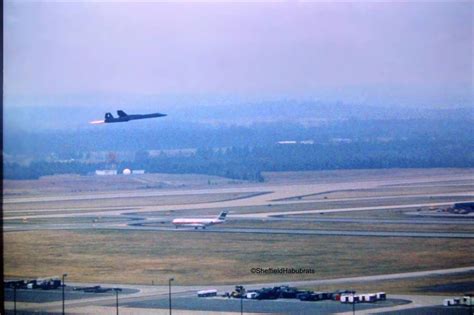
From Record-Setting Blackbird to Smithsonian Exhibit
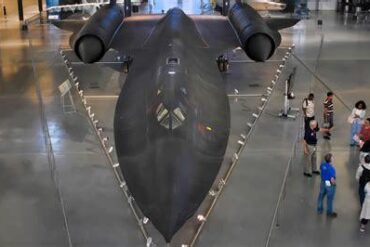
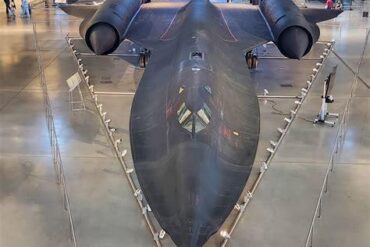
After completing its record-setting journey, 61-7972 landed at Washington-Dulles International Airport and was turned over to the Smithsonian’s National Air and Space Museum. The aircraft had accumulated approximately 2,801 hours during its 24 years of Air Force service.
Today, the aircraft remains part of the Smithsonian collection at the Steven F. Udvar-Hazy Center in Chantilly, Virginia. Its presence there provides an unusually tangible connection to an era when engineers were willing to build an aircraft around performance requirements that seemed almost absurd by conventional standards.
The Smithsonian describes the SR-71 as the world’s fastest jet-propelled aircraft and notes that its record-setting final flight covered nearly 3,000 miles in just 1 hour, 4 minutes and 20 seconds. The museum also records that the aircraft accumulated about 2,800 hours during its active Air Force career.
The Blackbird’s legacy is therefore not simply about having a spectacular top speed. It demonstrated what could happen when aerodynamic design, propulsion technology, materials science, reconnaissance equipment and operational doctrine were developed around one uncompromising objective.
Why the SR-71 Blackbird Still Has No True Successor
More than three decades after its final flight, the SR-71 remains difficult to replace conceptually. Modern aircraft can outperform it in stealth, sensors, networking, automation and mission flexibility. Uncrewed hypersonic vehicles can also reach speeds far beyond Mach 3. Yet the Blackbird occupies a distinctive place in aviation history because it combined crewed flight, sustained Mach 3-class performance and operational reconnaissance in a single reusable aircraft.
That distinction matters. The SR-71 was not merely a laboratory demonstrator. It was a working military aircraft that repeatedly operated at the outer edge of what engineers believed a crewed aircraft could practically sustain.
Its final flight captured that character perfectly. Four official records were established during a journey that ended not with another combat mission, but with the aircraft being handed over to a museum. The Blackbird crossed the country at speeds that remain astonishing today, and it did so while carrying two people who knew exactly what the aircraft could accomplish.
The final numbers tell the story. 64 minutes and 20 seconds from Los Angeles to Washington, 67 minutes and 54 seconds from coast to coast, 25 minutes and 59 seconds from Kansas City to Washington, and 8 minutes and 32 seconds between St. Louis and Cincinnati.
Those figures transformed a retirement flight into an aviation milestone. The SR-71 Blackbird had spent its career proving that speed could be a form of protection. On March 6, 1990, it used that same speed one last time—not to escape an enemy, but to outrun the expectations of what a final flight was supposed to be.
And that is why the Blackbird’s last journey remains so extraordinary. It did not slow down for retirement. It accelerated into history.