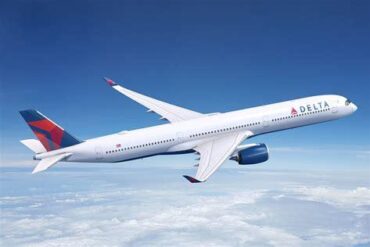
Delta Air Lines is preparing for another round of domestic network changes, with four routes from New York and Las Vegas scheduled to end before the close of 2026. The reductions affect short-haul markets that are largely operated with regional jets, highlighting how airlines are continuing to reassess smaller domestic routes as costs, demand and aircraft capacity shift.
According to the latest schedule updates, Delta will first end its service between New York LaGuardia Airport (LGA) and Tulsa International Airport (TUL) on November 6. Two days later, flights from Harry Reid International Airport (LAS) to John Wayne Airport (SNA) and San Diego International Airport (SAN) will also disappear from Delta’s schedule. The final cut will come in December, when the airline ends its daily New York JFK–Milwaukee Mitchell International Airport (MKE) service.
The four routes have several characteristics in common. They are relatively short domestic markets, operate at only one or two flights per day, and are served by smaller regional aircraft through Delta Connection. While each cancellation has its own competitive and operational circumstances, together they provide a useful snapshot of how Delta is reshaping its domestic network heading into the winter season.
Delta Ends New York LaGuardia–Tulsa Service
The first route to disappear will be Delta’s 1,235-mile connection between LaGuardia and Tulsa, with the final flight scheduled for November 6, 2026. Delta currently operates the route once daily using a Bombardier CRJ900, making it a relatively small part of the airline’s overall New York network.
The service launched in November 2024, meaning it will have operated for less than two years when it ends. Its relatively short lifespan suggests that the route did not develop into the sustained market Delta had hoped for. Travelers will still have an alternative on the city pair, as American Airlines continues to offer service between New York and Tulsa.
The Tulsa cancellation also fits into a broader change in how Delta is organizing its New York flying. The airline has increasingly been shifting shorter domestic routes toward LaGuardia while preserving valuable JFK capacity for international and longer-distance operations. That strategy makes particular sense in a slot-constrained market such as New York, where every departure opportunity can have significant network value.
Two Las Vegas Routes Will End on November 8
Just two days after the Tulsa service ends, Delta will make two cuts at Harry Reid International Airport in Las Vegas. Its flights to Orange County and San Diego will both conclude on November 8.
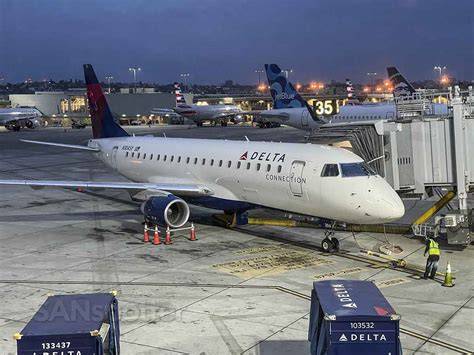
Delta currently operates two daily flights between Las Vegas and Orange County, using SkyWest Airlines-operated Embraer E175 aircraft under the Delta Connection brand. The airline reinstated the route in early 2025, but the service will now once again leave the schedule after a relatively brief period.
The Las Vegas–San Diego market is even more competitive. Delta currently operates one daily E175 flight, down from two daily services earlier in 2026. Once the remaining flight ends, travelers will still have substantial alternatives from competitors, particularly Southwest Airlines and Alaska Airlines, both of which maintain much larger schedules in the market.
The competitive environment matters because these are extremely short routes. Las Vegas–San Diego is only around 260 miles, while Las Vegas–Orange County is also comfortably below 300 miles. Such sectors can be useful for connecting networks and maintaining market presence, but they can become difficult to justify when aircraft, crews and airport resources can generate stronger returns elsewhere.
JFK–Milwaukee Becomes Another New York Casualty
Delta’s fourth route will survive longer, with the final JFK–Milwaukee flight scheduled for December 18, 2026. The airline currently operates the approximately 747-mile route once daily with a Bombardier CRJ900.
The cancellation is particularly notable because Delta is currently the only airline serving the nonstop route. JetBlue Airways ended its JFK–Milwaukee service in October 2025, leaving Delta as the sole operator. Despite that lack of direct competition, Delta has decided that maintaining the service is no longer the best use of its resources.
That decision reinforces an important point about airline route economics: being the only carrier on a route does not automatically make the service profitable. Passenger demand, fares, aircraft utilization, labor expenses, airport costs and the opportunity to deploy an aircraft elsewhere can all outweigh the benefits of having a monopoly position.
Delta’s Broader New York JFK Restructuring
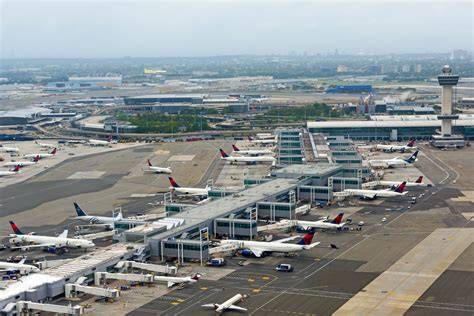
The Milwaukee cancellation also follows several other changes at JFK. Earlier in 2026, Delta confirmed that flights to Memphis, St. Louis and Houston would not return after being suspended in June.
Those routes were themselves relatively new, having launched in September 2025 and lasting less than a year before their suspension. With Houston, Memphis, St. Louis and Milwaukee all falling within LaGuardia’s 1,500-mile perimeter, Delta has a clear opportunity to consolidate much of this shorter-distance flying at LGA.
That allows JFK to play a more specialized role. Rather than using scarce JFK capacity for short domestic markets that can be served from LaGuardia, Delta can dedicate more resources at JFK to international flights and longer domestic routes. Passengers have not necessarily lost access to these cities altogether, because Delta continues to serve Houston, Memphis, Milwaukee and St. Louis from LaGuardia. Tulsa is the notable exception after its November cancellation.
Las Vegas Demand Is Adding Pressure
Delta’s Las Vegas reductions are taking place against a backdrop of weakening passenger traffic at the airport. Harry Reid International handled 4.4 million passengers in July 2026, down 7.6% from the same month a year earlier. International traffic increased by 6%, but domestic traffic fell by 8.7%, dragging down the airport’s overall results.
For the first seven months of 2026, Harry Reid handled 30.2 million passengers, representing a 6.9% decline compared with the same period in 2025. That deterioration is especially relevant to airlines such as Delta because its Las Vegas network competes for passengers in highly competitive short-haul markets.
Delta had already ended flights to Sacramento and San Jose in January, while reducing San Diego from two daily flights to one before eliminating it altogether. The latest changes therefore appear less like isolated cancellations and more like a continued effort to streamline its Las Vegas operation.
Rising Fuel Costs Make Short Routes Vulnerable
Another factor is the airline industry’s continuing cost pressure. Delta’s second-quarter fuel bill reached $4.4 billion, reportedly 77% higher than a year earlier. Rising fuel expenses can make marginal routes considerably harder to justify, particularly when they require regional aircraft and operate with limited frequencies.
Short domestic flights can be especially vulnerable because their revenue potential may be constrained by intense competition while fixed operating costs remain significant. An airline may therefore decide that redeploying a regional jet onto another route, consolidating traffic through a stronger hub or simply reducing capacity offers a better financial return.
Delta’s four upcoming cancellations consequently tell a larger story. New York is being optimized around LaGuardia and JFK’s higher-value flying, while Las Vegas is seeing a more selective approach to short-haul markets. For passengers, the changes will mean fewer nonstop options on four city pairs this winter, but for Delta, the objective is likely to create a leaner network better aligned with demand, competition and operating economics.