Inflatable decoys and aircraft dispersal are becoming increasingly important as air forces rethink one of the oldest problems in military aviation: how to keep aircraft alive when they are sitting on the ground. A fighter can be exceptionally difficult to detect and defeat in the air, yet the same aircraft can become comparatively vulnerable when parked at a known airfield. Modern surveillance systems can locate fixed bases, identify activity, and repeatedly monitor them before an attack even begins. As a result, survivability increasingly depends on deception, movement, dispersion, distance, and uncertainty rather than simply adding more concrete around an aircraft.
The concept of deception itself is ancient. Military commanders have repeatedly attempted to convince an opponent that forces existed where they did not, or that important assets were somewhere else. During World War II, the Allies famously created elaborate deception operations around a fictional army associated with General George Patton to persuade Germany that the main Allied invasion would strike elsewhere. Modern aircraft decoys follow the same fundamental logic, but they operate in a far more technically demanding environment. Instead of deceiving only human observers, they may have to fool cameras, radar, infrared sensors, electronic intelligence systems, drones, and satellites.
For parked aircraft, that distinction is crucial. A decoy does not necessarily have to remain undetected forever. It only needs to create enough uncertainty that an attacker spends valuable surveillance time or expensive weapons on the wrong target. In a large-scale conflict, that can have enormous consequences. Every weapon directed toward a false aircraft is potentially one less weapon available against a real fighter, bomber, tanker, or transport.
Inflatable Aircraft Decoys Are More Than Balloons
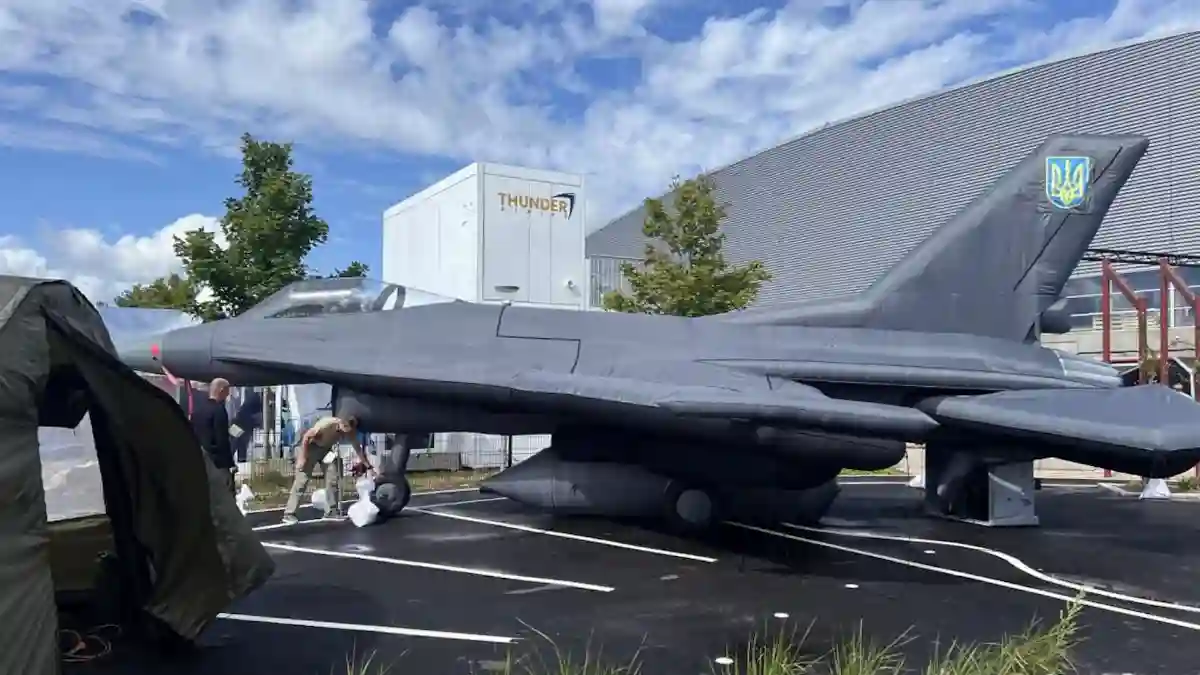
The phrase inflatable decoy can make these systems sound deceptively simple. In reality, sophisticated military decoys are designed around the signatures that modern intelligence and surveillance systems expect to see. A convincing false aircraft therefore needs to resemble the physical shape of the real platform while potentially reproducing selected optical, radar, and infrared characteristics.
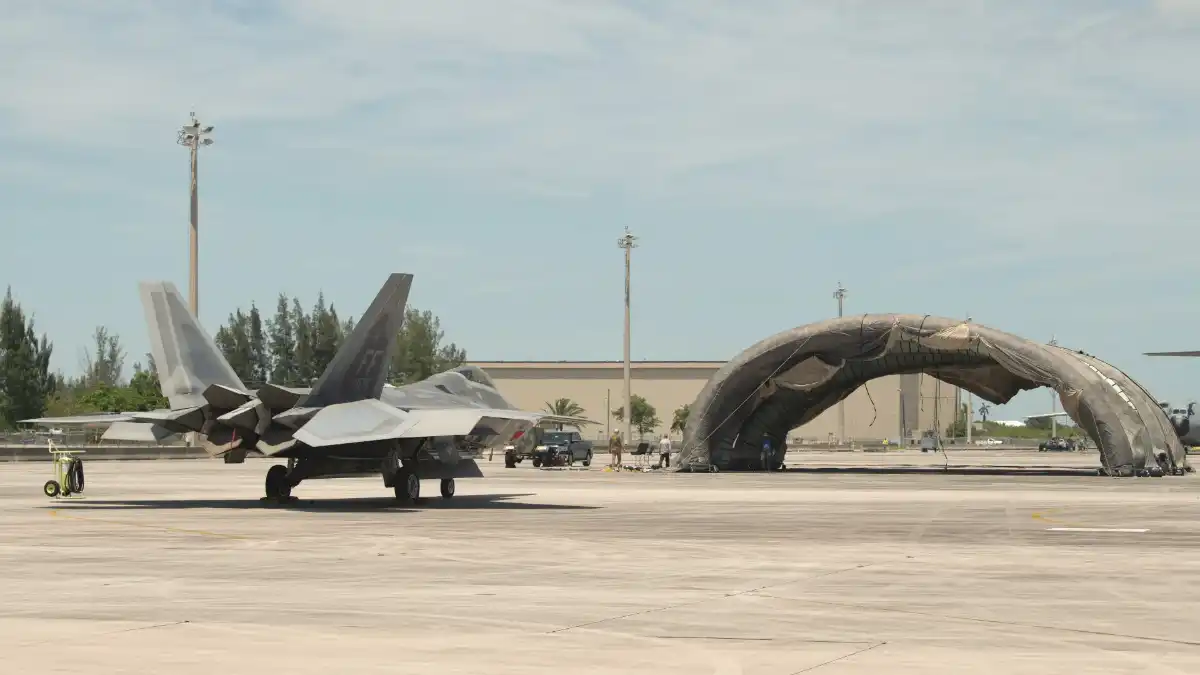
Companies such as Czech manufacturer Inflatech have demonstrated the evolution of this technology with life-sized inflatable representations of military equipment. Their catalog has included aircraft, tanks, armored vehicles, and missile systems. Such systems can be transported relatively easily, deployed quickly, and moved without the logistical burden associated with a genuine combat aircraft.
Their greatest advantage is therefore not physical realism alone. It is cost exchange. If an attacker uses an expensive precision-guided weapon against a comparatively inexpensive decoy, the defender has potentially achieved a favorable exchange without risking an actual aircraft. The deception can become even more valuable when the attacker has to expend reconnaissance resources first to determine whether a target is genuine.
However, inflatable decoys have an obvious limitation: sensors are improving rapidly. A shape that looks convincing through a basic optical camera may appear completely different to a synthetic-aperture radar or thermal sensor. A modern intelligence system can also compare imagery over time, examine shadows and movement, detect unusual heat signatures, and search for evidence of maintenance activity.
That creates an evolutionary arms race between deception and detection. Once an adversary understands the characteristics of a particular decoy, its effectiveness declines. The defender must then improve the decoy or combine it with additional deception measures.
Why Modern Surveillance Makes Deception Harder
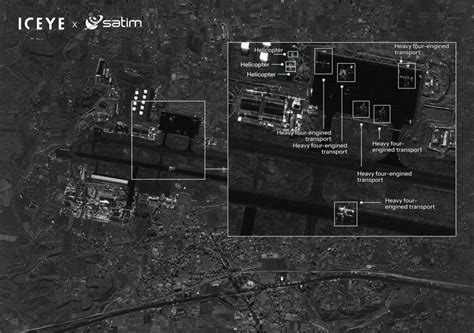
During earlier conflicts, an aircraft parked beneath camouflage could be difficult to identify from the air. Today, an adversary can potentially combine multiple surveillance layers to build a much more detailed picture of an airbase.
Commercial and military satellites can repeatedly photograph fixed facilities. Synthetic-aperture radar can provide imagery in darkness and through cloud cover. Infrared sensors can search for thermal differences, while electronic intelligence can identify communications and other emissions associated with aircraft operations.
Drones add another dimension. They can provide persistent surveillance much closer to the target and can sometimes revisit the same area frequently. A decoy that appears convincing in a single satellite image may therefore face a much more difficult test when observed repeatedly from different angles.
This explains why modern deception increasingly involves the entire target environment, not simply the aircraft itself. A false fighter sitting alone on an otherwise empty patch of concrete may be less convincing than a decoy surrounded by the visual patterns, support equipment, camouflage, shelters, and other indicators normally associated with aircraft operations.
Yet realism creates another problem. The more elaborate a decoy becomes, the more time, personnel, transportation, and resources are required to deploy it. A military cannot simply manufacture unlimited high-fidelity replicas and scatter them everywhere. Decoy operations must therefore be integrated into a broader survivability strategy.
Retired Aircraft Can Become Highly Valuable Decoys
One of the most intriguing forms of aircraft deception is also one of the simplest: using an actual aircraft that no longer has combat value.
A retired airframe can reproduce many of the physical characteristics that an inflatable replica struggles to imitate. Its dimensions, surface geometry, landing gear, shadows, and construction are genuine. From certain sensor perspectives, a retired aircraft may therefore be considerably harder to distinguish from an operational example.
Recent conflicts have demonstrated the potential value of obsolete military equipment as decoys. Aircraft that have reached the end of their useful operational lives can sometimes be positioned to attract enemy attention or weapons. The attacker may only discover afterward that the target was already effectively worthless to the defender.
For countries possessing large reserves of retired aircraft, this creates an unusual opportunity. An old airframe that would otherwise be scrap can potentially become part of a deception network. The difficulty is transportation. Maintaining large numbers of retired aircraft near potential conflict zones is itself a logistical undertaking.
For the United States, much of the nation’s retired aircraft inventory is concentrated at facilities such as the Davis-Monthan Air Force Base aircraft storage complex in Arizona. Moving obsolete airframes thousands of miles into the Indo-Pacific would require planning, transport capacity, personnel, and secure locations.
That does not make the concept impossible, but it highlights an important principle: a useful decoy must exist where the enemy expects to find something valuable. A perfect fake sitting thousands of miles away from the battlefield provides no meaningful protection.
Dispersal Changes the Ground Target
Decoys address deception. Dispersal addresses concentration.
A traditional airbase places aircraft, maintenance facilities, fuel supplies, weapons, command centers, and personnel within a relatively compact area. This arrangement is efficient during peacetime because it simplifies maintenance, logistics, security, and sortie generation. During a major war, however, the same efficiency can become a vulnerability.
If an adversary knows where the aircraft are concentrated, it does not necessarily have to defeat individual fighters in aerial combat. It can attempt to damage them while they remain on the ground.
The United States Air Force’s Agile Combat Employment (ACE) concept is intended to reduce this vulnerability by distributing operations across multiple locations. Instead of treating one large airbase as the center of an entire campaign, aircraft can operate from a network of locations and move between them.
This approach changes the attacker’s problem. Destroying one runway or parking area becomes less decisive if aircraft have already relocated elsewhere. Finding the aircraft also becomes harder because their location changes over time.
The concept can extend beyond simply flying from one airfield to another. Aircraft may be repositioned around an airfield, reducing the amount of time they remain in a predictable parking location. Maintenance, refueling, weapons handling, and command functions can also be distributed where practical.
The Pacific Is Driving New Dispersal Thinking
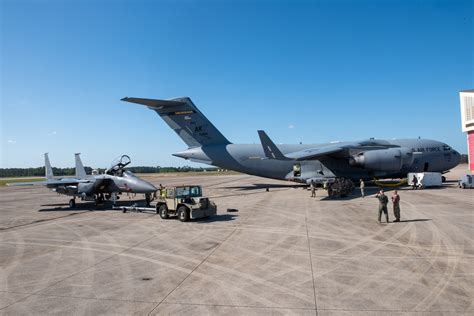
The Indo-Pacific presents an especially difficult problem because geography creates both opportunities and vulnerabilities. Large distances separate potential operating locations, while many military airfields are fixed and therefore identifiable.
The United States has explored and exercised operations across locations in Guam, the Northern Mariana Islands, Palau, Micronesia, and Australia. Locations associated with this broader dispersal concept include Andersen Air Force Base, Tinian, Saipan, Rota, Yap, Palau, and other airfields.
The attraction is straightforward. If aircraft can operate from multiple locations, an adversary has to monitor and potentially attack more targets. The defender gains additional options for moving aircraft away from threatened areas.
But dispersal comes with serious costs. Smaller airfields may lack fuel infrastructure, hardened maintenance facilities, weapons storage, spare parts, communications, and sufficient personnel. A fighter can physically land at a remote runway, but operating an advanced combat aircraft there for an extended period requires an enormous support ecosystem.
This is why ACE should not be understood simply as “spreading aircraft around.” It is a logistical concept as much as an operational one. The real challenge is keeping dispersed aircraft supplied, maintained, armed, connected, and ready to fly.
Why Hardened Hangars Are Not a Complete Answer
Building stronger aircraft shelters appears to offer an obvious solution, but hardened infrastructure has limitations.
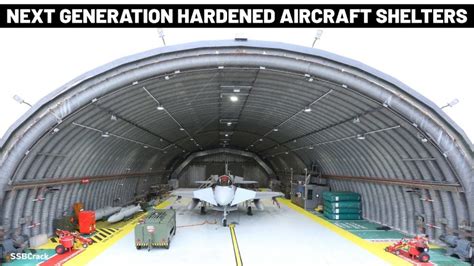
A reinforced hangar can protect aircraft from fragments, blast effects, weather, and some classes of attack. It can also make an aircraft more difficult to destroy through relatively small weapons. However, no shelter should be assumed to be invulnerable against every modern precision weapon.
More importantly, a hardened shelter remains a fixed and identifiable location. An adversary may not know whether an aircraft is inside, but it knows where aircraft are likely to be stored. Intelligence collection can gradually reduce that uncertainty.
This creates a difficult targeting dilemma. Shelters conceal aircraft while simultaneously identifying the places where valuable aircraft are most likely to be found.
Deep underground facilities provide another option. Countries including Switzerland, Taiwan, and Iran have developed underground aircraft storage concepts in mountainous or hardened environments. Such facilities can offer extraordinary physical protection, but they introduce their own vulnerabilities. Entrances can be targeted or blocked, potentially trapping aircraft inside even when the airframes themselves survive.
Consequently, modern airbase defense increasingly involves layering multiple imperfect solutions rather than searching for one perfect shield.
Mobility May Matter More Than Concrete
The central logic behind dispersal is that a moving target is harder to destroy than a predictable one.
An aircraft that remains parked in the same location for many hours gives surveillance systems an opportunity to identify it, classify it, monitor supporting activity, and establish a targeting solution. An aircraft that repeatedly changes its position forces the attacker to keep searching.
This is particularly important in a conflict where both sides possess extensive intelligence, surveillance, and reconnaissance capabilities. The defender cannot assume that camouflage alone will hide an aircraft from satellites or drones. Instead, it can attempt to create uncertainty about where the aircraft will be next.
That philosophy also helps explain interest in autonomous systems and alternative logistics. If unmanned aircraft can deliver supplies, sensors, or weapons without requiring every function to operate from a major forward base, the defender can reduce its dependence on a handful of vulnerable locations.
Range then becomes another form of protection.
Range Is an Invisible Layer of Aircraft Protection
The farther an aircraft can operate from a threat, the more difficult it becomes for an adversary to attack its operating location with shorter-range weapons.
This is one reason long-range aircraft and advanced fighters are becoming increasingly valuable. A platform with greater combat radius can operate from bases farther away while still reaching important areas of the battlespace.
Australia is particularly significant in this context. Airfields such as RAAF Darwin, RAAF Tindal, and RAAF Base Amberley provide operating locations much farther from some potential threat areas than bases positioned directly along the first island chain.
The trade-off is equally important. Moving aircraft farther away can improve survivability, but it also increases transit distance and can reduce sortie rates. The ideal operating location is therefore not necessarily the safest possible base. It is the point where survivability, range, logistics, and combat availability intersect.
New generations of aircraft are being designed with this problem in mind. Greater combat radius, improved fuel efficiency, external or internal fuel capacity, tanking capability, and autonomous aircraft can all reduce dependence on vulnerable forward airfields.
Japan, Taiwan, China, and the Wider Airpower Problem
The challenge is not uniquely American.
Japan and Taiwan also face the fundamental problem of operating advanced aircraft from geographically constrained bases in a region where long-range precision weapons and sophisticated surveillance systems are increasingly widespread.
Taiwan has spent decades preparing for the possibility that its airfields could come under intense attack. Its geography creates both defensive advantages and severe limitations. There are only so many places where large numbers of aircraft can operate, and fixed infrastructure can be identified.
China faces a different but equally important problem. Its mainland offers greater strategic depth and numerous potential dispersal locations, yet aircraft deployed closer to a potential conflict may become vulnerable to attacks against forward airbases. If China is conducting offensive operations, it must also move aircraft and supporting assets toward the battlespace.
This means the same basic principles apply to both sides: deception, dispersion, mobility, redundancy, and range.
The Future of Aircraft Survivability Is a Network
Inflatable decoys are unlikely to replace hardened shelters, camouflage, underground facilities, or dispersed operations. Their real value lies in how they interact with those systems.
A convincing decoy can complicate surveillance. Dispersal can make the target harder to locate. Mobility can make yesterday’s intelligence obsolete. Greater range can keep aircraft farther from the most dangerous weapons. Underground facilities can provide additional protection during periods of intense attack.
Together, these measures create a more complicated targeting problem than any individual defense could provide.
The most important shift is therefore conceptual. Air forces are increasingly treating the parked aircraft not as a stationary asset waiting for protection, but as part of a dynamic survivability system. Its location, signature, support activity, and movement all become elements of the defense.
In a future high-end conflict, an attacker may still be able to locate airfields. Destroying every aircraft there, however, becomes considerably harder when some are genuine, some are decoys, some have moved elsewhere, and others are operating from distant or temporary locations.
That is ultimately the purpose of modern aircraft deception. It does not have to make an airbase invisible. It only has to make the enemy less certain about what is real, where it is, and when it will still be there. In an era of persistent surveillance and precision weapons, that uncertainty may become one of the most valuable defenses an air force possesses.