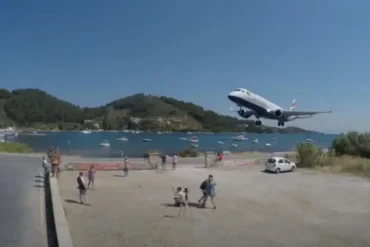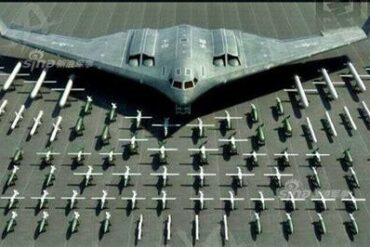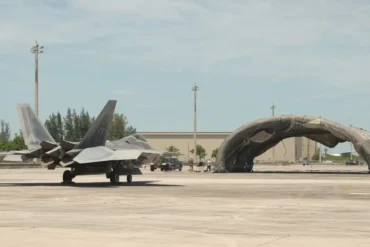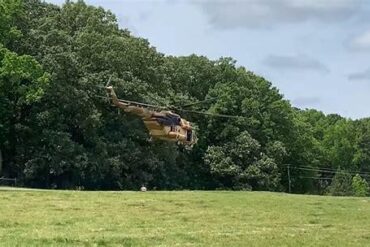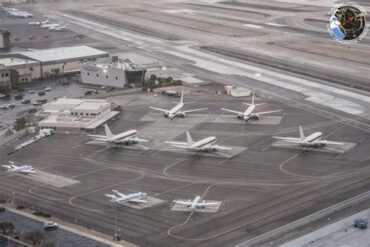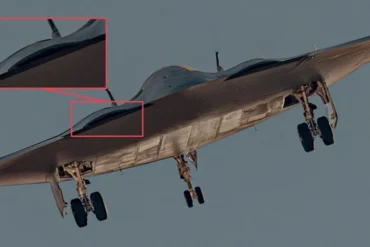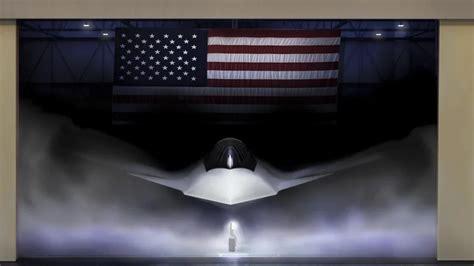
For decades, aviation photography has existed in a legal gray area shaped by enthusiasm, public access, and national security. Across the United States, thousands of photographers gather near airport fences, public roads, and observation parks to capture images of commercial airliners, cargo jets, and military aircraft. In most cases, photographing aircraft from public land is perfectly lawful. Yet hidden inside federal law is a rarely discussed statute that dramatically changes the rules when sensitive military assets are involved.
The recent arrest of Tianrui Liang, a Chinese aeronautical engineering student accused of photographing military aircraft at Offutt Air Force Base in Nebraska, has suddenly thrust that obscure law into the national spotlight. What makes the case remarkable is not merely the nationality of the accused or the sensitivity of the aircraft involved. The real shock lies in the fact that prosecutors relied on a little-known federal statute that criminalizes photographing designated military installations and equipment without authorization, even if the photographer never trespasses onto restricted property.
The incident has sparked intense debate among aviation enthusiasts, legal analysts, and national-security experts because it challenges one of the most widely accepted assumptions in aviation photography: that anything visible from public land can be photographed legally.
The truth is far more complicated.
The Federal Law That Makes Photographing Military Aircraft Illegal
At the center of the controversy is 18 U.S.C. § 795, a federal statute dating back to the early twentieth century. While rarely discussed outside military legal circles, the law gives the United States government sweeping authority to prohibit unauthorized photography, sketches, maps, or visual recordings of designated military installations and equipment.
Unlike espionage laws that require prosecutors to prove intent to aid a foreign government, this statute focuses narrowly on the act itself. If a military installation or aircraft falls under protected designation, photographing it without permission can itself constitute a criminal offense.
That distinction is enormously important.
Under traditional espionage investigations, federal authorities typically must demonstrate theft of classified information, transmission of secrets, or direct cooperation with foreign intelligence agencies. Section 795 lowers that threshold dramatically. Prosecutors only need to establish that protected military assets were photographed without authorization.
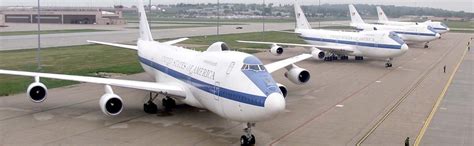
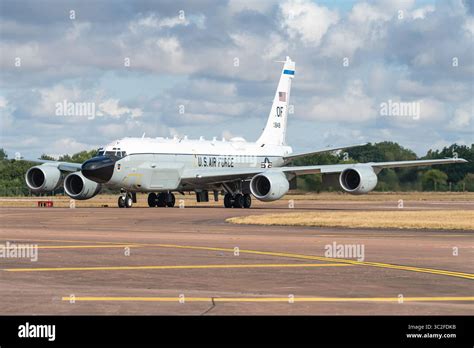
In Liang’s case, investigators allege that he photographed highly sensitive aircraft stationed at Offutt Air Force Base, including the RC-135 reconnaissance aircraft and the E-4B Nightwatch, often referred to as the American “Doomsday Plane.”
According to federal filings, Liang reportedly admitted that he understood photographing those specific aircraft was illegal. That alleged acknowledgment could become one of the most significant elements of the government’s case because it demonstrates awareness of the restriction rather than accidental conduct.
For aviation enthusiasts accustomed to photographing aircraft openly at civilian airports, the case serves as a startling reminder that military aviation operates under an entirely different legal framework.
Why The US Government Treats Military Aircraft Photography So Seriously
To casual observers, a photograph of a parked aircraft may seem harmless. To intelligence agencies, however, a single image can reveal an extraordinary amount of strategic information.
Modern military aircraft are among the most technologically sophisticated machines ever constructed. Tiny visual details captured in high-resolution images can expose equipment upgrades, sensor modifications, antenna configurations, maintenance cycles, defensive systems, and operational readiness levels.
The danger does not come from one isolated image alone. The real intelligence value emerges through accumulation.
Repeated photography over time can help analysts identify deployment schedules, readiness patterns, mission rotations, or periods of heightened military alert. Even seemingly insignificant changes in external hardware can reveal classified modernization programs or indicate the presence of newly installed electronic warfare systems.
For aircraft such as the E-4B Nightwatch, the stakes are even higher.
The E-4B serves as America’s airborne national command center during nuclear conflict or catastrophic emergencies. Designed to survive apocalyptic scenarios, the aircraft functions as a mobile command-and-control platform capable of coordinating military operations during the collapse of ground infrastructure.
Photographs documenting modifications to such aircraft are not viewed merely as hobbyist images. They are treated as potential intelligence resources.
The RC-135 reconnaissance aircraft presents a similar concern. These aircraft conduct highly sensitive surveillance and signals intelligence missions around the world. External modifications can reveal changes in intelligence-gathering capabilities, sensor systems, or mission configurations.
For adversarial governments engaged in aggressive intelligence collection, open-source photography has become increasingly valuable. Modern intelligence operations no longer depend exclusively on stolen documents or undercover spies. Vast quantities of actionable information can now be assembled through publicly available imagery, social media posts, satellite data, and enthusiast photography.
That evolution has fundamentally reshaped how governments view aviation photography near military installations.
The Tianrui Liang Case That Brought The Law Back Into Focus
The federal case involving Tianrui Liang transformed a little-known statute into an international news story almost overnight.
According to investigators, Liang entered North America through Vancouver International Airport in March 2026 before crossing into the United States. Prosecutors say he traveled across several states while visiting military aviation locations and eventually arrived near Offutt Air Force Base in Nebraska.
Offutt is not an ordinary military installation.
The base houses the United States Strategic Command (USSTRATCOM), one of the most sensitive components of the American defense establishment. It oversees nuclear deterrence operations, strategic global strike capabilities, missile defense coordination, and military command continuity planning.
Because of that mission, virtually every operational detail surrounding aircraft activity at Offutt receives heightened scrutiny.
Federal authorities allege Liang exited a vehicle on a public road near the installation and photographed aircraft on the flight line. Investigators later claimed he used planespotting websites to identify photography locations and aircraft positions.
The arrest itself added another dramatic layer to the story.
Liang was detained at John F. Kennedy International Airport while allegedly attempting to leave the United States for Scotland. Prosecutors argued he posed a significant flight risk, ultimately resulting in his transfer to Nebraska for continued legal proceedings.
The case immediately ignited fierce online debate among aviation photographers.
Many enthusiasts argued that photography from public roads has long been accepted practice. Others countered that photographing sensitive military assets has always carried unique risks, particularly when involving foreign nationals and strategically important aircraft.
What makes the case especially significant is that it demonstrates how federal authorities can pursue criminal charges even without accusations of espionage.
That legal distinction may ultimately redefine how aviation photographers approach military installations in the future.
The Fine Line Between Public Photography And National Security
One of the most misunderstood aspects of American photography law is the assumption that visibility automatically creates legality.
In civilian contexts, photography from public spaces enjoys broad constitutional protection under the First Amendment. Photographers routinely capture buildings, transportation systems, infrastructure, and aircraft without legal consequence.
Military facilities exist in a very different category.
National-security interests often override assumptions that apply elsewhere in public photography law. Courts have historically recognized the government’s authority to restrict access to sensitive defense information, especially when national survival or military readiness could be affected.
This creates a strange legal paradox.
An aircraft may be visible from a public road, yet photographing it can still violate federal law if the installation or equipment falls under protected designation.
That contradiction frustrates many aviation enthusiasts because military aircraft are often impossible to avoid seeing near major bases. Spotters may assume that visibility implies permission, especially when aircraft can be viewed openly from highways or civilian observation areas.
In reality, visibility and legality are not the same thing.
Security agencies increasingly view photography through the lens of modern intelligence collection rather than traditional hobbyist culture. A camera today is not merely a recreational device. Combined with digital databases, geolocation data, and artificial intelligence analysis, it can become part of a sophisticated intelligence ecosystem.
That shift explains why governments have become far more sensitive about military photography in recent years.
Why Foreign Nationals Face Greater Scrutiny In Military Photography Cases
Although the law itself applies regardless of nationality, the geopolitical context surrounding Liang’s case has intensified public attention dramatically.
Foreign nationals photographing sensitive military sites inevitably attract heavier scrutiny from federal investigators because intelligence agencies frequently use civilian cover identities, academic travel, tourism, and technical research exchanges as operational pathways.
That does not mean every foreign visitor with a camera is suspected of espionage. However, national-security agencies are trained to identify patterns rather than isolated actions.
When investigators observe a traveler moving between multiple military installations while documenting sensitive aircraft, the situation quickly escalates beyond ordinary tourism concerns.
The timing of Liang’s attempted departure from the United States likely amplified prosecutorial concerns further. Authorities argued that leaving the country immediately after FBI contact increased the risk of evasion or disappearance beyond American jurisdiction.
The broader political climate also matters.
Relations between Washington and Beijing remain deeply strained over espionage allegations, technology theft, cyber operations, and military competition. In that environment, incidents involving Chinese nationals near strategic American defense infrastructure are almost guaranteed to trigger heightened attention from federal agencies.
Even absent direct espionage accusations, the national-security implications become unavoidable.
Other Countries Also Restrict Military Photography
Although the American statute has drawn renewed attention, the broader concept is hardly unique to the United States.
Many governments maintain strict restrictions surrounding military photography because visual intelligence collection has become a central component of modern security threats.
The United Kingdom’s National Security Act 2023 strengthened protections around prohibited places and sensitive installations. Under British law, unauthorized recordings, photographs, or surveillance activities near protected defense locations can trigger severe criminal penalties.
Australia maintains similarly strict controls through provisions within the Defense Act 1903, which criminalizes unauthorized photography and visual documentation of defense facilities.
Canada’s national-security laws also include broad protections covering military information, sketches, plans, and imagery associated with defense infrastructure.
What differs between countries is not the existence of restrictions but the aggressiveness of enforcement.
The United States stands out because of the visibility and influence of American aviation culture. Military aircraft enthusiasts have long photographed aircraft near bases across the country, creating a perception that such activity exists within an accepted gray area.
Cases like Liang’s demonstrate that the gray area may be narrowing significantly.
The Growing Role Of Open-Source Intelligence In Aviation Security
One reason governments are becoming increasingly aggressive about military photography is the explosive rise of open-source intelligence, often called OSINT.
OSINT refers to intelligence gathered from publicly available information sources rather than classified channels. What once required covert operatives can now be accomplished through social media posts, enthusiast photography, satellite imagery, and publicly accessible databases.
Military analysts today can reconstruct astonishingly detailed operational pictures using open information alone.
Tracking aircraft tail numbers, deployment cycles, maintenance schedules, and temporary equipment modifications has become easier than ever. Enthusiast communities often unknowingly contribute to these intelligence ecosystems by uploading high-resolution photographs with timestamps and location metadata.
For intelligence professionals, this represents both a powerful opportunity and a growing threat.
Adversarial governments increasingly exploit publicly available aviation photography to supplement classified intelligence efforts. Even small details captured unintentionally can become strategically useful when combined with broader analytical systems.
That reality explains why governments now view hobbyist photography through a much more security-focused lens than they did twenty years ago.
What Aviation Photographers Should Learn From This Case
For aviation photographers, the Liang case delivers a sobering warning about the limits of public-access assumptions.
Military installations demand an entirely different level of caution than civilian airports. Spotters cannot safely assume that photography is automatically lawful simply because aircraft are visible from roads, sidewalks, or publicly accessible land.
The safest approach involves extensive research before visiting military locations. Photographers should pay close attention to warning signs, restricted-area notices, security patrol activity, and historical enforcement patterns around particular installations.
Certain categories of military facilities deserve especially heightened caution:
- Nuclear command installations
- Strategic bomber bases
- Reconnaissance aircraft facilities
- Command-and-control centers
- Restricted maintenance zones
- Intelligence collection aircraft operations
Foreign visitors face even greater risks because their actions may be interpreted within broader counterintelligence frameworks.
Most importantly, aviation enthusiasts should recognize that online spotting culture does not override federal law. The existence of publicly shared photographs from a location does not guarantee that photography is legal or risk-free.
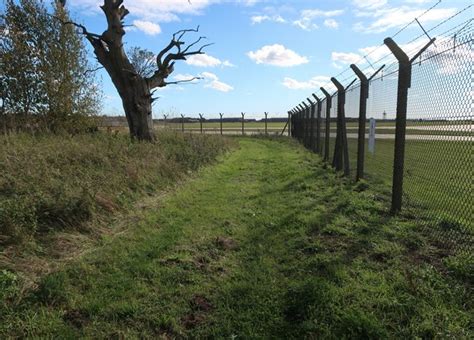
The modern national-security environment has changed dramatically. Governments now treat information itself as a strategic battlefield, and cameras have become part of that landscape.
The Bottom Line On America’s Military Aircraft Photography Law
The prosecution of Tianrui Liang has exposed a legal reality that many aviation enthusiasts never fully understood: photographing military aircraft in the United States can, under specific circumstances, become a federal crime even when conducted from public land.
At the heart of the issue is the balance between public freedom and national security.
The United States government views sensitive military aircraft not merely as machines but as repositories of strategic intelligence. Every photograph has the potential to reveal operational details that adversaries could exploit. In an era dominated by open-source intelligence and digital surveillance, even hobbyist photography can trigger serious national-security concerns.
For photographers, the lesson is unmistakable. Public visibility does not automatically equal legal permission, especially around strategically sensitive military installations.
As aviation spotting culture continues colliding with increasingly aggressive security enforcement, cases like Liang’s may become far more common. And for enthusiasts standing near military fences with expensive cameras and telephoto lenses, the line between harmless hobby and federal investigation has never looked thinner.