China’s military aviation industry has evolved at remarkable speed over the past two decades, producing increasingly sophisticated fighters, drones, and missile systems that have altered the balance of power in the Asia-Pacific region. Yet among all of Beijing’s high-profile aerospace projects, none remains more mysterious than the Xi’an H-20 stealth bomber. First teased publicly nearly a decade ago, the aircraft has become one of the most debated and elusive military programs in modern aviation.
The H-20 is expected to become China’s first true strategic stealth bomber, potentially placing the country alongside the United States and Russia in the elite club of nations capable of fielding long-range stealth strike aircraft. However, despite years of speculation, leaks, and promises from Chinese officials, the bomber has yet to appear publicly in any confirmed operational form.
The continuing silence surrounding the aircraft has transformed the H-20 into something unusual in modern military aviation: a weapon system famous largely because nobody has actually seen it.
China’s leadership first acknowledged the bomber’s existence in 2016 when former People’s Liberation Army Air Force chief Ma Xiaotian confirmed that a new-generation long-range bomber was under development. That brief statement ignited global attention because it signaled Beijing’s determination to close one of the largest gaps in its military capabilities. At the time, China possessed advanced ballistic missiles and growing naval power, but it lacked a stealth bomber capable of penetrating heavily defended airspace at intercontinental ranges.
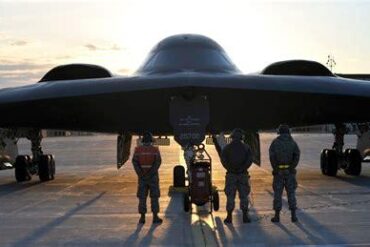
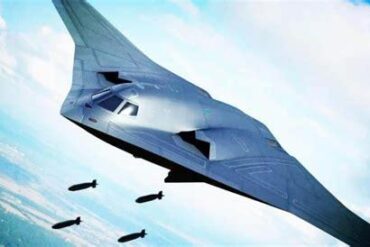
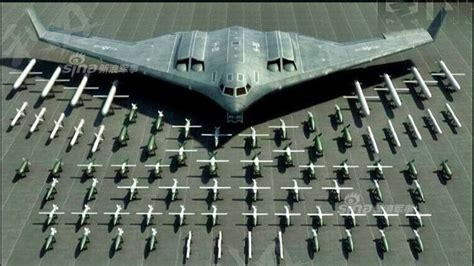
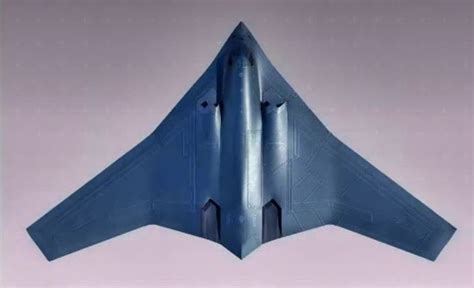
Military analysts immediately began comparing the H-20 to the American B-2 Spirit, largely because conceptual artwork and unofficial renderings pointed toward a flying-wing design optimized for stealth. Such a configuration minimizes radar reflections and dramatically reduces detection range, making it ideal for strategic strike missions.
The excitement surrounding the bomber intensified in 2018 when Chinese state-linked media suggested the aircraft would appear during the People’s Liberation Army Air Force’s 70th-anniversary celebrations in 2019. Expectations surged across defense communities worldwide. Aviation observers closely monitored every rehearsal, satellite image, and military parade lineup hoping to catch the first glimpse of the aircraft.
The unveiling never happened.
That absence only deepened speculation that the project was facing major developmental challenges. While China has demonstrated extraordinary progress in fighter aircraft development with jets such as the J-20 Mighty Dragon, stealth bombers are significantly more difficult to engineer. Long-range stealth aircraft require advanced engine efficiency, heat management, radar-absorbent materials, electronic warfare integration, and highly complex aerodynamic balancing.
Unlike fighters, bombers must combine stealth with endurance and heavy payload capability. Achieving all three simultaneously represents one of aerospace engineering’s most difficult tasks.
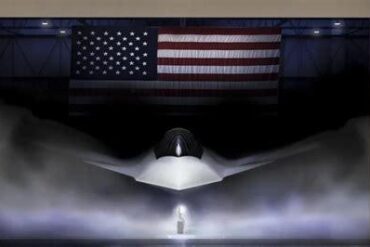
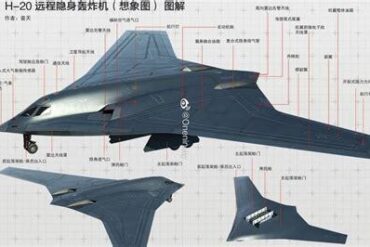
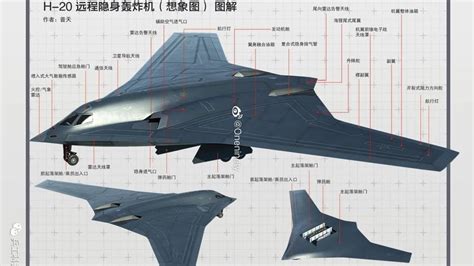
By 2021, unofficial 3D renderings and leaked concept art began circulating online. Some images depicted a smooth flying-wing airframe strongly resembling the B-2, while others suggested a more angular shape with redesigned engine intakes. None of these visuals were verified, but they fueled growing belief that the aircraft was nearing a prototype phase.
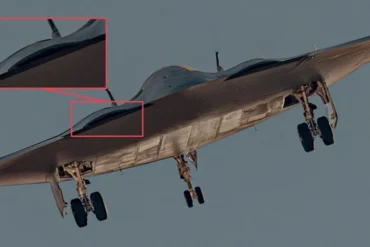
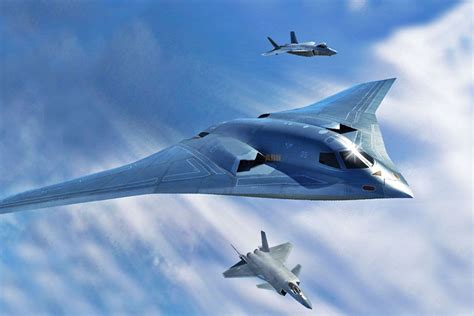
Then came another wave of speculation in 2025 when brief footage surfaced on Chinese social media allegedly showing the H-20 flying alongside a Shenyang J-16 fighter. The clip lasted only seconds, yet it immediately triggered global debate. Some aviation experts believed the silhouette matched expectations for a stealth bomber. Others argued the footage could easily have been manipulated using increasingly sophisticated CGI or AI-generated video tools.
The uncertainty surrounding the clip reflected a broader problem: almost every detail about the H-20 exists in a fog of incomplete information, strategic misinformation, and internet rumor.
Despite the secrecy, several estimates regarding the aircraft’s capabilities have repeatedly surfaced in defense assessments. One of the most significant claims concerns range. Some analysts believe the H-20 may achieve operational ranges between 10,000 and 13,000 kilometers, potentially allowing it to strike targets deep into the Pacific or even parts of the continental United States with aerial refueling support.
If accurate, that capability would dramatically expand China’s strategic reach.
Currently, China’s bomber fleet relies heavily on the aging Xian H-6, an aircraft derived from the Soviet-era Tupolev Tu-16. Although upgraded variants of the H-6 can carry cruise missiles and nuclear payloads, the platform lacks the stealth characteristics and survivability needed in modern high-threat environments. The H-20 would represent an entirely different class of aircraft — one designed not merely for regional deterrence but for global strategic projection.
Reports also suggest the bomber could carry payloads approaching 45 tons, potentially including both conventional and nuclear weapons. Such flexibility would align the aircraft with the role performed by America’s B-2 and upcoming B-21 Raider, enabling precision strikes against hardened military targets while maintaining low observability.
One particularly interesting rumored feature involves the aircraft’s flight profile. Analysts believe the H-20 may prioritize subsonic penetration tactics, flying below the speed of sound to reduce heat signatures and radar exposure. This strategy mirrors stealth doctrine used by existing Western stealth bombers, where invisibility matters more than outright speed.
Yet perhaps the most important question surrounding the H-20 is not its design or payload, but why it continues to face delays.
The U.S. Department of Defense stated in its 2024 report to Congress that the aircraft may not become a meaningful operational platform until the 2030s. That assessment surprised many observers who had expected China to unveil at least a prototype years earlier.
Several theories attempt to explain the delay. One possibility involves engine technology. China has historically struggled to produce domestic jet engines matching the reliability and efficiency of top Western powerplants. Another theory centers on stealth coatings and electronic warfare systems, both of which demand highly specialized manufacturing techniques.
There is also the possibility that Beijing is intentionally slowing public disclosure to maintain strategic ambiguity. Keeping adversaries uncertain about the bomber’s readiness, capabilities, or production status may itself provide military value.
For now, the H-20 occupies a strange position in global defense discussions. It is simultaneously one of the world’s most anticipated military aircraft and one of its least understood. Every few months, new rumors emerge promising an unveiling, a maiden flight, or hidden satellite imagery proving its existence. Yet official confirmation remains absent.
Whether the aircraft finally appears before the decade ends or remains trapped in prolonged development limbo, the H-20 has already become symbolic of China’s broader military ambitions. Beijing clearly intends to field a stealth bomber capable of extending its power far beyond regional boundaries. The only unanswered question is how long the world will have to wait before the aircraft finally leaves the shadows.