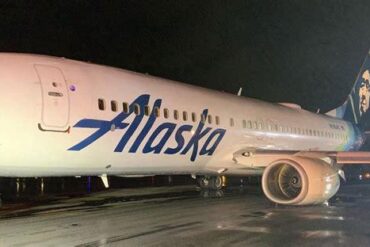
A shipment of 11 original Japanese paintings has become the center of a $521,900-plus legal dispute involving Alaska Airlines after the artworks were allegedly soaked by heavy rain while being transferred between aircraft in Honolulu. The paintings were traveling from Osaka, Japan, to New York and were being routed through Honolulu before continuing to John F. Kennedy International Airport. An art insurer that paid the shipment’s claim is now seeking compensation from Alaska Airlines, Hawaiian Airlines, and a logistics company.
The lawsuit centers on an alleged failure to adequately protect the valuable artwork from severe weather. According to the complaint, the paintings were removed from an arriving aircraft during a heavy Honolulu rainstorm and left exposed to water on the airport ramp. The insurer claims that airline personnel made “no effort to protect” the shipment, resulting in the paintings becoming soaked and sustaining significant damage.
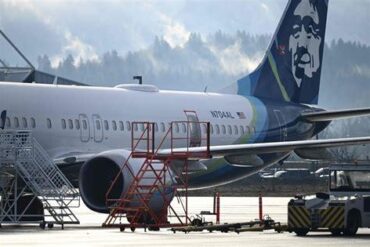
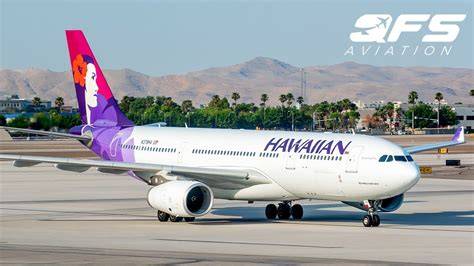
The incident occurred on March 18, 2026, during a period of unusually wet weather across Hawaii. Both flight segments involved in the shipment were operated by Hawaiian Airlines, which is now a wholly owned subsidiary of Alaska Airlines. The first aircraft was an Airbus A330-200 arriving from Kansai International Airport in Osaka, while another A330 was scheduled to carry the shipment onward from Honolulu to New York.
Japanese Paintings Allegedly Left Exposed on Honolulu Ramp
The complaint describes the critical moment as the transfer between the two Airbus A330 aircraft. The paintings were reportedly packed inside cardboard crates, which provided limited protection against sustained rainfall. According to the allegations, airline employees removed the artworks from the inbound aircraft without sufficiently shielding them from the weather.
The insurer argues that the circumstances were particularly serious because the employees allegedly knew that exposing the shipment to heavy rain could cause substantial damage. The complaint states that the paintings were ultimately “soaked and sustained significant damage.” Because the artworks were original paintings on paper, exposure to water could have severe consequences, including staining, warping, pigment deterioration, and irreversible deterioration of the paper itself.
The paintings were being shipped to Naga Antiques, a New York-based dealer specializing in Japanese and Asian antiques. Established in 1971, the business handles historically and commercially valuable objects, with some individual antiques reportedly carrying price tags exceeding $100,000. The lawsuit does not identify the individual paintings or provide separate valuations for each work, instead placing the collective claimed loss at more than $521,900.
Cargo Packaging Could Become a Key Issue
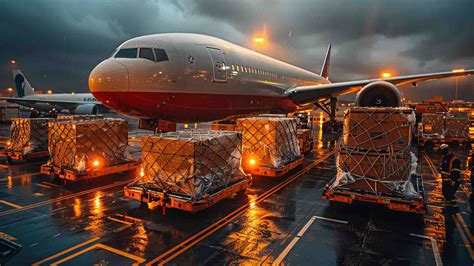
One potentially important issue in the dispute is the way the paintings were packaged before transportation. Alaska Airlines’ cargo conditions generally place responsibility on customers for ensuring that shipments are packaged strongly enough to withstand normal handling. The carrier also reserves the right to refuse improperly packaged cargo and limits responsibility for damage caused by insufficient or improper packaging.
That provision could become significant if the case proceeds. The insurer’s allegations focus on the handling of the paintings during a rainstorm, while the airline’s cargo rules raise a separate question over whether the shipment itself provided adequate protection against foreseeable transportation conditions. Determining whether cardboard crates were reasonably suitable for valuable paper artworks could therefore become an important part of establishing liability.
Distinguished Programs, the plaintiff, is pursuing the claim after paying Naga Antiques for its insured loss. The lawsuit also names Compass Forwarding, a logistics company based in Queens, alongside Alaska and Hawaiian. The involvement of multiple companies reflects the complexity of international art transportation, where responsibility can pass among shippers, freight handlers, airlines, and receiving agents.
Honolulu Weather Added Another Risk
The timing of the incident is also significant. National Weather Service data cited in the case indicates that Hawaii experienced a series of heavy downpours and flooding between March 10 and March 24, 2026. Rain itself is not unusual at Honolulu’s airport, but intense precipitation can create substantial risks when delicate cargo must be moved outside between aircraft.
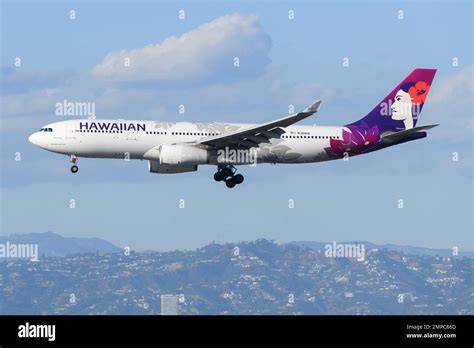
Honolulu is an important aviation and cargo connection between the United States and Asia. Daniel K. Inouye International Airport operates extensive freight facilities, with cargo activity spread across nine terminals and substantial warehouse and ramp space. While passenger baggage benefits from automated infrastructure introduced at Terminal 1, international cargo operations remain dependent on specialized ground handling and ramp transfers.
The shipment’s nearly 10-hour onward flight from Honolulu to New York may have further complicated the situation. Any water damage sustained during the transfer could not be immediately assessed by Naga Antiques or an art specialist. By the time the shipment arrived in New York, the paintings had already spent hours in transit, potentially allowing moisture-related deterioration to progress.
The case ultimately highlights how vulnerable high-value artwork can be during ordinary airline ground operations. A shipment may survive an international flight without incident yet face its greatest risk during a short transfer on the airport ramp. For Alaska Airlines and Hawaiian Airlines, the lawsuit now places that Honolulu transfer under scrutiny while raising broader questions about weather protection, cargo handling procedures, packaging standards, and responsibility for valuable cultural property transported by air.