Dubrovnik may be a relatively small European airport by global standards, but Air Canada sees significant potential in Croatia’s most famous coastal destination. Starting in May 2027, the Canadian flag carrier will launch seasonal nonstop flights between Montréal and Dubrovnik, restoring a direct Canada–Dubrovnik connection after more than four decades and adding a strategically important destination to its rapidly expanding international network.
The new service is part of Air Canada’s broader international expansion for summer 2027. The airline plans to operate more than 125 international routes, offering as many as 169,000 seats every week from Canada to more than 85 destinations across Europe, Asia, the Caribbean, Mexico, Central America, and South America. Among the newly announced destinations are Guangzhou, Shannon, Nice, Oslo, Basel, and Dubrovnik, with the Croatian city standing out because of its combination of strong tourism demand and limited nonstop capacity from North America.
Air Canada will begin Montréal–Dubrovnik service on May 11, 2027, operating three times weekly on Tuesdays, Thursdays, and Saturdays through October 23. The route will use the carrier’s 255-seat Boeing 787-8 Dreamliner, giving passengers a nonstop option that previously has been largely absent from the Canadian market. Flights will depart Montréal in the evening and arrive in Dubrovnik the following morning, while the return service will leave Croatia late in the morning.

Why Air Canada Is Targeting Dubrovnik
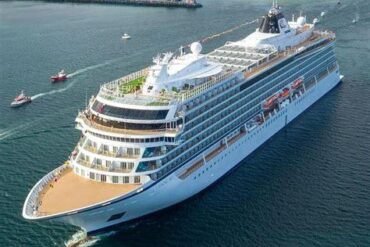
The decision is easier to understand when Dubrovnik’s tourism profile is examined. The historic city sits on Croatia’s southern Adriatic coast and has become one of Europe’s most recognizable leisure destinations. Its medieval walls, coastal scenery, luxury hotels, cruise traffic, and proximity to other Adriatic destinations have helped turn it into a major international tourism hub.
Yet strong visitor demand does not necessarily translate into abundant nonstop flights. OAG Traffic Analyzer data indicates that roughly 170,000 passengers traveled between Dubrovnik and North America in 2025, but approximately 80% of those travelers had to make a connection. That represents a substantial pool of passengers who could benefit from additional direct service.
Canada currently represents only a fraction of that market, which is precisely where Air Canada sees an opportunity. Around 6,000 passengers traveled between Montréal and Dubrovnik during 2025. On its own, that number would not necessarily justify a widebody operation three times a week. However, Air Canada does not have to rely solely on Montréal-originating passengers.
The airline can use Montréal as a connecting gateway, bringing travelers from across Canada and potentially the wider North American market onto the new Dubrovnik flights. This hub strategy is particularly important because existing demand is distributed across multiple major cities rather than concentrated entirely in Montréal.
Montréal Gives Dubrovnik Access to a Much Larger Market
Toronto is an especially interesting example. Approximately 12,000 passengers traveled between Toronto and Dubrovnik in 2025, making the Canadian market considerably larger than the Montréal numbers alone suggest. Air Canada can potentially capture some of that traffic by connecting Toronto passengers through Montréal rather than requiring them to travel through another European hub.
The opportunity becomes even larger when the United States is considered. The greater New York area generated roughly 42,000 passengers to or from Dubrovnik in 2025, while Los Angeles and Chicago each accounted for approximately 15,000. Boston contributed another 11,000 passengers. Many of these travelers currently depend on one-stop itineraries.
That gives Air Canada a valuable advantage: the new route does not have to function as a simple point-to-point Montréal–Dubrovnik service. Instead, it can become part of the carrier’s broader transatlantic network, feeding passengers from Canadian cities and selected U.S. markets into Montréal. The strategy effectively turns a relatively modest local market into a much larger network opportunity.

A Return to Croatia After Years Away
The route also represents an important return for Air Canada. The airline previously served Zagreb, Croatia’s capital, but discontinued the service in 1991. Air Canada Rouge eventually restored the brand to the Croatian market in 2018 with seasonal Toronto–Zagreb flights.
That operation initially ran four times weekly using Boeing 767-300ER aircraft, but the route was later suspended during the COVID-19 pandemic. The retirement of Air Canada Rouge’s widebody fleet further complicated the airline’s ability to maintain the service.
Air Canada had even planned to take over the Zagreb route itself in 2022, with three weekly Airbus A330-300 flights. However, those flights were removed from sale before the service could begin. The Dubrovnik announcement therefore marks more than another seasonal European route. It is Air Canada’s return to Croatia with its own aircraft, and this time the airline is choosing the country’s most internationally recognized leisure destination rather than its capital.
Dubrovnik Airport Is Growing Fast
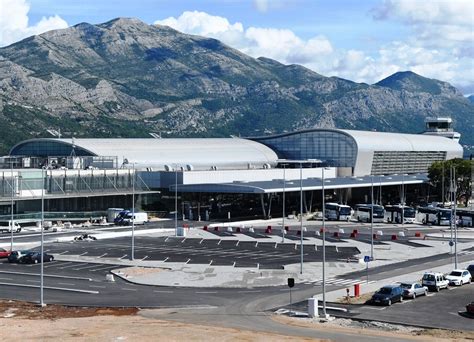
Dubrovnik Airport, officially renamed Ruđer Bošković Airport, may be described as a tiny European airport compared with major hubs such as London Heathrow or Paris Charles de Gaulle, but its passenger numbers tell a different story.
The airport handled 3,090,245 passengers in 2025, representing a 4.6% increase from approximately 2.95 million passengers in 2024. Growth has continued into 2026, with more than 2.34 million passengers passing through the airport by the time of the reported figures.
August was particularly impressive. Dubrovnik handled 566,259 passengers during the month, surpassing its previous August record of 543,733 passengers set in 2025. Such growth gives airlines an increasingly compelling reason to experiment with longer-haul seasonal services.
The airport’s schedule also reflects its role as a major European leisure gateway. Ryanair has a particularly large presence, with services to destinations including Dublin, London Stansted, Bari, and Krakow. The carrier is expected to operate hundreds of departures during the month, illustrating how Dubrovnik combines strong seasonal tourism with an increasingly broad European network.
Air Canada Is Not Entering an Empty Market
Air Canada will not have Dubrovnik entirely to itself in North America. United Airlines already operates seasonal flights between Newark and Dubrovnik, while Delta Air Lines and American Airlines have previously served the Croatian destination.
Delta operated flights from New York-JFK, while American Airlines offered seasonal Philadelphia service in 2019. Dubrovnik has also actively sought stronger Canadian connectivity. In 2018, the airport held discussions with Air Transat about a potential Toronto service, although the proposed route never materialized.
The persistence of these efforts highlights an important point. Airlines are not discovering Dubrovnik’s appeal for the first time. Instead, the market has been constrained more by the availability of nonstop capacity than by a lack of tourism demand.
Air Canada’s decision to use the Boeing 787-8 is therefore significant. The Dreamliner provides the range needed for the transatlantic operation while offering substantially more capacity than a narrowbody aircraft. At three flights per week, the schedule also gives the airline room to test the market without committing to a year-round operation.
A Strategic Bet on Summer Travel
The seasonal nature of the route makes perfect sense. Dubrovnik’s strongest demand is closely linked to the European summer travel season, when tourists arrive to explore the Adriatic coast and the city’s historic center. Air Canada will operate the route from May 11 through October 23, 2027, covering the core period when leisure demand should be strongest.
The timing also complements Air Canada’s wider strategy of expanding its international network selectively rather than simply adding capacity to the largest European capitals. Destinations such as Nice, Oslo, Basel, Shannon, and Dubrovnik allow the airline to reach specialized leisure and regional markets while feeding traffic through its Canadian hubs.
For Dubrovnik, the benefit is equally significant. A nonstop connection with Montréal can reduce travel time and complexity for Canadian visitors while creating a new one-stop option for travelers elsewhere in North America.
Ultimately, Air Canada’s Dubrovnik expansion is not really a bet on the size of a small European airport. It is a bet on the size of the market that airport can reach. Dubrovnik already attracts millions of passengers and substantial North American demand, but much of that demand currently travels through connecting hubs. By placing a Boeing 787 directly between Montréal and Croatia’s Adriatic jewel, Air Canada is attempting to capture more of that traffic itself—and potentially establish a durable bridge between Canada and one of Europe’s most popular coastal destinations.