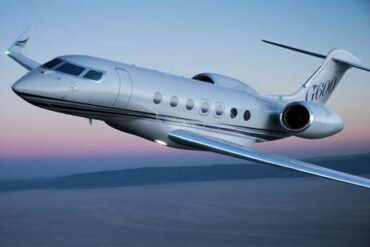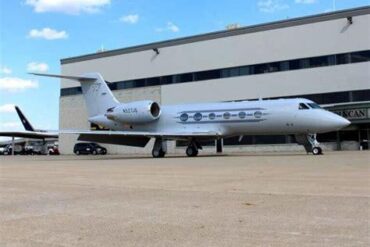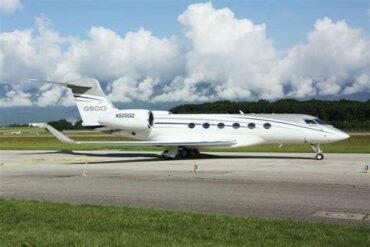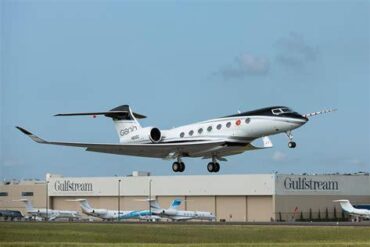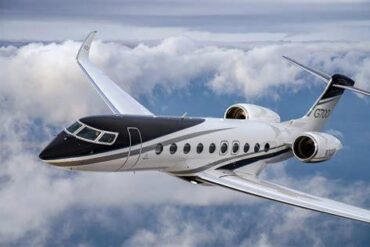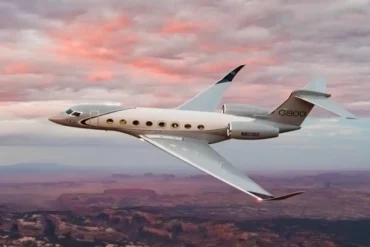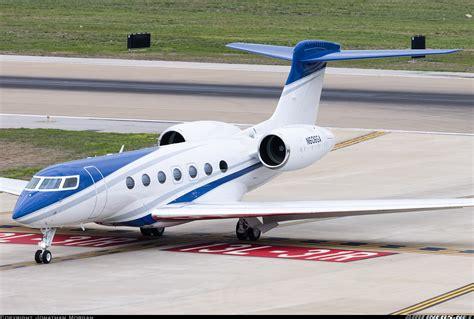
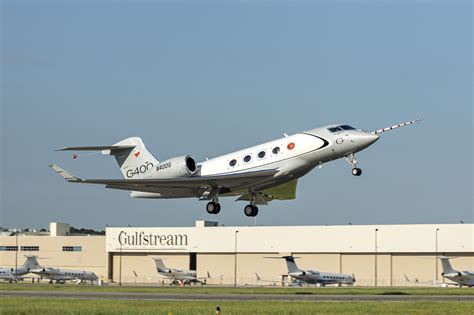
The Gulfstream G400, G500, and G600—collectively known under the GVII designation—represent a new era in the world of long-range business aviation. Manufactured by Gulfstream Aerospace, these aircraft merge technological sophistication, luxurious interior layouts, and performance that redefines transcontinental and intercontinental travel. Each model in this series caters to a unique range and capacity niche, offering tailored solutions for discerning operators worldwide.
The G500 first took to the skies on May 18, 2015, entering service in September 2018, while the G600 followed with a first flight on December 17, 2016 and entry into service in August 2019. The G400, the most recent and compact of the trio, was unveiled in October 2021, with deliveries anticipated in 2025. These aircraft are powered by the Pratt & Whitney Canada PW800-series turbofans, each variant equipped with a model optimized for its intended range and payload capacity.
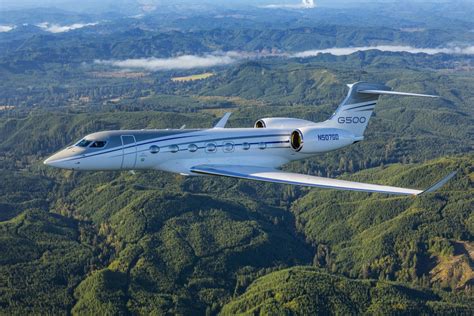
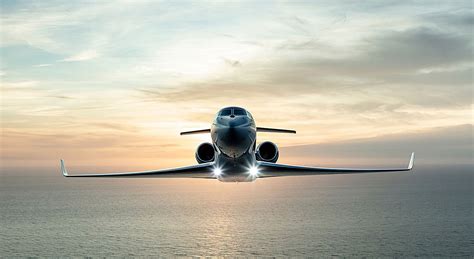
The GVII Family: Precision-Driven Development and Market Strategy
When Gulfstream introduced the G500 and G600 on October 14, 2014, it marked a decisive evolution in their product line, offering improved performance and next-gen avionics compared to the G450 and G550. Remarkably, within just three years, these models comprised 80% of Gulfstream’s order book, reflecting their early commercial success and market fit.
The G500’s flight test program involved 995 sorties over 3,690 flight hours, receiving FAA certification on July 20, 2018. The G600’s test fleet—T1 through T4 and a production model P1—accumulated more than 3,150 hours across 840 flights, with the aircraft earning certification in June 2019. The European Union Aviation Safety Agency (EASA) granted its approval by the end of 2020, enabling deliveries to international clients.
The G400, while still under certification, is particularly notable for being developed under stricter FAA rules introduced post-G500/G600 launch. With a shortened fuselage derived from the G500, the G400 aims to deliver the same cabin comfort and avionics in a more compact, cost-efficient form. The projected price of $34.5 million positions it strategically below the G500 ($49.5M) and G600 ($59.5M).
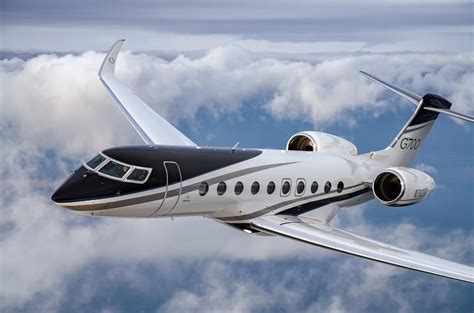
Design Philosophy and Airframe Characteristics
A significant feature of the GVII series is the fuselage cross-section, a modified version derived from the flagship G650, but made 7 inches smaller to balance cabin space and aerodynamic performance. The external fuselage dimensions stand at 8 ft 4 in in height and 8 ft 5 in in width, while the cabin offers 6 ft 2 in of headroom and 7 ft 7 in of width, creating a standing environment conducive to extended comfort.
The G600’s cabin stretches 3.7 ft longer than the G500, providing more flexibility for custom configurations. The G400 cabin is more compact with 10 windows across 2.5 zones, compared to the G500’s 14 windows and 3 zones.
All three models use a supercritical wing design with a 36° sweep, enhancing high-speed cruise efficiency and range. The G600, in particular, boasts a wingspan of 94 ft 2 in, giving it an extended range capability of 6,600 nautical miles.
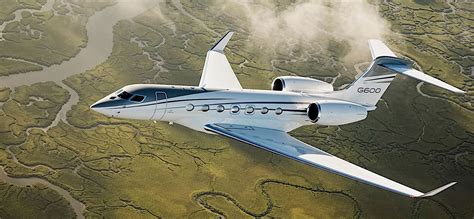
Structurally, these jets rely primarily on high-strength aluminum, with composite materials used in stabilizers and fairings. The tail configuration is shared with the G650, reinforcing structural stability and aerodynamic performance.
Avionics and Flight Deck: The Honeywell Symmetry Flight Deck
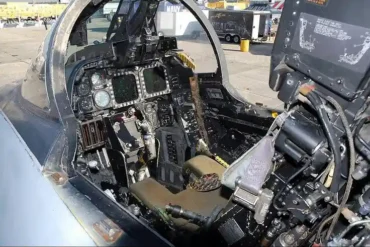
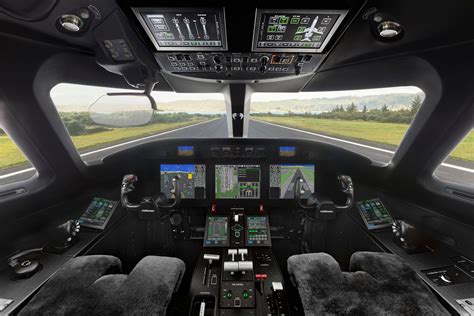
At the heart of the GVII’s flight experience is the Honeywell Symmetry Flight Deck, a cutting-edge flight management suite designed for ease of use, safety, and intuitive control. Each aircraft features:
- Four portrait touchscreens and additional force-touch overhead panels.
- Digital fly-by-wire system with BAE active sidestick controllers—providing tactile feedback and minimizing pilot workload.
- Enhanced Flight Vision System (EFVS) allowing approaches with runway visual range as low as 1,000 ft.
- Honeywell HTG400G auxiliary power unit (APU).
This cockpit environment streamlines pilot interaction, reduces the potential for error, and dramatically improves the training-to-proficiency cycle.
Performance Metrics: Power and Range Across the Fleet
Each model in the GVII family is powered by a tailored variant of the PW800 engine series:
- G400: PW812GA
- G500: PW814GA
- G600: PW815GA
These engines feature an optimized core design focused on fuel efficiency, reliability, and low noise emissions. Notably, cruise fuel burn is measured at 2,920 lb/h for the G500 at FL400 and Mach 0.90, and 2,960 lb/h for the G600 at FL430 and Mach 0.90—impressive figures for aircraft of their category.
Cruise speed capabilities range between Mach 0.85 and 0.90, with the G600 pushing up to Mach 0.925. This enables operators to shave significant time off transatlantic and transpacific routes.
Cabin Experience and Pressurization Advantages
Cabin design across the GVII fleet emphasizes long-range comfort, noise suppression, and air quality. The cabin volume increases progressively across the series:
- G400: 1,441 cu ft
- G500: 1,715 cu ft
- G600: 1,884 cu ft
Advanced pressurization systems maintain a maximum cabin altitude of just 4,850 ft at FL510, made possible by a 10.69 psi differential. This significantly reduces fatigue during long-haul flights and is a notable health and comfort advantage over competing models.
Specifications Comparison: G400 vs. G500 vs. G600
| Specification | G400 | G500 | G600 |
|---|---|---|---|
| Max Takeoff Weight | 69,850 lb | 79,600 lb | 94,600 lb |
| Range (nautical miles) | 4,200 nmi | 5,300 nmi | 6,600 nmi |
| Cruise Speed | Mach 0.85–0.88 | Mach 0.85–0.90 | Mach 0.85–0.925 |
| Fuel Capacity | 25,350 lb | 30,250 lb | 41,500 lb |
| Wingspan | 86 ft 4 in | 86 ft 4 in | 94 ft 2 in |
| Length | 86 ft 3 in | 91 ft 2 in | 96 ft 1 in |
| Cabin Volume | 1,441 cu ft | 1,715 cu ft | 1,884 cu ft |
| Passenger Capacity | Up to 12 | Up to 19 | Up to 19 |
This side-by-side comparison reveals how each aircraft fulfills a specific mission profile—from regional intercontinental routes (G400) to ultra-long-range, non-stop global missions (G600).
Market Positioning and Delivery Forecasts
As of early 2024, Gulfstream has delivered more than 125 G500s, 130 G600s, and continues to fulfill a combined 300+ aircraft orders. With only one G400 prototype flying, the model is undergoing an extensive five-aircraft test campaign. Gulfstream is keen to meet strengthened FAA and international certification requirements, ensuring the G400 launches with robust reliability and global acceptance.
By placing the G400 at the $34.5 million price point, Gulfstream is targeting owners looking to step into the large-cabin jet market without reaching into the higher operational budgets of the G500 and G600. All three jets, however, maintain the same flight deck and core systems, ensuring consistent fleet training and pilot transition efficiencies.
Conclusion: The GVII Series Defines the Future of Business Aviation
The Gulfstream G400, G500, and G600 represent more than incremental upgrades—they stand as a collective benchmark for performance, innovation, and luxury in modern business jets. From their shared aerodynamic DNA to their distinctive mission profiles, each model is crafted for a specific segment of the elite aviation market.
Whether it’s the efficient and compact G400, the versatile and high-performance G500, or the ultra-long-range G600, the GVII family delivers on every front—speed, comfort, reliability, and technological superiority.
As demand continues to rise for business aircraft that can fly farther, faster, and more efficiently, the **GVII series ensures that Gulfstream remains not just competitive, but unquestionably dominant in the large-cabin jet arena.