Air Canada is set to add a distinctive fifth daily service between Toronto and London Heathrow in 2027, using the Airbus A321XLR for an eight-hour daytime transatlantic journey. But while the new flight offers greater scheduling flexibility and a potentially easier adjustment to the time difference, its unusual timing comes with a notable trade-off.
Air Canada Adds a Fifth Daily Toronto–Heathrow Flight
From June 1, 2027, Air Canada plans to increase service between Toronto Pearson International Airport (YYZ) and London Heathrow Airport (LHR) to as many as 33 flights per week. The additional frequency will raise the airline’s operation on the route from four to five daily flights, giving passengers another option for traveling between Canada and the United Kingdom.
The aircraft assigned to the new service will be Air Canada’s Airbus A321XLR, a narrowbody designed specifically to make long-distance routes more practical. With its extended range, the A321XLR allows airlines to operate transatlantic flights that previously would have required larger widebody aircraft.
The new service has been scheduled as something of a “daytripper” transatlantic flight. Flight AC862 will leave Toronto at 8:30 a.m. and reach London at 9:00 p.m., while AC863 will depart Heathrow at 11:05 a.m. and arrive back in Toronto at 2:45 p.m. The timing creates a very different experience from the traditional overnight transatlantic schedule.

An Eight-Hour Flight With a Different Strategy
The appeal of Air Canada’s new schedule is not simply another daily departure. It reflects a deliberate attempt to provide passengers with an alternative to the conventional overnight North America–Europe flight.
For travelers who struggle to sleep on aircraft, an overnight flight can make the journey particularly exhausting. The new daytime departure allows passengers to spend the flight awake and arrive in London late in the evening, making it easier to follow the local clock and go to bed shortly after arrival.
That could make the service attractive to passengers who prioritize arriving in Britain ready for the following day rather than spending their first hours recovering from a poor night’s sleep. Air Canada has not regularly offered a daytime transatlantic service to Europe since 2020, making the return of this scheduling concept particularly notable.
There is, however, an obvious downside. Passengers essentially lose much of a daytime period while onboard the aircraft. An overnight flight turns sleeping hours into travel time, whereas the A321XLR service occupies much of the day. For some travelers, avoiding jet lag will be worth that sacrifice; for others, the traditional overnight departure may remain preferable.
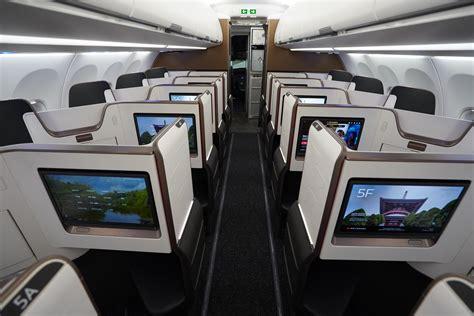
Air Canada A321XLR Brings Lie-Flat Business Class
The aircraft itself adds another important dimension to the new route. Air Canada’s A321XLR configuration will feature 182 seats, including 14 business-class suites and 168 economy seats.
More significantly, the aircraft introduces Air Canada’s first lie-flat business-class product on a narrowbody aircraft. The 14 business-class seats will be arranged in a 1-1 configuration, giving premium passengers individual pods rather than the more conventional paired seating found on many narrowbody aircraft.
That configuration is particularly significant on an approximately eight-hour transatlantic flight. Although the A321XLR has a single aisle and fewer seats than a widebody, the dedicated premium cabin is intended to preserve a level of comfort normally associated with longer-range aircraft.
The economy cabin, meanwhile, will account for the overwhelming majority of capacity. This gives Air Canada a relatively efficient aircraft for a high-frequency route where demand does not necessarily require a larger widebody on every departure.
Toronto Connections Make the Timing More Important
The Heathrow schedule also has implications beyond the Toronto–London market. Passengers arriving in Toronto in the afternoon can connect onward through Air Canada’s hub to destinations across Canada, the United States, the Caribbean, Central America and South America.
For passengers continuing to the United States, the presence of U.S. Customs and Border Preclearance at Toronto Pearson provides an additional advantage. Travelers can complete U.S. entry formalities before departure and, depending on their itinerary, arrive in the United States as domestic passengers rather than facing another immigration process after landing.
This makes the Heathrow flight more than a simple point-to-point service. Its timing is designed to feed Air Canada’s broader network, potentially making the A321XLR an important tool for connecting European traffic with destinations throughout the Americas.
The A321XLR Is Already Entering Air Canada’s Network
The Heathrow announcement also comes as Air Canada continues integrating the A321XLR into its international operation. The aircraft has already begun flying transatlantic missions, including service between Montréal–Trudeau International Airport and Toulouse-Blagnac Airport.

Its deployment to Heathrow demonstrates how Air Canada can use a long-range narrowbody to increase frequency without automatically adding another widebody aircraft. That flexibility could become increasingly valuable as the airline develops its Summer 2027 international network.
The Toronto–Heathrow expansion therefore represents more than one additional flight. It demonstrates how Air Canada is using the A321XLR’s range, premium cabin and relatively compact capacity to create a new kind of transatlantic schedule—one that trades the efficiency of overnight travel for greater daytime flexibility, stronger connections and potentially less disruption from jet lag.
And that is the twist: the eight-hour Heathrow flight is designed not around saving time in the air, but around changing how passengers experience the time difference on the ground.