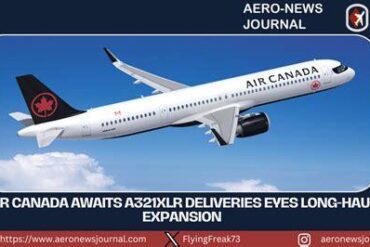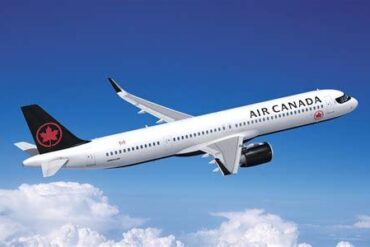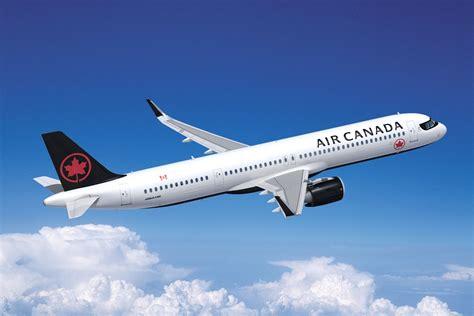
Air Canada’s decision to remove its brand-new Airbus A321XLR from the Toronto Pearson–London Heathrow schedule only weeks before the planned launch looks surprising at first. The aircraft had been ordered specifically to open long, thin international markets, and Toronto–Heathrow is one of the most important routes in Air Canada’s network. Yet the reversal makes more sense when the economics of the A321XLR are examined beyond its headline range.
Air Canada became the first Canadian airline to take delivery of the Airbus A321XLR in April 2026, beginning a program for 30 aircraft configured with 182 seats. After entering domestic revenue service between Montreal and Toronto on June 9, the type made its first international appearance on June 15, flying from Montreal to Toulouse. The plan for 2026 included 12 A321XLR routes, with nine serving secondary European destinations. Those markets are precisely where a smaller long-range aircraft can create opportunities that a widebody cannot economically support.
The Toronto–Heathrow assignment was therefore notable because it represented something different. Schedule filings showed the A321XLR assigned to Air Canada flight AC852 between Toronto Pearson International Airport and London Heathrow from August 31 through October 22. Instead, before the first A321XLR flight operated on the sector, the airline removed the type and restored Boeing 777 and 787 widebody aircraft.
Why Air Canada Changed the Toronto-Heathrow A321XLR Plan
Air Canada has not publicly provided a detailed route-specific explanation for the withdrawal. Aviation A2Z described the move as part of broader A321XLR schedule changes across the network, while analysis from Simple Flying pointed to the commercial importance of premium passenger capacity and belly cargo. Those explanations fit the underlying aircraft economics.
Toronto–London is fundamentally different from a thin route to a secondary European city. Heathrow is a major business market, an important destination for visiting friends and relatives, and a huge connecting point. A route with this combination of traffic can support a much larger aircraft and can produce revenue from more than just the passengers sitting in the cabin. That second part matters enormously for an aircraft such as the A321XLR.
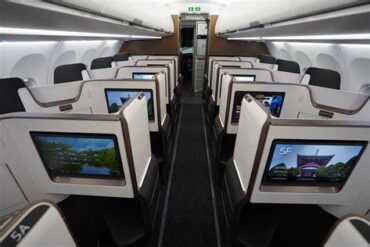
Air Canada configured its first A321XLRs with 182 seats: 14 lie-flat Signature Class suites and 168 economy seats. There is no premium economy cabin. By contrast, its widebody fleet can carry substantially more passengers, with the 777-300ER reaching roughly 400 seats and the 787-9 configured with 298 seats in the referenced fleet examples. On a high-demand trunk route, replacing a widebody with an A321XLR does not simply mean using a cheaper aircraft. It can mean giving up a large amount of revenue-generating capacity on every departure.
A widebody provides Air Canada with enough seats to accommodate strong demand while spreading the cost of a long-haul flight across a much larger cabin. The A321XLR can have a compelling cost advantage when demand is modest, but its smaller capacity becomes a limitation when a route regularly produces enough traffic to justify more seats. The aircraft is designed to make smaller markets work, not necessarily to replace a widebody wherever a runway and range permit it.
The Rear Center Tank Creates a Cargo Problem
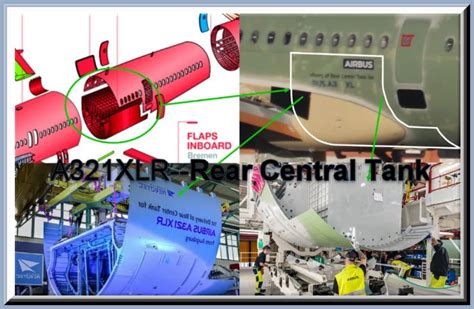
The most important technical detail is hidden below the passenger cabin. The A321XLR achieves its approximately 4,700-nautical-mile range partly through a permanently integrated Rear Center Tank, or RCT. The tank holds about 3,400 gallons, or 12,900 liters, of fuel, allowing the aircraft to fly considerably farther than the standard A321neo. That additional fuel capacity is the foundation of the XLR concept, but it comes with a structural trade-off.
The RCT occupies lower-deck volume that would otherwise be available for commercial cargo. Unlike a temporary piece of equipment that an airline can remove when it is not needed, the tank is integrated into the aircraft structure. Every A321XLR carries the consequences of that design, even when flying a route that does not require the aircraft’s maximum range.
This is where the difference between a secondary European destination and Toronto–Heathrow becomes much clearer. A Montreal–Toulouse flight of roughly 3,100 nautical miles does not require the aircraft to exploit its full 4,700-nautical-mile range. Yet the tank remains installed because the aircraft has been designed as a long-range variant. On a route where cargo demand is limited, the lost lower-deck volume may have little commercial significance. On a major international trunk route, it can be much more consequential.
A typical widebody such as the Boeing 787-9 has lower holds designed to accommodate large cargo containers and palletized freight in addition to passenger baggage. That space gives airlines another revenue stream on long-haul routes. The A321XLR’s lower deck is much more constrained by the RCT, leaving the aircraft largely focused on passenger baggage and smaller quantities of freight rather than the palletized commercial cargo capacity associated with a widebody.
Why Belly Cargo Matters on a Major Transatlantic Route
Air Canada Cargo generated C$1.033 billion in revenue in 2025, illustrating why freight cannot simply be treated as an incidental addition to an airline’s passenger operation. Not every route produces the same cargo economics, and the reference material does not establish how much of that total comes specifically from Toronto–London. However, the broader point is clear: where widebody belly capacity is commercially valuable, an aircraft with restricted lower-deck cargo capability can have a very different route economics profile.
Toronto and London are major commercial centers, so the aircraft choice affects more than the number of passenger seats available. Freight can move in the same aircraft as passengers, allowing the airline to monetize capacity below the cabin floor without operating a dedicated freighter. A 777 or 787 can therefore contribute passenger revenue and cargo revenue on the same flight. An A321XLR can provide excellent long-range passenger economics, but it cannot reproduce that widebody cargo capability.
This helps explain why the A321XLR can be useful for Air Canada while still being a poor fit for a particular trunk route. An aircraft does not need to be capable of flying a route in order to be economically optimal on it. The XLR’s range solves one problem—connecting distant cities without a widebody—but its RCT introduces a limitation that becomes increasingly important as cargo demand rises.
Where Air Canada’s A321XLR Makes More Sense
The rest of Air Canada’s A321XLR network shows the intended strategy much more clearly. The aircraft’s first international route, Montreal to Toulouse, is a good example of a market where 182 seats can be the right amount of capacity. Toulouse has meaningful direct demand from Montreal, including traffic connected with the city’s French-speaking population, but the market may not justify a large widebody every day. An A321XLR can connect the cities nonstop while using substantially less capacity than a 787.
Air Canada planned 12 A321XLR routes for 2026, including destinations such as Toulouse, Edinburgh, Barcelona, Copenhagen, and Palma de Mallorca. Several of these markets are secondary European destinations where demand is strong enough to support nonstop service but not necessarily strong enough to justify a widebody operation. Palma de Mallorca is particularly illustrative because the A321XLR creates a nonstop option that Air Canada’s existing fleet could not economically support in the same way.
The aircraft’s approximately 45% lower trip cost than a widebody, as cited in the reference material, is central to this strategy. If a 787 carries far more seats than a market needs, its greater capacity does not automatically translate into better economics. A smaller aircraft can produce stronger results when it matches demand more closely. The A321XLR gives Air Canada the ability to serve cities that sit between two choices: too far away for a conventional narrowbody and too small to justify a widebody.
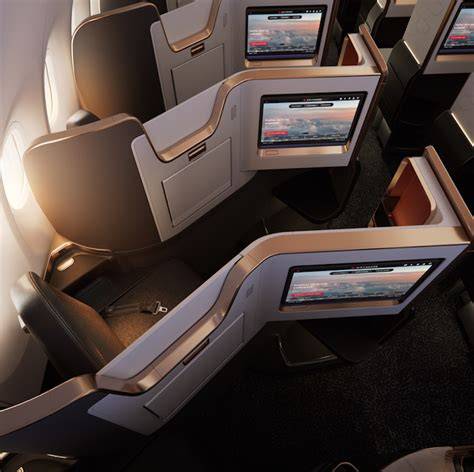
Air Canada’s 182-Seat Cabin Was Built for Thin Long-Haul Markets
The cabin itself reinforces the network strategy. The 14 Signature Class suites use the Collins Aerospace Aurora platform in a 1-1 inward-facing herringbone arrangement. Each suite offers direct aisle access, a fully lie-flat bed, a 19-inch 4K OLED display, Bluetooth audio, and AC, USB-C, and USB-A power. The suites do not have doors, with the design prioritizing bed length and aisle width rather than the enclosed privacy found on some other Aurora installations.
Behind the premium cabin are 168 Collins Meridian+ economy seats in a 3-3 configuration. The aircraft also provides larger seatback entertainment screens, Bluetooth connectivity, power at every seat, and free Wi-Fi for Aeroplan loyalty members. The absence of premium economy is another clue. Air Canada uses premium economy as a separate revenue product on its widebody transatlantic aircraft, where the larger cabin can support multiple classes. On the A321XLR, the airline has chosen a simpler two-class layout.
Why the A321XLR Was Pulled Before Flying to Heathrow
Air Canada did not discover that the A321XLR could not physically fly from Toronto to London. The aircraft has more than enough published range for the route. The issue is that range is only one part of an airline’s route economics.
For Toronto–Heathrow, the widebody offers a combination the A321XLR cannot fully reproduce: substantially more passenger seats, a larger premium cabin strategy, and far greater belly cargo capability. On a thin route, those advantages might not be needed. On a major transatlantic trunk route, they can outweigh the XLR’s lower trip cost.
The reversal therefore does not undermine Air Canada’s decision to introduce the A321XLR. Instead, it highlights the limits of a specialized aircraft. The XLR is exceptionally useful when an airline needs long range with relatively modest passenger demand. It becomes less attractive when the route generates enough passengers and freight to fill a widebody’s larger commercial footprint.
Air Canada’s Toronto–Heathrow schedule change is consequently best understood as a network optimization decision, not a failure of the A321XLR. The airline can use its 30-aircraft XLR fleet where its particular combination of range, capacity, and operating cost creates new opportunities, while reserving 777s and 787s for routes where passenger and cargo demand reward their greater size.
That distinction is likely to remain important as more airlines receive the A321XLR. Its headline range makes it possible to connect cities that were previously difficult to serve nonstop, but the aircraft does not erase the economics of widebody aviation. For Air Canada, Toronto–Heathrow demonstrates that the question is not simply whether an A321XLR can fly far enough. The more important question is whether 182 seats and limited belly cargo capacity generate more useful revenue than the widebody capacity being replaced. On this particular route, the schedule change indicates that Air Canada decided the answer did not justify making the switch.