Starlink has become one of the most recognizable names in satellite internet, but the technology behind those bright objects moving across the night sky is considerably more complicated than simply putting internet satellites into orbit. Developed by SpaceX, Starlink is designed to provide high-speed connectivity in places where traditional fiber, cable, or cellular networks can be difficult or expensive to build. Its customers now include households, businesses, travelers, aircraft operators, and people living in some of the world’s most remote regions.
The scale of the project is equally remarkable. Instead of depending on a handful of enormous communications satellites positioned far above Earth, Starlink uses a huge constellation of relatively small satellites flying much closer to the planet. That architectural decision affects everything from latency and network performance to satellite lifespan, orbital safety, astronomy, and even what people can see with the naked eye.

The constellation is also evolving rapidly. SpaceX continues to launch newer generations of Starlink satellites while retiring older spacecraft, changing orbital configurations, and expanding the network’s capacity. That means the Starlink system people use today is not necessarily the same system that will exist several years from now. Behind the familiar name is an enormous and constantly changing piece of space infrastructure.
Here are five lesser-known facts about Starlink satellites that reveal why the network is so different from traditional satellite internet systems.
1. Starlink Satellites Fly Much Closer to Earth
One of the biggest differences between Starlink and traditional satellite internet is where the satellites operate. Conventional satellite communications have historically relied heavily on geostationary-orbit, or GEO, satellites positioned roughly 35,786 kilometers (22,236 miles) above the equator. At that altitude, a satellite can remain synchronized with Earth’s rotation and appear almost stationary from the ground.
The enormous altitude gives GEO satellites an important advantage: each spacecraft can cover a very large portion of Earth’s surface. However, distance creates a major disadvantage for interactive internet services. Data has to travel tens of thousands of kilometers from the user to space and back, producing significantly higher latency than terrestrial broadband.
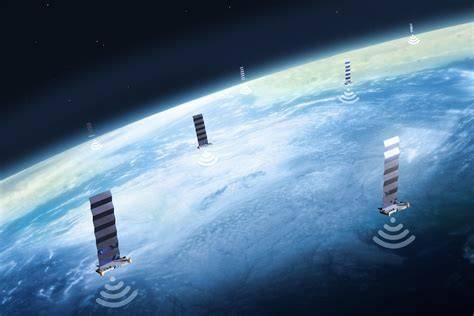
Starlink takes almost the opposite approach. Its satellites generally operate in low Earth orbit (LEO), with many spacecraft operating around 550 kilometers (342 miles) above Earth. That dramatically reduces the distance that signals need to travel. The result is much lower latency, making applications such as video conferencing, online gaming, streaming, cloud services, and interactive websites much more practical than they traditionally were with GEO satellite internet.
The lower altitude also creates an important safety benefit. In early 2026, SpaceX announced plans involving the lowering of more than 4,000 Starlink satellites to an altitude of roughly 298 miles (about 480 kilometers). A lower operational orbit means that satellites that fail can generally re-enter Earth’s atmosphere sooner, reducing the amount of time they remain in orbit as inactive spacecraft.
That is a particularly important consideration for a constellation containing thousands of satellites. When you operate space infrastructure at this scale, orbital altitude becomes part of the network’s maintenance strategy, not merely a technical specification.
2. Starlink Satellites Use Lasers to Talk to Each Other
Starlink satellites do not always need to send data down to Earth every time information needs to move from one part of the constellation to another. Newer spacecraft use optical inter-satellite links, commonly called space lasers, to communicate directly with neighboring satellites.
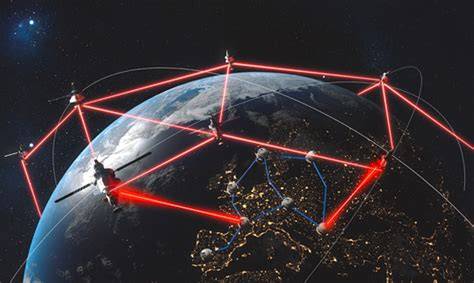
SpaceX began deploying upgraded Starlink satellites equipped with laser links in 2021. The technology allows satellites to transmit enormous amounts of information through space without relying on a ground station for every connection between distant points.
The principle is surprisingly straightforward. Imagine a message traveling from a user in one region to a destination thousands of miles away. Rather than immediately sending the information down to Earth, the Starlink network can potentially move it across multiple satellites using laser-based links, before routing it toward an appropriate ground station or user terminal.
Current Starlink satellites are described as having three optical inter-satellite links, allowing them to establish connections with other spacecraft in the constellation. As satellites move relative to one another, the network can automatically establish new links as neighboring spacecraft enter and leave useful positions.
This creates something that looks less like a traditional collection of independent satellites and more like a high-speed communications network in orbit. It is one of the reasons Starlink’s architecture can support applications requiring relatively low latency over long distances.
The technology also has an intriguing consequence. Light traveling through space can move between satellites without having to follow the complicated path of terrestrial fiber networks. In some situations, that can make satellite-to-satellite routing highly competitive for specific long-distance communications.
So, yes, Starlink really does use lasers. They just happen to be internet infrastructure rather than science-fiction weapons.
3. Starlink Satellites Are Intentionally Short-Lived
Spacecraft are expensive and difficult to replace, so it might seem logical to design every satellite to survive for decades. Starlink takes a different approach. Its satellites are generally designed around an expected operational lifespan of roughly five years, considerably shorter than the 15-to-25-year lifetimes associated with some traditional satellites.
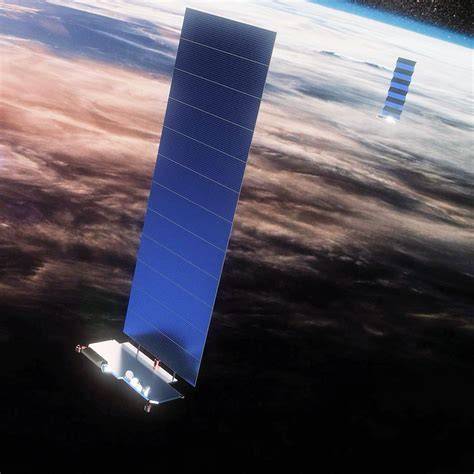
That short lifespan is not necessarily a weakness. It is part of SpaceX’s strategy for keeping the constellation technologically current.
Satellite technology improves quickly. Communications hardware, antennas, processors, solar power systems, and network capabilities can all become outdated while a spacecraft remains physically functional. A traditional satellite built to operate for two decades may therefore spend much of its life using technology designed many years earlier.
Starlink can instead operate more like a continually refreshed technology platform. As older satellites reach the end of their useful lives, they can be replaced by newer spacecraft featuring improved capabilities. The constellation effectively receives hardware upgrades over time, rather than forcing the company to wait decades before replacing an aging generation.
There is another important advantage. A satellite constellation with thousands of spacecraft cannot realistically depend on every satellite remaining operational indefinitely. Planned retirement and replacement are therefore fundamental parts of the system.
When a Starlink satellite reaches the end of its mission, SpaceX can lower its orbit so that atmospheric drag eventually pulls it back into the atmosphere. U.S. regulatory requirements also establish disposal expectations for these spacecraft. SpaceX has reported a disposal reliability rate above 99%, reflecting the company’s emphasis on controlled end-of-life operations.
In other words, Starlink’s satellites are not necessarily designed to stay in space forever. Their relatively short lives are part of the constellation’s upgrade cycle.
4. Starlink Is Creating Serious Concerns for Astronomers and Environmental Scientists
The extraordinary size of the Starlink constellation has produced an equally extraordinary scientific debate. As of August 2026, more than 11,000 Starlink satellites were in orbit, and SpaceX has proposed an even larger future constellation that could eventually involve up to 100,000 LEO satellites. That proposal has not been approved.
The concern is not simply that there are many satellites in the sky. Astronomers worry that reflective spacecraft can pass through the field of view of telescopes and interfere with observations of distant objects.

This is particularly significant for large astronomical surveys that repeatedly photograph enormous sections of the sky. A satellite crossing an exposure can create a bright streak, potentially obscuring scientific data or complicating the processing of astronomical images.
SpaceX has worked with astronomers to reduce the visibility of its spacecraft. Measures have included darker surfaces and other approaches intended to reduce reflected sunlight. However, the sheer number of satellites means the issue remains difficult to eliminate completely.
There is also an environmental question that extends beyond astronomy. Satellites eventually re-enter Earth’s atmosphere, where their materials burn up. Rockets also release exhaust and particles during launches, while re-entry can introduce additional material into the atmosphere.
Scientists are still working to understand the long-term consequences of increasing launch and re-entry activity. Black carbon and other emissions from rocket operations can affect the upper atmosphere, and researchers are examining what a rapidly expanding space industry could mean for atmospheric chemistry and climate.
This does not mean Starlink’s environmental impact is fully understood or that every predicted effect is established. Rather, it highlights a major challenge created by the speed of constellation growth: research and regulation must keep pace with an industry that is expanding extraordinarily quickly.
5. You Can See Starlink Satellites Without a Telescope
Perhaps the most accessible fact about Starlink is also one of the most fascinating: you can sometimes see the satellites with your own eyes.
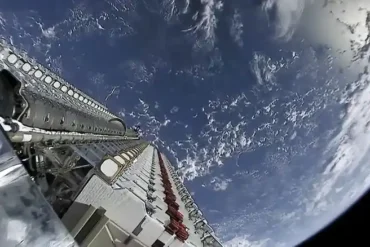
Starlink spacecraft do not generate visible light like stars. Instead, sunlight reflects from their surfaces, allowing observers on Earth to see them under the right conditions. The satellites are particularly noticeable shortly after launch, when a group of spacecraft travels relatively close together before spreading out and reaching their operational positions.
This formation is commonly called a Starlink satellite train. From the ground, it can look like a neat line of moving lights crossing the sky. For someone unfamiliar with the phenomenon, the sight can be genuinely strange. A series of evenly spaced lights moving together is certainly more dramatic than the average backyard astronomy session.

The best viewing opportunities generally occur around one to two hours after sunset or before sunrise. The reason is simple: the sky near the observer can be dark while the satellites high above remain illuminated by the Sun.
Visibility changes constantly, however. A satellite that is easy to spot immediately after launch may become much harder to see once it reaches its final altitude and orientation. Weather, light pollution, the observer’s location, satellite position, and sunlight angle all influence whether a spacecraft will be visible.
For anyone interested in watching Starlink, satellite-tracking services can provide information about when spacecraft will pass overhead. Checking launch schedules and tracking predictions can turn an ordinary evening into an unexpectedly impressive space-watching experience.
And that line of lights is probably not a fleet of alien spacecraft. It is something arguably more remarkable: a rapidly expanding human-built communications network orbiting Earth.
Why Starlink Satellites Are More Than Just Internet Infrastructure
Starlink is often described simply as satellite internet, but that label understates the scale of what SpaceX is building. The system combines thousands of low-Earth-orbit satellites, inter-satellite laser communications, rapidly replaceable spacecraft, automated orbital management, ground infrastructure, and user terminals into a single network.
Its low orbit helps reduce latency. Its laser links allow data to travel between spacecraft. Its short satellite lifespan makes regular technological upgrades possible. At the same time, the constellation’s size is forcing astronomers, environmental researchers, regulators, and the space industry to reconsider how crowded Earth’s orbital environment should become.
That combination makes Starlink particularly significant. It is not merely another communications service competing with cable and fiber. It represents a different model for building global connectivity, one in which space itself becomes a constantly refreshed layer of the internet.
Whether the long-term benefits outweigh the technical, environmental, and astronomical challenges will continue to be debated. But one thing is already clear: those small satellites moving overhead are part of one of the most ambitious infrastructure projects ever attempted beyond Earth.