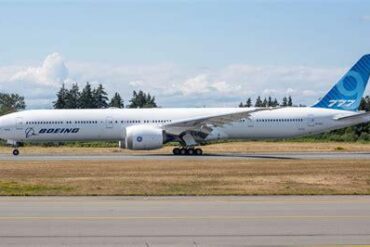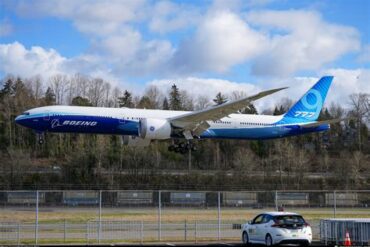
The Boeing 777X was supposed to represent a relatively straightforward evolution of one of the world’s most successful widebody aircraft families. Instead, its journey toward airline service has become a prolonged engineering and certification campaign, leaving Boeing with an unusual problem: dozens of aircraft have already been built, yet some of them are no longer configured exactly as the final certified aircraft will need to be. The result is an expensive gap between “finished” and “ready for delivery.”
Boeing CEO Kelly Ortberg has disclosed that approximately 30 completed 777X aircraft will require what the company calls a “change incorporation” process before they can be handed over to customers. The phrase sounds procedural, but the work behind it can be substantial. Some of the oldest airframes may require structural modifications, while newer aircraft should need comparatively limited software and systems changes.
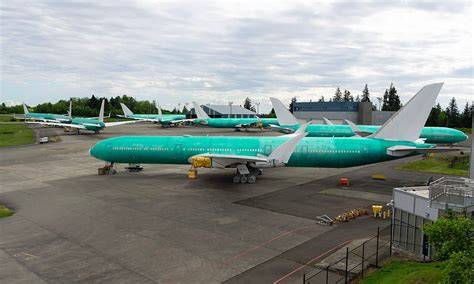
The situation reveals one of the most difficult consequences of developing a new widebody aircraft while production is already underway. Every major design change discovered during flight testing has a ripple effect. When an aircraft is still on a drawing board, engineers can incorporate the change into the next production configuration. When the airplane is already assembled, painted, tested and sitting in storage, incorporating that same change can mean opening up an otherwise complete aircraft and rebuilding sections that Boeing had already finished.
For Boeing, the challenge is therefore larger than simply repairing 30 airplanes. The company must effectively move a batch of early-production 777Xs through an additional industrial process while simultaneously completing certification, maintaining production and preparing the aircraft for airline customers. The scale explains why Ortberg described the work as a “pretty massive activity.”
The Boeing 777X Has Been Finished for Years
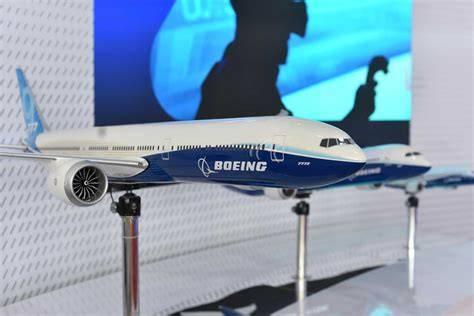
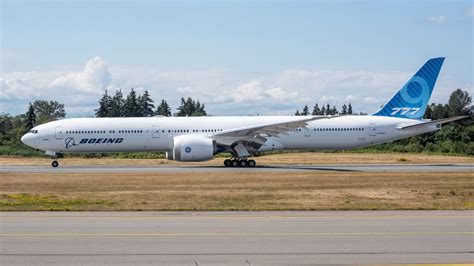
The 777X program began in 2013 with an ambitious objective: take the proven Boeing 777 platform and combine it with a new composite wing, larger and more efficient engines, updated systems and a redesigned passenger cabin. The flagship 777-9 was intended to deliver greater capacity and efficiency on long-haul routes, while the 777-8 would provide a smaller alternative with exceptionally long range.
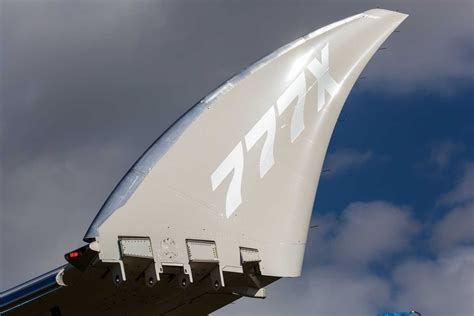
Its technology was substantial. The aircraft uses the GE9X, the largest commercial aircraft engine ever developed, alongside a new carbon-fiber-reinforced composite wing and distinctive folding wingtips. Those innovations promised significant efficiency gains, but they also introduced additional certification and engineering complexity.
The biggest complication was timing. Boeing continued manufacturing aircraft while the 777X remained deep in development and certification. That decision made industrial sense in several ways. Widebody production lines are enormously expensive to stop and restart, and maintaining production can preserve skilled labor, supplier relationships and manufacturing momentum.
But production ahead of certification creates another problem: the aircraft being built today can reflect engineering decisions that later change.
That is precisely what has happened with the 777X. The certification program has continued for years, and engineers have accumulated information from flight testing, structural evaluations, system testing and regulatory reviews. Some of those findings have resulted in modifications to the final aircraft configuration.
The approximately 30 stored aircraft were therefore caught between two generations of the design. They are genuine production aircraft, but some were manufactured before later certification-driven changes had been incorporated.
Why Boeing Must “Tear Open” Finished 777X Jets
The term “tear open” is more dramatic than Boeing’s official language, but it captures an important reality. The older aircraft cannot simply receive a software update and leave the factory.
Ortberg indicated that the oldest aircraft will require more structural-related changes, while newer builds will need less extensive work. That distinction is critical because structural modifications are fundamentally different from updating software or replacing an electronic component.
A structural change can require engineers and technicians to gain physical access to areas that were already completed. Depending on the specific modification, this can involve removing interior components, opening access panels, removing insulation or other equipment, modifying structural elements and subsequently reinstalling systems and cabin components.
The exact modification package for each aircraft has not been publicly disclosed in full. It would therefore be misleading to claim that every one of the 30 aircraft must literally be dismantled in the same way. What is clear is that early-production aircraft require significantly more extensive incorporation work than newer examples.
That creates a hierarchy of difficulty. The oldest 777Xs are furthest removed from the eventual certified configuration, so they have the greatest amount of work to absorb. Aircraft produced later should be closer to the final standard and therefore require fewer modifications.
In practical terms, Boeing is taking aircraft that look externally like completed airliners and turning them back into active production projects.
Years of Flight Testing Changed the Final Design
The root of the problem lies in the nature of aircraft certification itself. A commercial aircraft cannot simply be designed, assembled and declared ready for passengers. Regulators require manufacturers to demonstrate that the aircraft satisfies extensive requirements covering structure, flight characteristics, systems, engines, emergency procedures, reliability and environmental conditions.
The 777X certification campaign has taken much longer than Boeing originally anticipated. That extended period has provided engineers with more time to identify issues and refine the aircraft.
Normally, those changes would flow naturally into later production aircraft. The difficulty comes when earlier aircraft have already been built.
The 777X is particularly complicated because its most important innovations are deeply integrated into the aircraft. The composite wing is not simply an optional component that can be exchanged without consequences. Neither are the aircraft’s systems, software, engine installation and structural interfaces.
Certification changes can therefore create interactions between multiple engineering disciplines. A modification to one component can require inspections or validation elsewhere. A software change may require additional system testing. A structural alteration can trigger further conformity inspections and documentation.
This is why change incorporation is not simply a maintenance exercise. It is part of bringing the aircraft into the final certified production standard.
Boeing Built Ahead of Demand for a Practical Reason
It may seem strange that Boeing would manufacture dozens of aircraft before receiving certification. Yet there were rational industrial reasons for doing so.
A new widebody production system requires a stable flow of aircraft. Stopping production for several years can create serious problems. Skilled workers can leave, suppliers can lose volume, manufacturing processes can become less efficient and restarting the line can itself introduce quality risks.
Boeing therefore had an incentive to continue producing 777Xs despite certification delays.
The strategy protected the industrial system, but it transferred some of the risk into the future.
Instead of having an empty production line, Boeing now has a storage field containing aircraft that represent enormous amounts of invested capital. They occupy space, require preservation work and cannot produce revenue for Boeing or its customers until they meet the necessary configuration.
The problem becomes even more significant when the aircraft are eventually modified. Boeing must now spend additional labor hours and engineering resources on jets that had already passed through much of the manufacturing process.
The Older 777Xs Face the Biggest Bill
The age of each airframe is now one of the most important factors determining how much work it needs.
The earliest production aircraft were built when Boeing was still moving toward the final configuration. These aircraft can contain a larger number of differences from the certified standard. Correcting those differences can require considerably more physical work.
Newer aircraft benefited from lessons learned during the certification campaign. Their designs were progressively brought closer to the expected production configuration. Consequently, Boeing can address their remaining differences with fewer interventions.
This explains why the 30 aircraft cannot simply be treated as a single batch.
Each airframe effectively has its own configuration history. Engineers must identify which modifications already exist, which remain outstanding and which inspections are required before the aircraft can be released.
That creates an enormous documentation challenge alongside the physical work. Every modification must be traceable, verified and accepted as part of the aircraft’s conformity record.
Boeing Has Created a Dedicated Rework Team
Recognizing the scale of the problem, Boeing has established a dedicated team to manage the 777X rework campaign.
The company’s approach is reportedly to bring the stored aircraft into a common configuration first, before applying the final changes associated with certification and delivery. That strategy could reduce complexity by avoiding a situation in which every airplane follows a completely different modification pathway.
Standardization is particularly valuable in aircraft manufacturing. If technicians perform the same work repeatedly, procedures become more predictable, tooling can be optimized and inspection processes can be streamlined.
Yet the dedicated team also illustrates how significant the problem has become.
Boeing is not simply assigning a few technicians to repair several aircraft. It is creating an organizational structure around a multi-year industrial activity. That means engineering, production, quality assurance, certification and supply-chain teams all have to remain coordinated.
The timing is especially important because Boeing has been under intense pressure to strengthen engineering and manufacturing execution after years of quality and certification problems.
Certification Is Finally Moving Forward
Despite the rework burden, the 777X program has also made meaningful progress.
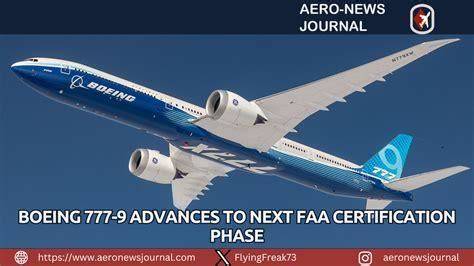
In March 2026, the FAA authorized Boeing to begin Phase 4A of the Type Inspection Authorization process for the 777-9. This is an important step because TIA represents formal regulatory involvement in the aircraft’s type certification campaign.
Phase 4A includes natural icing testing, allowing FAA personnel to evaluate aircraft performance and system behavior in demanding environmental conditions. Such testing is crucial for establishing that the aircraft’s systems function correctly beyond controlled laboratory conditions.
The certification campaign still has work ahead. Phase 4B remains part of the process, followed by later certification activities and operational evaluations such as ETOPS and Function and Reliability testing.
The significance is that Boeing is now much further through the certification process than it was several years ago. The finish line is becoming more visible, even if the path remains complicated.
Why 2027 Delivery Still Matters
Boeing continues to target 2027 for the first 777-9 delivery. That target is crucial for both the manufacturer and its customers.
Airlines including Emirates and Lufthansa have planned significant roles for the 777X within their future fleets. Every additional delay forces these carriers to keep existing aircraft operating for longer than originally expected.
For airlines, the consequences extend beyond the simple question of receiving a new airplane. Fleet replacement affects route planning, cabin investment, maintenance schedules, fuel consumption and long-term capacity planning.
A delayed 777X can therefore create a chain reaction across an airline’s network.
The aircraft was designed to provide substantial efficiency improvements over older generations, so postponing deliveries also postpones those benefits. At the same time, airlines have to manage the uncertainty of fleet transitions, especially on high-demand long-haul routes where aircraft availability matters enormously.
For Boeing, 2027 is consequently more than a delivery date. It is a deadline that must be supported by both certification progress and a credible plan for converting stored aircraft into customer-ready airplanes.
The Hidden Cost of Boeing’s Build-and-Store Strategy
The 30 aircraft illustrate an uncomfortable reality of modern aircraft manufacturing: building an aircraft is not the same as completing the program.
The physical airplane may be sitting outside a factory with engines, wings and landing gear installed, but until its design configuration is aligned with certification requirements, it is not commercially ready.
That distinction creates significant financial exposure.
Boeing has already invested heavily in materials, labor and manufacturing capacity. It must now invest again to modify the aircraft. Meanwhile, the aircraft cannot be delivered and airlines cannot generate the expected operational value from them.
Storage itself also has costs. Aircraft require preservation, inspection and protection from environmental exposure. Components and systems must remain in acceptable condition while the airplanes wait.
The longer certification takes, the more complicated that equation becomes.
The 777X Problem Is Bigger Than 30 Airplanes
The most important lesson from the 777X situation is not the exact number of aircraft awaiting modification. It is what those aircraft reveal about the program’s development strategy.
Boeing attempted to maintain production momentum while certification continued. That protected the manufacturing system but created a growing population of aircraft built against configurations that evolved during testing.
Now Boeing must reconcile those two worlds.
The company has to complete certification, establish the final configuration, modify early aircraft, maintain quality control and prepare airlines for delivery. All of those activities have to happen without introducing new problems.
The 777X remains one of Boeing’s most strategically important commercial aircraft programs. Its success could strengthen the company’s position in the large twin-engine widebody market and provide airlines with a highly efficient replacement for aging 777s and other large aircraft.
But before passengers ever board these early-built jets, Boeing has to finish a task that was never supposed to become such a defining feature of the program: turning completed aircraft back into major engineering projects.
If the remaining certification work proceeds without another major setback, the extensive rework could ultimately become a temporary chapter in the 777X story. But for the approximately 30 stored aircraft, the path to airline service now runs through workshops, inspections, structural modifications and configuration changes.
In other words, these airplanes may already look finished. They are not finished yet.